
IDX JCI strengthens amid heightened expectations of Fed rate hikes
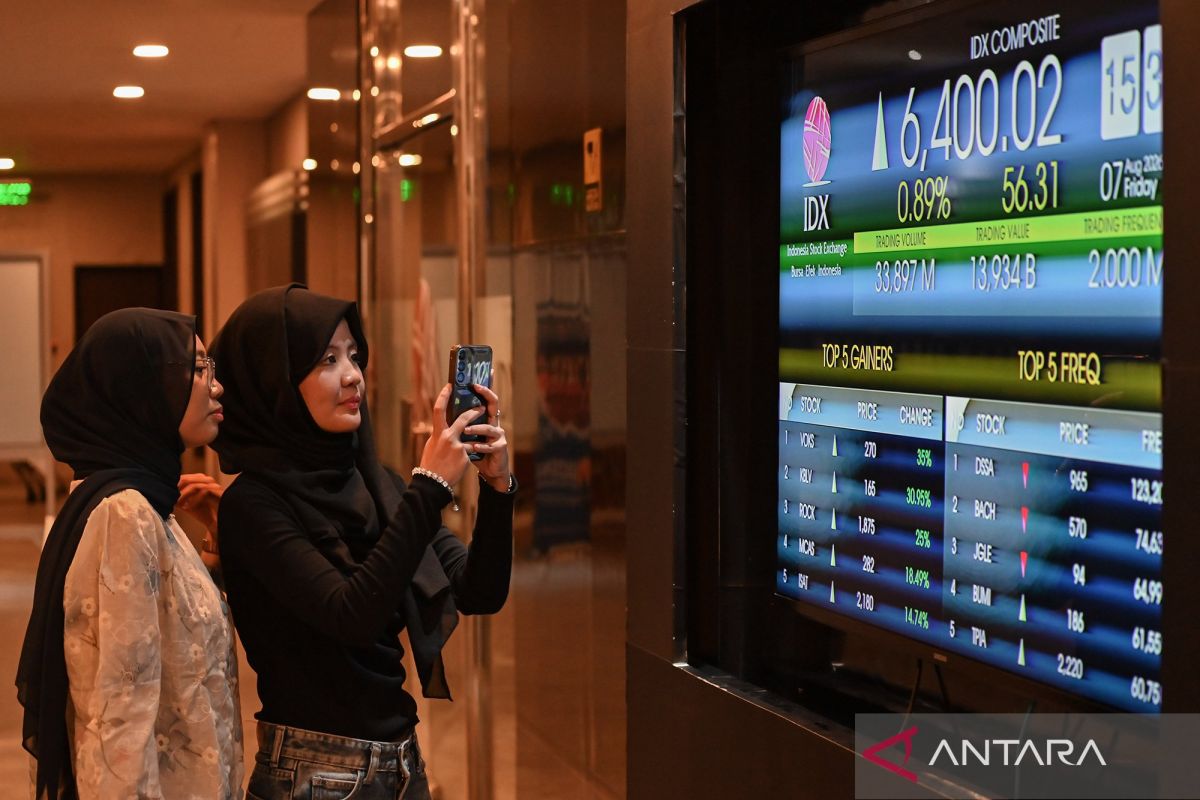
Jakarta (ANTARA) - The Indonesia Composite Index (IHSG) on the Indonesia Stock Exchange (BEI) moved higher on Wednesday morning amid increasing market expectations regarding a potential hike in the US Federal Reserve’s benchmark interest rate.
After opening lower, the IHSG rose by 35.64 points or 0.55 per cent to 6,496.79 at 09:15 WIB. Meanwhile, the group of 45 blue-chip stocks, known as the LQ45 Index, increased by 1.86 points or 0.29 per cent to 652.62.
“Based on technical analysis, we see the potential for a limited decline in the IHSG, with support and resistance levels at 6,440-6,600,” said Maximilianus Nico Demus, Associate Director of Research and Investment at Pilarmas Investindo Sekuritas, in his analysis in Jakarta on Wednesday.
Regarding international markets, Nico explained that market participants are betting on a combination of uncertainties involving the US-Iran conflict, oil prices exceeding US$100 per barrel, potentially rising inflation, and 10-year US Treasury yields surpassing 5 per cent to reach the 5.04 per cent level.
Based on these conditions, CME FedWatch data reported that the probability of a 2-basis-point hike in the Fed’s benchmark rate at the September 2026 FOMC meeting has breached the 92-93 per cent range.
“Under these conditions, it seems difficult for the Fed not to raise its interest rates,” said Nico.
Nico noted that if the Fed were to hold its benchmark rate instead, investors would undoubtedly continue to demand much higher US Treasury yields.
On the other hand, the US and China are currently discussing tariff reductions on certain goods, including energy and agricultural products from the US. Although limited, this bilateral trade has the potential to influence more than US$400 billion in the first eight months of this year.
“Thus, we are confident there is a new hope that the trade war truce could potentially be extended for another year,” said Nico.
Nico mentioned that China is also fulfilling its commitment to purchase 25 million tonnes of soybeans from the US annually until 2028. Additionally, China has committed to purchasing other agricultural products besides soybeans worth nearly US$17 billion.
“At the very least, amidst the current market dryness, friendly relations can ensure everything is navigated well,” Nico added.
Domestically, Indonesia’s External Debt (ULN) as of July 2026 reached US$453.4 billion, growing 4.9 per cent year-on-year (yoy), with public external debt at US$218.4 billion and private external debt at USability $194.6 billion.
Government external debt is primarily utilised for the health, administration, education, construction, and transport sectors, and is dominated by long-term debt.
The ratio of external debt to GDP stands at 30.7 per cent, which Bank Indonesia (BI) assesses as a healthy and controlled debt structure.
“We assess that the increase in Indonesia’s external debt, primarily from the public sector, remains relatively controlled because it is dominated by long-term debt and used to finance productive sectors,