
IDX: Intraday Short Selling to be Implemented Gradually
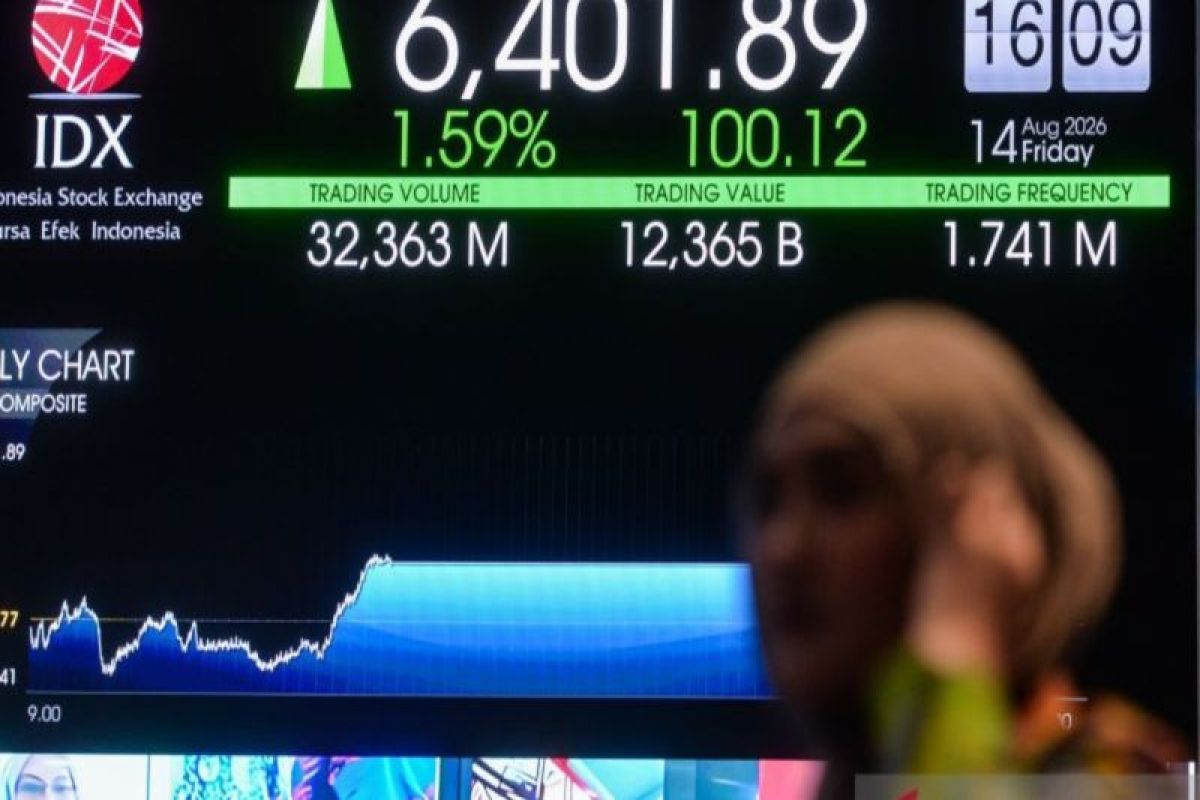
PT Bursa Efek Indonesia (IDX) has stated that the implementation of Short Selling and Intraday Short Selling (IDSS) transactions will be carried out gradually, taking into account the readiness of mechanisms, infrastructure, Broker Members (AB), and risk management aspects.
Irvan Susandy, Director of Trading and Broker Member Regulation at IDX, stated that the implementation of IDSS is a follow-up step in the IDX’s efforts to provide more diverse transaction mechanisms while supporting more dynamic market development. “The implementation in this initial stage is being conducted in a measured manner, considering the readiness of mechanisms, infrastructure, and risk management aspects,” Irvan said in an official statement in Jakarta on Friday.
The IDX has implemented Short Selling and IDSS transactions starting 1 October 202 ม6, with the initial phase involving two Broker Members that have obtained licences to provide IDSS facilities: PT Ajaib Sekuritas Asia and PT Semesta Indovest Sekuritas. IDSS transactions can only be conducted on stocks included in the Short Selling Securities List determined by the IDX, which in the initial stage includes five stocks: ASII, BBCA, BRPT, BUMI, and INDF.
“These stocks have high free float and liquidity levels. This limited implementation is part of a learning process for market participants as well as the deepening of the Indonesian capital market,” said Irvan.
From a risk management perspective, the IDX has set Short Selling transaction limits for each Broker Member, with the quota size determined based on the average daily transaction contribution of the Broker Member during the previous month in the Regular Market. Through this scheme, Irvan explained that Broker Members with a larger daily transaction value contribution can obtain a higher Short Selling transaction quota.
Meanwhile, Broker Members with an average daily transaction value of less than Rp750 billion are limited to a maximum of 0.02 per cent of the number of listed shares per day. Broker Members with an average daily transaction value between Rp750 billion and Rp1.5 trillion can conduct Short Selling transactions of at most 0.03 per cent of the number of listed shares per day. Furthermore, Broker Members with an average daily transaction value exceeding Rp1.5 trillion can conduct Short Selling transactions of at most 0.05 per cent of the number of listed shares per day.
“The regulation of these quotas is one of the IDX’s instruments to ensure that short selling activity develops gradually and remains within the corridors of market risk management,” said Irvan.
Furthermore, the IDX is also implementing a transition period for the implementation of Short Selling, during which the facility will be accessible to domestic individual investors until 31 December 2026. After the transition period ends, access to Short Selling will be opened gradually to a wider range of investors, considering market developments and conditions.
From the investor’s perspective, IDSS transactions require investors to deposit an initial margin of at least Rp50 million or 50 per cent of the Short Selling transaction value, whichever is higher. While a Short Selling position is active, the adequacy of collateral is monitored through the Short Selling Ratio. When stock prices rise, collateral may be eroded because the cost required to repurchase the shares becomes larger. This condition can lower the collateral ratio and, if it reaches the specified limit, may trigger a margin call.
If the obligation to meet the collateral is not fulfilled according to the regulations, a forced buy-back mechanism is available as part of risk control. Specifically for IDSS, the forced buy mechanism is automatically executed at the end of every trading day, meaning investors cannot maintain an IDSS position until the next trading day.
Irvan ensured that the IDX will continue to evaluate the implementation of IDSS, taking into account market developments and conditions. “This evaluation is expected to support the development of the short selling ecosystem while strengthening the development of products and transaction mechanisms in the Indonesian capital market,” said Irvan.