
IDX Demutualisation Rules: Shareholders Prohibited from Holding More Than 50%
The Financial Services Authority (OJK) has issued regulations concerning the demutualisation of the Indonesia Stock Exchange (IDX) through Financial Services Authority Regulation (POJK) Number 13 of 2026 regarding Shareholders of the Stock Exchange (POJK 13/2026).
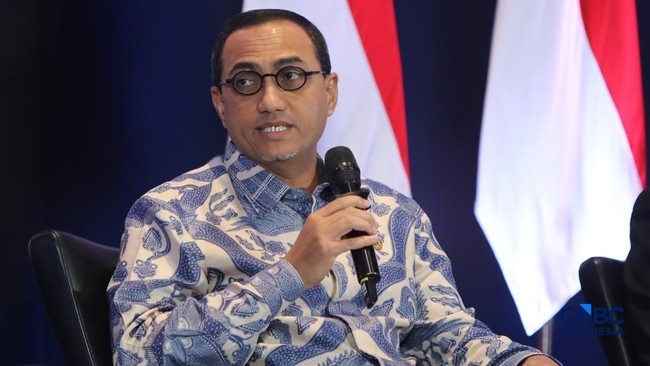
OJK Executive Head of Capital Market, Derivatives, and Carbon Exchange Supervision, Hasan Fawzi, stated that the demutualisation of the Stock Exchange is a vital part of the accelerated reform plan for integrity within the Indonesian Capital Market. He noted that this transformative step will not only change the ownership structure of the Stock Exchange but will also build an exchange that is more transparent, efficient, and innovative.
“The Stock Exchange demutualisation structure, which allows for broad ownership by exchange members, strategic investors, and the public, will encourage improved governance quality, open wider access to capital, and accelerate the development of the Stock Exchange,” Hasan said in a written statement on Monday (21/09/2026).
Under the regulation, IDX shareholders may hold a maximum of 5%. The objective is to prevent dominance, concentration of share ownership, and/or control by a single party, thereby ensuring the independence of the Stock Exchange is maintained.
Furthermore, shareholders are prohibited from holding a majority stake or more than half of the total issued shares of the stock exchange.
“Every party is prohibited from owning a majority stake in the Stock Exchange (more than 50%), whether directly or indirectly, including through their affiliates,” the POJK regulation stated.
The new regulation has been in effect since its promulgation on Thursday (17/09/202<0xA0>26). This is in accordance with Law Number 4 of 2026 (UU P2SK), which mandates the OJK to further regulate Stock Exchange shareholders through Financial Services Authority Regulations (POJK).
POJK 13/2026 serves as the legal foundation for the Stock Exchange to undertake demutualisation steps. This process will transform the ownership structure of the Stock Exchange from being limited solely to exchange members (mutual) to being available to individuals and/or Indonesian legal entities, including both exchange members and non-members (demutual).
The regulation covers key provisions including Stock Exchange shares, the separation of ownership and membership, the implementation of demutualisation, the separation of regulatory, supervisory, and business functions, dividend distribution, and Stock Exchange reporting.
POJK 13/2026 also contains several regulatory substances to guarantee the independence of the Stock Exchange and strengthen OJK supervision, including:
The demutualisation of the Stock Exchange must be carried out while maintaining the independence of the Stock Exchange, market integrity, and the regulatory and supervisory functions of the Stock Exchange by the OJK.
Ownership of the Stock Exchange by parties other than Exchange Members must be conducted while maintaining the independence of the Stock Exchange.
Ownership of Stock Exchange shares by shareholders must be separated from exchange membership.
Shareholders may hold a maximum of 5% (five per cent) of the total issued shares of the Stock Exchange.
OJK approval is required for any share ownership exceeding 5% (five per cent) to prevent dominance, concentration of ownership, and/or control by a single party, ensuring the independence of the Stock Exchange is preserved.
Every party is prohibited from holding a majority stake (more than 50%) in the Stock Exchange, whether directly or indirectly, including through affiliates.
The Board of Directors and Board of Commissioners of the Stock Exchange must be selected and undergo a Fit and Proper Test by the OJK.
Shareholders, the Board of Directors, and the Board of Commissioners of the Stock Exchange must, in the performance of their duties and authority, be subject to the prevailing laws and regulations of the Capital Market.