
IDX declines following Asian market trends amid inflation concerns
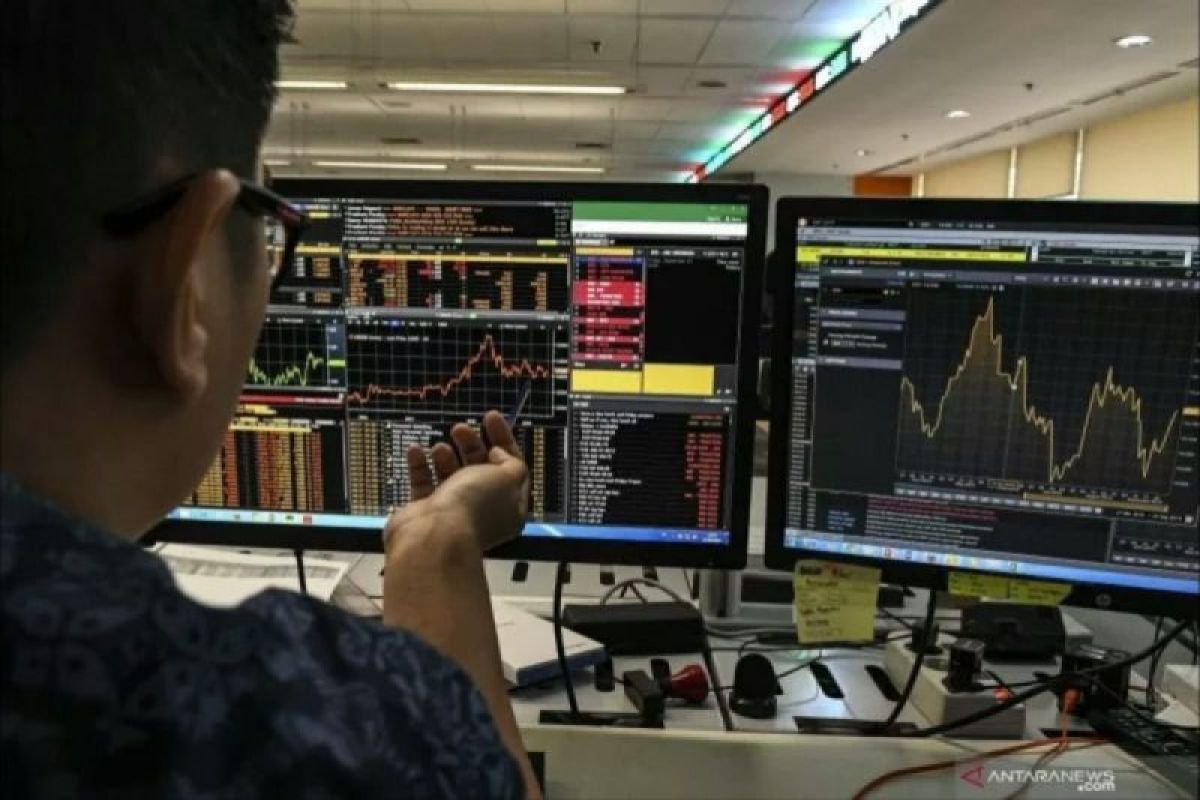
The Indonesia Composite Index (IHSG) on the Indonesia Stock Exchange (IDX) moved downwards on Tuesday, following the decline of Asian and global stock markets.
The IHSG opened lower by 29.05 points, or 0.47 per cent, to the 6,118.81 level. Meanwhile, the blue-chip group of 45 stocks, known as the LQ45 Index, fell by 4.04 points, or 0.66 per cent, to 607.77.
“It is estimated that the IHSG will test its next support level at 6,000-6,100,” stated Ratna Lim, Head of Research at Phintraco Sekuritas, in her analysis in Jakarta on Tuesday.
Internationally, Ratna noted that concerns regarding inflation triggered by energy prices, coupled with anxieties over significant corporate debt issued to fund Artificial Intelligence (AI) infrastructure development and signals of further interest rate hikes by the Fed, have triggered massive sell-offs in US government bonds. The US 10-year Treasury yield rose by more than 5 bps to the 5.234 per cent level on Monday (28/9) amid these inflation fears.
Throughout this week, investors will closely monitor crucial US data that could further influence the outlook for the Fed’s monetary policy, including the US Personal Consumption Expenditures (PCE) Price Index on Wednesday (30/9) as a key inflation indicator.
Additionally, investors are set to watch US labour market data, with the publication of the August 2026 Job Openings and Labor Turnover Survey (JOLTS) scheduled for Tuesday (29/9), followed by the September 2026 Non-Farm Payrolls (NFP) report on Friday (02/10).
Meanwhile, crude oil prices declined from their daily highs on Monday (28/9) following reports that Saudi Arabia has increased operations on its vital East-West pipeline after repairs. Brent crude closed at 108 USD per barrel.
Domestically, the resurgence of oil prices amidst Middle East conflict uncertainty has increased the risk of rising inflation. Should inflation exceed Bank Indonesia’s (BI) target, there are concerns that BI may be forced to raise its benchmark interest rate.
Based on BI’s assessment, every 25 bps increase in the BI Rate is estimated to reduce economic growth by approximately 0.1 per cent, which is why BI currently maintains the BI Rate at 5.75 per cent. BI has also opted to use other instruments to maintain the stability of the Rupiah exchange rate and encourage capital inflows.
Furthermore, the strengthening US Dollar index, driven by high oil prices which fuel expectations of further Fed rate hikes and rising US Treasury yields, poses a potential risk of capital outflow from emerging markets, thereby weakening the Rupiah.
Previously, BI provided hedging cost incentives for capital inflows to encourage foreign investment without needing to raise the BI Rate or SRBI. These hedging incentives, implemented for about a month, have encouraged capital inflows of approximately US$ 6 billion through Domestic Non-Deliverable Forward (DNDF) and swaps.
European markets showed mixed results at the close of Monday (28/09); the Euro Stoxx 50 gained 0.10 per cent, the UK’s FTSE 100 fell 0.10 per cent, the German DAX fell 0.13 per cent, and the French CAC 40 gained 0.01 per cent.
Wall Street indices all declined at Monday’s (28/09) close, with the S&P 500 falling 0.77 per cent to 7,683.69, the Nasdaq Composite dropping 0.92 per cent to 26,820.38, and the Dow Jones Industrial Average losing 0.67 per cent to 51,481.51.
In the regional Asian markets this morning, the Nikkei fell 0.87 per cent to 65,304.00, the Shanghai Index dropped 0.20 per cent to 3,815.78, the Hang Seng declined 0.80 per cent to 24,499.24, the Kospi fell 0.24 per cent to 6,873.13, and the Straits Times Index decreased 0.10 per cent to 5,723.18.