
IDX Composite Suddenly Drops 1% This Afternoon, Driven by Two Global Pressures
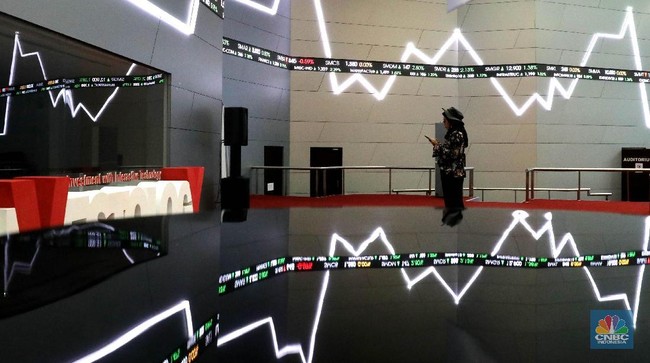
The correction of the Indonesia Composite Index (IHSG) deepened during the second session today, Thursday (10/09/2026). After initially strengthening and breaking through the 6,700 level, the index reversed course to hit a low of 6,590.79, representing a decline of more than 1.2% at approximately 14:30 WIB.
Most listed companies faced pressure, with 524 stocks in the red zone. Only 160 remained in the green, while 279 stocks remained unchanged. The market was characterised by heavy selling pressure, with transaction value reaching Rp 16.53 trillion, involving 33.84 billion shares across 2.14 million transactions.
According to Refinitiv, the healthcare sector saw the deepest decline at 2.27%. This was followed by energy at -1.81%, property at -1.55%, financials at -1.34%, and industrials at -1.32%. Only the utilities sector remained in the green with a 0.14% increase.
Several large-cap stocks acted as the primary drags on the IHSG. BBRI contributed 15.52 points, followed by BBCA with 9.39 points, Bayan Resources (BYAN) with 9.97 points, Dian Swastatika Sentosa (DSSA) with 5.02 points, Amman Mineral (AMMN) with 4.03 points, and Bank Mandiri (BMRI) with 3.47 points.
At least two global sentiments acted as ‘ghosts’ for the IHSG today: the rising price of oil due to escalating Iran-US conflict and the surge in US Treasury yields. The combination of rising Treasury yields and oil prices creates an unfavourable environment for the stock market. High yields increase pressure on stock valuations, while the spike in oil prices reintroduces inflation risks and may limit the room for central banks to ease monetary policy.
Furthermore, the United States is facing increasingly concerning debt issues. US federal government debt has officially surpassed US$40 trillion, setting a new record and serving as a warning regarding the nation’s growing fiscal burden. One impact is already visible in the bond market. The US Treasury is preparing a debt buyback of up to US$6 billion to maintain bond market liquidity. This amount is three times the normal operation, with the initial transactions targeting 10-year and 20-year Treasuries.
However, this policy was met with a negative market response. The 10-year Treasury yield rose to 4.84%, while the 20-year yield reached 5.314% and the 30-year yield breached 5.3%. The 10-year Treasury yield position is the highest since October 2023. This rise in yields is a concern for investors as it increases the attractiveness of US dollar-denominated assets while pressuring the valuation of risky assets, including stocks in emerging markets like Indonesia. Investor Stanley Druckenmiller warned that the more the government attempts to maintain bond prices, the larger the operations required to face market pressure.
Meanwhile, the conflict between Iran and the US has intensified. Iran claims to have attacked 10 ships around the Strait of Hormuz after the US destroyed five Iranian oil tankers. This escalation immediately shook the energy market. Brent crude prices broke above US$100 per barrel for the first time since July. Brent subsequently closed at US$101.21 per barrel, a 3.4% surge, while West Texas Intermediate (WTI) rose 1% to US$97.06 per barrel.
This rise in oil prices has persisted for four consecutive days. The condition heightens market concerns regarding global inflation, as rising energy costs can once again drive up production and transportation costs. The rise in energy prices is even being felt by consumers, with diesel prices in the US hitting a new record above US$5.94 per gallon.