
IDF Seizes 70% of Gaza as UN Security Council Credibility Fades
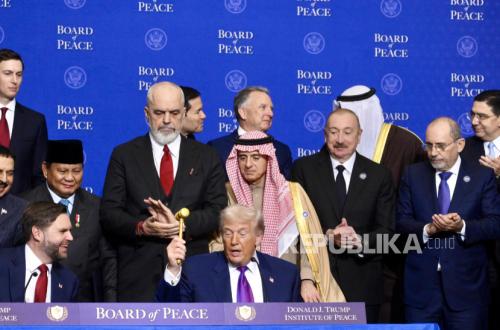
Tel Aviv – Israeli Prime Minister Benjamin Netanyahu’s order for the Israel Defence Forces (IDF) to seize 70% of the Gaza Strip violates the conditions of the 20-point ceasefire proposal put forward by US President Donald Trump, further eroding the credibility of the UN Security Council. Based on the US-mediated ceasefire in October, Israeli forces withdrew to a demarcation line granting Israel direct control over 53% of the occupied territory. Since then, Israeli troops have advanced westward into areas previously controlled by Hamas, declaring a new no-man’s-land zone where they claim the right to determine who can enter and shoot anyone deemed a threat. In recent days, Israel-backed armed militias have taken the lead in clearing areas along the ceasefire line, ordering residents to evacuate their homes or shelters. Over the eight-month ceasefire, Israeli forces have continued to shoot Palestinians within the “yellow line” demarcation and launched airstrikes deeper into western Gaza, killing over 900 Palestinians since the truce began. Israel’s military expansion would directly breach the October ceasefire, the UN Security Council resolution supporting it, and Trump’s 20-point peace plan, which established a temporary “yellow line” dividing Gaza into Israeli and Hamas-administered zones pending further negotiations. Trump’s plan also stated: “No one will be forced to leave Gaza, and those wishing to leave will be free to do so and return. We will encourage people to stay and offer them the chance to rebuild a better Gaza.” “Netanyahu has now declared Trump’s entire agreement, the framework for Gaza, null and void. In short, that’s the message. There’s no other way to put it,” said Muhammad Shehada, a researcher at the European Council on Foreign Relations, as reported by The Guardian. Israeli forces have systematically destroyed remaining structures in their zones, meaning that the 2.2 million Palestinians who survived the war would be crammed into less than a third of their original territory, which is already overcrowded. “The conditions there are dire. It is the most densely populated place on Earth,” Shehada said. “Every square metre houses a refugee family, emergency tents, or makeshift shelters. This will be a death sentence for many with nowhere to go.” The actions threaten the fragile ceasefire and worsen humanitarian conditions in the already devastated region. Speaking at a conference in the occupied West Bank, Netanyahu, who is fighting for political survival ahead of upcoming elections, outlined Israel’s territorial ambitions. “We are currently pressuring Hamas. We now control 60% of the Gaza Strip. We initially had 50%, then 60%. My directive is to seize 70% as soon as possible,” Netanyahu said yesterday, as reported by The Guardian. Defence Minister Israel Katz stated on Wednesday that the government’s main goal is for a large number of Palestinians to leave Gaza through what he called “voluntary migration.” However, human rights activists describe this as a long-term plan for ethnic cleansing by making life in Gaza unbearable. An Israeli military spokesperson referred questions about Netanyahu’s 70% threat to “political echelons.” Israeli forces continue to expand their control during the ceasefire. A UN briefing on Sunday to humanitarian agency heads in Gaza noted recent encroachments. In the northern Jabalia district, a UN presentation seen by The Guardian stated: “Tank movements [reported] daily – drones target any movement near the yellow line.” Israeli tanks have also reportedly advanced east towards the southern city of Khan Younis. The UN briefing referenced Israel-backed anti-Hamas militias led by Gaza warlord Ashraf al-Mansi, who said they had moved west of the yellow line around Jabalia last week.
Source: jawawa.id (https://jawawa.id/newsitem/idf-seizes-70-of-gaza-as-un-security-council-credibility-fades-1780020018)
Originally published by Republika (https://news.republika.co.id/berita/tfrwim393/idf-caplok-70-persen-gaza-bop-makin-tak-berguna), translated from Indonesian