
IDEAS Warns of Risks in Classifying Ride-Hailing Drivers as MSMEs
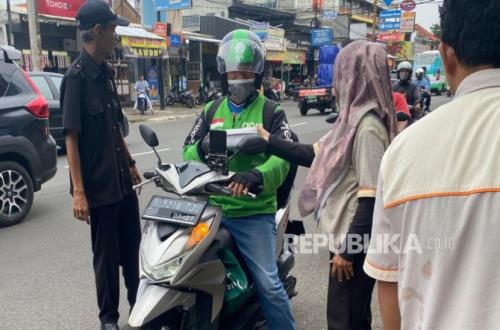
JAKARTA — Research institute the Institute for Demographic and Affluence Studies (IDEAS) has urged the government to review policies that would place online motorcycle-taxi (ojol) drivers in the micro, small and medium-sized enterprise (MSME) category.
IDEAS researcher Muhammad Anwar said the policy could not only blur the employment relationship between drivers and app companies, but also carry systemic risks: adding new debt burdens for drivers and potentially triggering widespread defaults if drivers were pushed into the MSME category primarily to expand access to loans such as the People’s Business Credit (KUR) scheme.
“Before classifying ojol drivers as MSMEs and expanding their access to loans, including through KUR, their economic circumstances and ability to repay must first be considered. Most ojol drivers are already in a fairly serious state of debt,” Anwar said in a written statement on Wednesday (30 September 2026).
An IDEAS survey on the economic conditions and debt holdings of online motorcycle-taxi drivers, conducted among 531 drivers in 51 regencies and cities across 13 provinces from 23 to 27 August 2026, found that 91 per cent had outstanding loans or instalments. In other words, nine in ten surveyed drivers currently have financial obligations to meet.
“This data confirms that debt is no longer an issue affecting only a small number of drivers; it is now widespread across the ojol population,” Anwar said.
The survey also found that 57.97 per cent of indebted drivers had more than one source of borrowing. Some drivers had debt across as many as seven different channels.
The sources of borrowing ranged from instalment financing for productive equipment such as motorcycles (43.89 per cent) and online loans (43.27 per cent), the two largest sources, to borrowing from relatives (40.58 per cent), buy-now-pay-later apps (31.06 per cent), banks (26.71 per cent), cooperatives (16.15 per cent) and moneylenders (7.45 per cent).
“Debt spread across various lending channels is a common pattern among groups with limited access to finance but urgent and substantial needs,” Anwar said.
He added that the figures showed drivers’ financing did not rely on a single channel, but was spread across formal and informal sources — a pattern commonly seen among people with limited financial access and pressing needs.
The situation becomes more serious when the outstanding amounts are considered. Among respondents with debt, 45.96 per cent had at least Rp10 million in remaining repayments. A further 25.67 per cent — one in four indebted drivers — owed more than Rp20 million.
“This shows that drivers are taking on financing obligations that are not small, while most have net daily incomes of less than Rp100,000,” Anwar said.
More worryingly, the debt was not used solely for productive activities. Of respondents with debt, 56.31 per cent used it to cover day-to-day needs, while 31.88 per cent borrowed to repay earlier debts.
Source: jawawa.id (https://jawawa.id/newsitem/ideas-warns-of-risks-in-classifying-ride-hailing-drivers-as-msmes-1793937059)
Originally published by Republika (https://news.republika.co.id/berita/to2944451/ideas-ingatkan-risiko-kebijakan-ojol-jadi-umkm), translated from Indonesian