
IDAI introduces 4P method for first aid on children
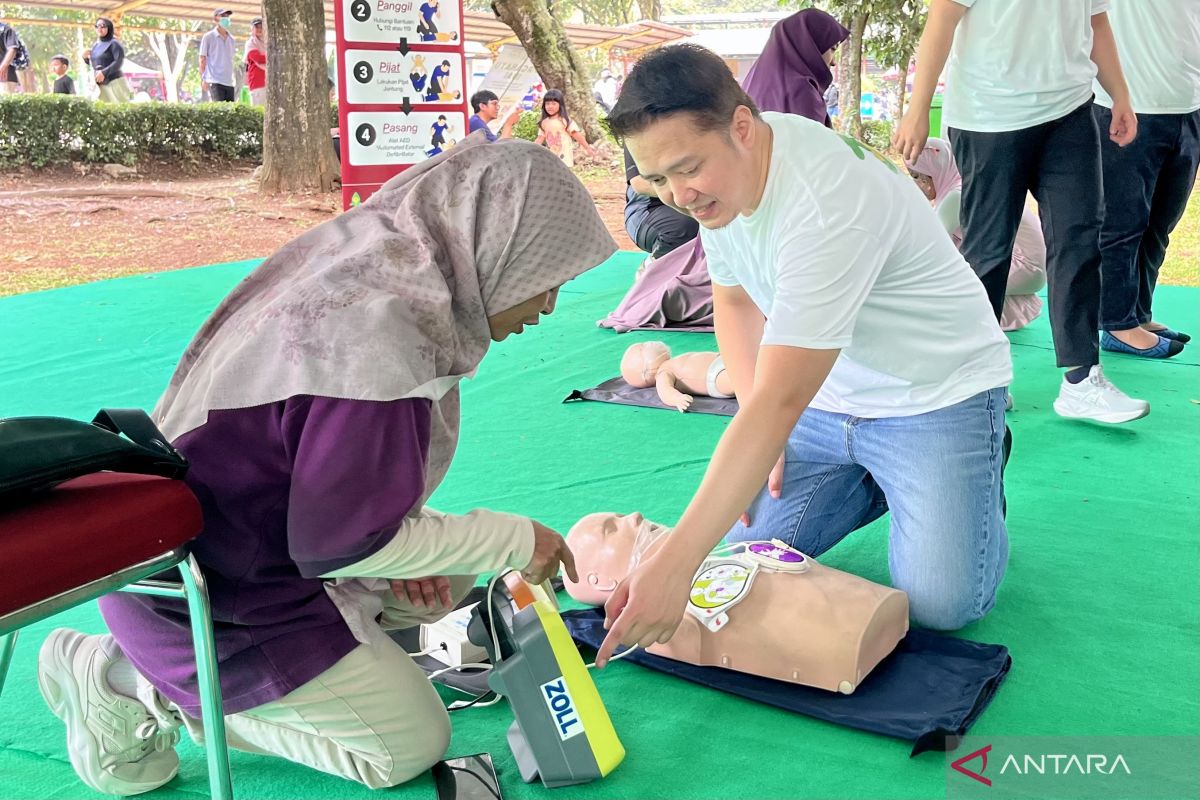
Jakarta (ANTARA) - The Indonesian Pediatric Society (IDAI) has introduced the 4P method as a simple guide for the public to provide first aid to children experiencing emergency conditions before receiving medical assistance.
The Head of the Emergency and Intensive Care Coordination Unit (ETIA) of IDAI, Dr Yogi Prawira, Sp.A., Subsp.ETIA(K), stated that Basic Life Support (BLS) skills are essential for the public to possess, as the first person on the scene during a child’s emergency is often not a healthcare professional.
“You may often hear news of children drowning, choking, or suffering electric shocks. During an emergency, those around the child are often not medical professionals, but parents, teachers, or even passers-by,” said Yogi during the peak event of IDAI’s 72nd anniversary at Ragunan Zoo, Jakarta, on Sunday.
According to him, IDAI developed a method that is easier for the public to understand to help them remember the steps of Basic Life Support when facing emergency situations.
“Because BLS algorithms are numerous and mostly in English, we at IDAI have developed an algorithm that is quick and easy to respond to. The principle is simple, namely 4P: Periksa (Check), Panggil (Call), Pijat (Massage), and Pasang (Attach),” he said.
If a child does not respond, the public can proceed to the second step, Call, by immediately contacting emergency services via 112 or 119 and requesting medical assistance.
The next step is Massage, or performing cardiopulmonary resuscitation (CPR) according to the child’s age. For infants under one year old, massages are performed using two thumbs in the centre of the chest, while for older children, one or two hands can be used.
The final stage is Attach, which involves using an Automated External Defibrillator (AED) if the device is available at the scene.
He noted that the AED is designed to be used by laypeople as it is equipped with voice instructions that guide the user through the rescue process.
He added that the 4P method can be applied to various emergency conditions that cause a child to become unconscious, stop breathing, or become unresponsive, including drowning, choking, or electric shocks.
“The principle is, this Basic Life Support is performed when a child is unconscious, not breathing, and not responding, regardless of the cause,” he said.
Basic Life Support education is one of the activities organised by IDAI during its 72nd anniversary celebrations as an effort to improve the public’s ability to handle emergency situations involving children.