
IDAI: Children Exposed to Forest and Land-Fire Smoke Risk Stunting
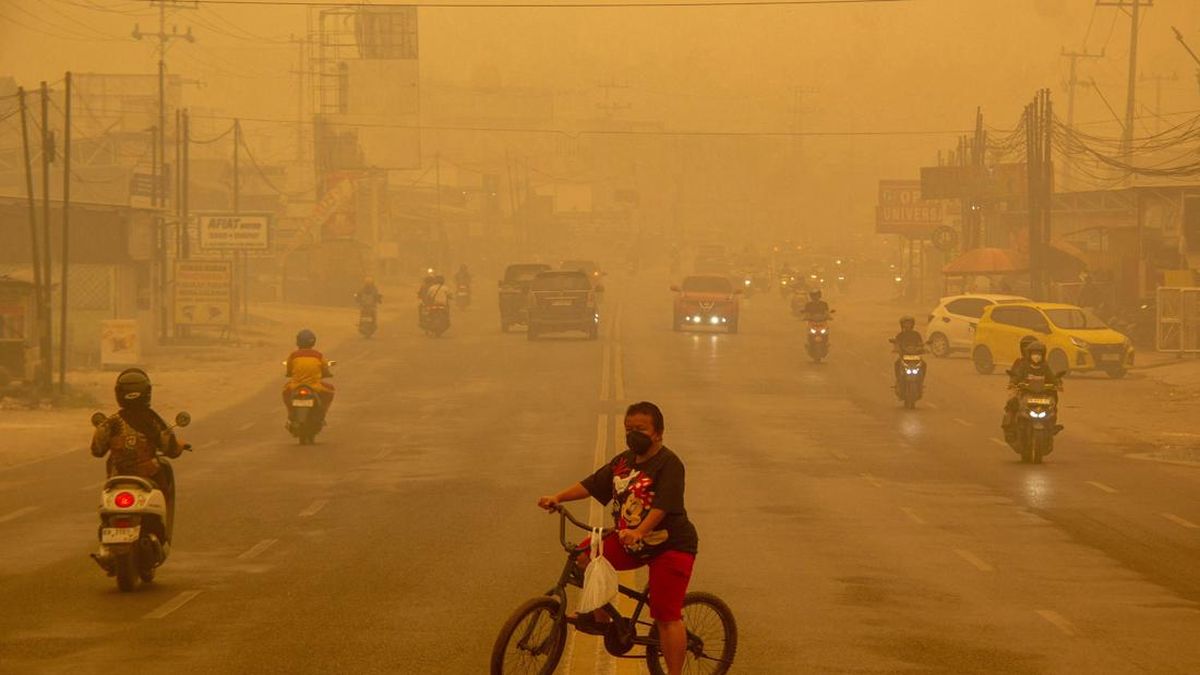
The Indonesian Paediatric Society (IDAI) says children directly exposed to smoke from forest and land fires are at risk of permanent disruption to lung growth and stunting.
Dr Nastiti Kaswandani, a member of IDAI’s Respiratory Medicine Coordinating Work Unit, explained that the effects of exposure to forest and land-fire smoke extend beyond acute respiratory problems.
“Children exposed over a prolonged period are at risk of permanent impairment of lung growth, an increased risk of persistent asthma and chronic obstructive pulmonary disease, which can lead to stunting, as well as possible disruption to brain and cognitive development,” she said in Jakarta on Saturday (31 October), as quoted by Antara.
Nastiti said studies of Indonesia’s 1997 fires found lower lung capacity for as long as 10 years afterwards, as well as a higher risk of persistent asthma and chronic obstructive pulmonary disease (COPD).
Exposure in the womb can also affect children’s growth, with effects lasting for 10 and 17 years, including an increased risk of stunting. Other evidence points to possible effects on cognitive attainment, lower IQ, and behavioural and memory problems.
In response, Nastiti stressed the importance of planning for the long-term effects of chronic exposure to forest and land-fire smoke among children.
“Close, long-term monitoring of affected children is needed,” she said.
She outlined four measures. First, monitor children’s growth and development by regularly measuring their height and weight, and watch for developmental delays.
Second, monitor their breathing by keeping track of recurring coughs or wheezing, assessing asthma control, and conducting spirometry or lung-function tests where possible.
Third, strengthen prevention through complete immunisation, good nutrition, smoke-free homes and the adoption of clean and healthy living practices. Fourth, advocate for environmental measures, including air-quality monitoring, clean-air spaces in schools and forest- and land-fire prevention.
Protecting children from the effects of forest and land fires, she said, means protecting the future generation of leaders.
“Protect the future generation of leaders. Our children are ‘Their Name Is Today’ — they deserve a healthy childhood, not to be victims of poisonous air,” Nastiti said.
Meanwhile, the University of Indonesia (UI) and the UI Alumni Association of the Master’s Programme in Occupational Medicine (ILUNI MKK) are planning a study into the longer-term health effects on workers and communities following forest and land fires. The initiative aims to strengthen the scientific basis for sustained health protection.
Anna Rozaliyani, dean of UI’s Faculty of Medicine, said in Jakarta on Saturday that human health must be an integral part of environmental protection and responses to forest and land fires.
She said the fires required a collaborative response from multiple parties so that scientific knowledge could be translated into practical protective measures.
“This is a matter of health, safety and the future of our generations. We must not only react when a disaster occurs. Preventing exposure, identifying health risks early and providing appropriate follow-up must be strengthened through scientific evidence and cross-disciplinary collaboration,” Anna said.
The planned study will assess health conditions one to three months after an incident, focusing on lingering respiratory symptoms and other health complaints relevant to exposure.
The research will be coordinated through the Occupational & Environmental Health Cluster at IMERI, the Faculty of Medicine’s Indonesian Medical Education and Research Institute, and the faculty’s Department of Community Medicine. Its findings are expected to support the development of education, screening and health monitoring tailored to the needs of affected groups.
The one-to-three-month observation period is the focus of the planned study and does not, in itself, represent the full range of long-term health effects.
Through the integration of education, research and community service, the university says it is committed to strengthening the contribution of medical science to public health in Indonesia and promoting integrated, sustainable efforts to prevent and address the health effects of forest and land fires.
Source: jawawa.id (https://jawawa.id/newsitem/idai-children-exposed-to-forest-and-land-fire-smoke-risk-stunting-1793454653)
Originally published by CNN Indonesia (https://www.cnnindonesia.com/nasional/20261031193252-20-1421842/idai-anak-terpapar-asap-karhutla-berisiko-alami-stunting), translated from Indonesian