
ICW Urges Distinction Between Temporary Seizure and Permanent Forfeiture in Asset Forfeiture Bill
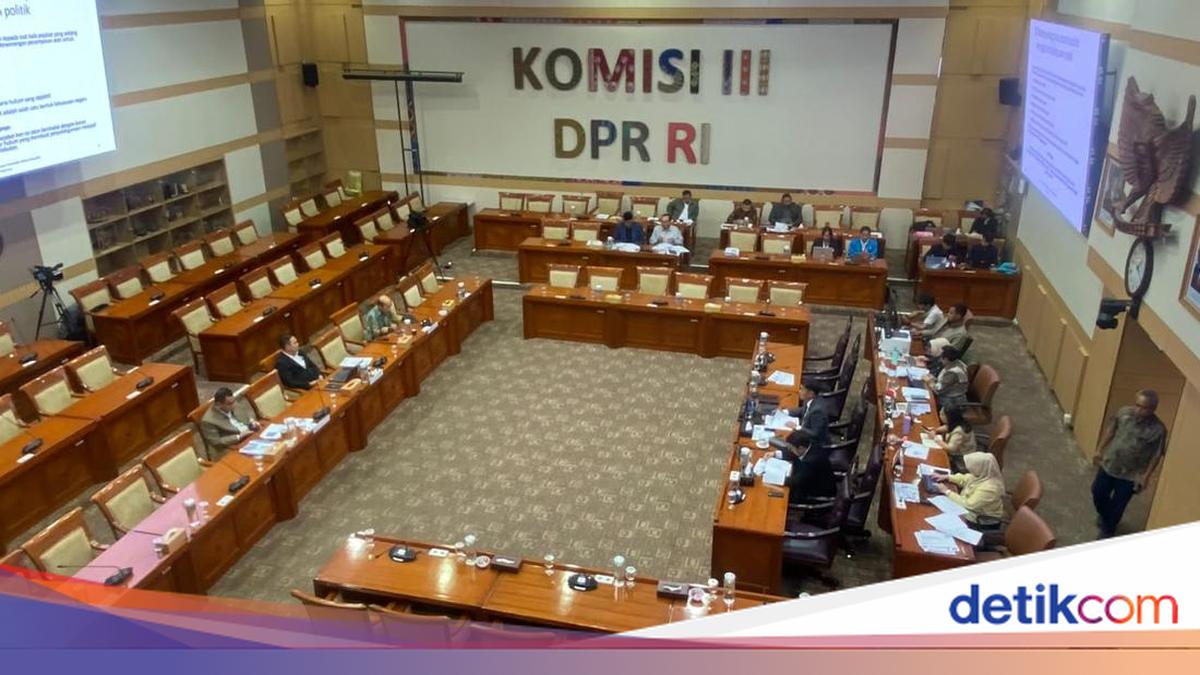
Indonesia Corruption Watch (ICW) researcher Bambang Melantun stated that the Asset Forfeiture Bill must clearly differentiate between temporary seizure and permanent forfeiture. He emphasised that permanent forfeiture must be decided by an independent court.
“The first legal principle is that permanent asset forfeiture must be decided by an independent court. Therefore, the law must clearly distinguish between temporary seizure, which must have a time limit, and permanent forfeiture,” Bambang said during a public hearing with House of Representatives Commission III at the parliamentary complex in Senayan, Jakarta, on Tuesday (11 August 2026).
Bambang explained that the state can freeze assets quickly to minimise the risk of them being sold or transferred while awaiting a court decision. He cautioned that investigators, prosecutors, police, or other administrative bodies must not have the final authority to determine that a citizen loses their property rights.
He also stressed the importance of the state bearing both the initial and final burden of proof. According to him, an asset owner should not be required to prove their innocence simply because an investigator deems their wealth “suspicious”.
“The state must first prove, using valid evidence, first, which asset is the object; second, what criminal act or unlawful conduct is alleged; third, when the act occurred; and fourth, the factual connection between the asset and the unlawful act,” Bambang stated.
“Only after this evidentiary threshold is met can the owner be asked to explain the lawful origin of a particular asset,” he added.
Bambang emphasised that the state must not assume that assets a owner cannot explain are the proceeds of crime. He cited examples such as errors in tax reporting and inaccuracies in the State Officials’ Wealth Report (LHKPN).
Regarding these points, Bambang affirmed that asset forfeiture without a criminal conviction can be justified under certain conditions, such as when a suspect dies, when a suspect is known to have fled from ongoing legal proceedings, or when a perpetrator cannot be brought to court for specific reasons clearly defined by law.
“However, these circumstances must be clear and limited categories, not formulations that provide overly broad discretionary space,” he concluded.