
ICW: Unsoed Rector Sting Operation Exposes Weak Governance in Higher Education
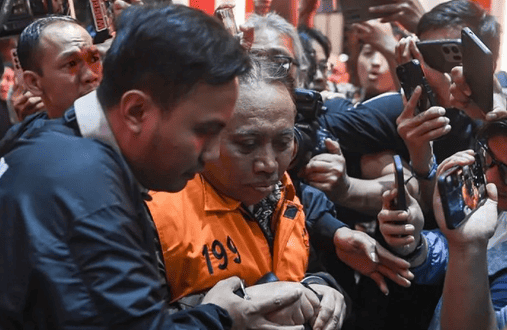
The sting operation (OTT) conducted by the Corruption Eradication Commission (KPK) against the Rector of Universitas Jenderal Soedirman (Unsoed) on Friday (21/8) has become a serious wake-up call for the higher education sector. The case, allegedly linked to bribery in new student admissions at the Faculty of Medicine, is considered not merely an individual violation but a reflection of the fragility of internal oversight systems within universities.
Indonesia Corruption Watch (ICW) has stressed that the incident at Unsoed adds to a long list of corrupt practices in the academic sphere. Based on data compiled by ICW from 2006 to 2025, the higher education sector has recorded at least 60 corruption cases. The impact has been substantial, with total state losses reaching Rp446.892 billion and bribe values amounting to Rp4.4 billion.
ICW’s Public Education Division Coordinator, Nisa Rizkiah Zonzoa, revealed worrying facts about the profile of the perpetrators. Of the 60 cases, at least 188 individuals were identified as being involved. The majority came from within the higher education ecosystem itself, rather than external parties.
ICW’s data shows the involvement of various layers of the academic community. ‘The data shows that corruption in higher education does not only involve external parties such as the private sector, but the largest number of perpetrators is contributed by various layers of the higher education ecosystem itself,’ said Nisa in her statement on Saturday (22/8).
ICW highlighted that the risk of corruption increases in line with the greater authority over budget management and non-academic affairs granted to universities. Since the enactment of Law Number 12 of 2012 on Higher Education, universities have enjoyed broad autonomy, whether in the form of Public Service Agencies (BLU) or State Universities with Legal Entity status (PTN-BH).
Although autonomy is necessary for institutional development, ICW considers that the granting of such authority has not been accompanied by adequate control mechanisms. Without strong transparency and accountability, autonomy has the potential to become a dark space for the abuse of power.
In response to the recurrence of similar cases, ICW is urging that the handling of corruption on campus should not stop at legal action against individual perpetrators. Radical steps are needed to systematically improve governance.
Several proposed improvement points include strengthening internal oversight, enhancing transparency and accountability in budget management, and reforming the governance of non-academic affairs. ‘The recurrence of corruption cases in higher education cannot simply stop at the prosecution or arrest of the perpetrators. There must be systematic governance reform,’ concluded Nisa.
Source: jawawa.id (https://jawawa.id/newsitem/icw-unsoed-rector-sting-operation-exposes-weak-governance-in-higher-education-1787385042)
Originally published by Media Indonesia (https://mediaindonesia.com/politik-dan-hukum/924727/icw-ott-rektor-unsoed-buktikan-lemahnya-tata-kelola-perguruan-tinggi), translated from Indonesian