
ICW Insists Illicit Enrichment Must Be Included in Asset Forfeiture Bill
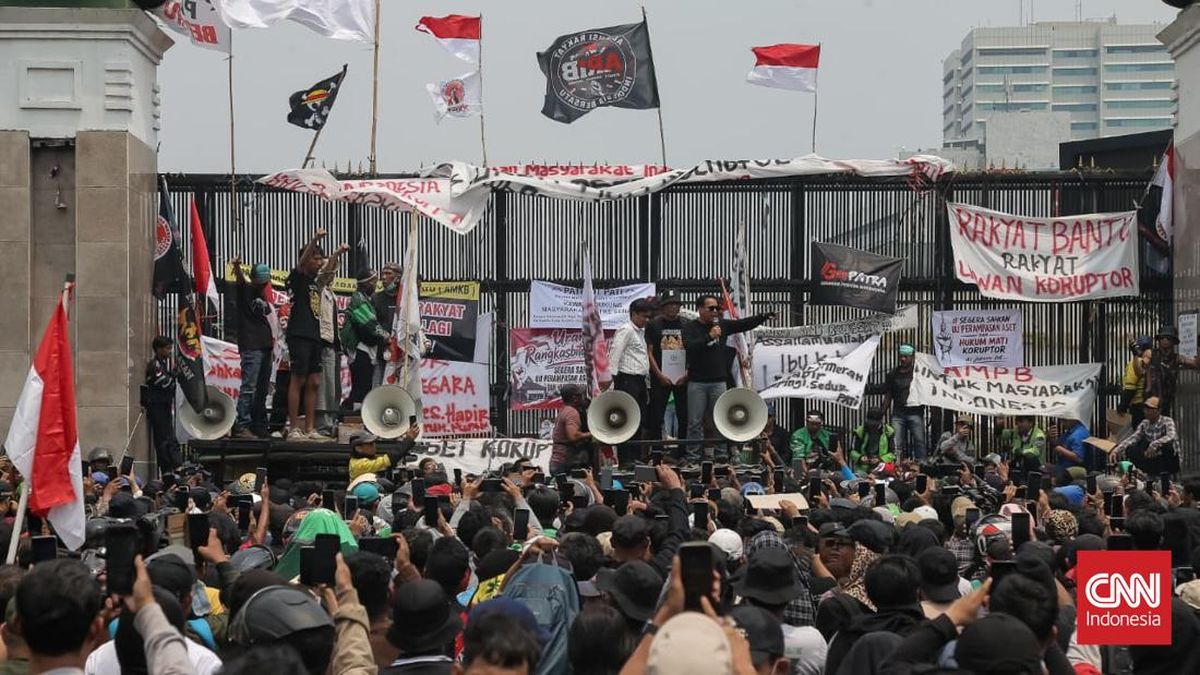
Indonesia Corruption Watch (ICW) has stressed the need to include the concept of illicit enrichment in the Asset Forfeiture Bill.
“Is it necessary? ICW’s answer is yes. ICW and the civil society coalition have held the same position from the outset: the forfeiture of unexplained wealth (illicit enrichment) must be regulated in the Asset Forfeiture Bill,” Ibrahim, head of ICW’s Law and Investigation Division and programme manager, said when contacted on Tuesday (27 October).
Ibrahim said that public officials whose wealth exceeds their lawful income and who cannot explain its origins should be suspected of holding proceeds of crime, such as bribes or gratuities. He said this was a crucial issue in deliberations on the Asset Forfeiture Bill.
“This is the essence of the Asset Forfeiture Bill, not an add-on,” he said.
He also referred to the government’s 2023 draft of the bill, which included illicit enrichment in Article 5(2). He suspected, however, that the provision had been omitted from the version drafted by the House of Representatives (DPR RI) on 10 July 2026.
“Without this article, suspicious assets held by officials remain safe as long as there is no case against them,” he said.
Ibrahim said Indonesia already had a tool for measuring officials’ wealth: the State Officials’ Wealth Report (LHKPN).
“The LHKPN must not become merely an administrative formality,” he said.
Ibrahim added that the provision on illicit enrichment would govern asset forfeiture, not the criminal punishment of an individual. Any suspected criminal offence would still have to be proven through a separate criminal process.
He also said public officials had been required to submit to scrutiny of their wealth before, during and after holding office since the enactment of Law No. 28 of 1999.
In his view, concerns about arbitrary action should be addressed through precise drafting, not by removing an important provision. This should include clearly defining the subjects covered, the relevant parameters and the burden of proof.
“The subjects, parameters and burden of proof must be clear in the article and not left to a judge’s interpretation,” he said.
He added that coercive measures, such as freezing and seizing assets, should also be subject to judicial oversight.
Ibrahim therefore reiterated that the DPR and the government should promptly make the draft and the bill’s List of Issues (DIM) public.
“So the public can judge for itself whether this article has been reinstated,” he said.
The concept of illicit enrichment remains under discussion in meetings of Commission III of the DPR as deliberations on the Asset Forfeiture Bill continue, with passage planned for 15 December.
During the bill’s deliberations, several lawyers and lecturers have also opposed including illicit enrichment. Yadi Surya Diputra, executive director of the Open Parliament Institute, for example, has rejected the proposal, saying it could worsen the public image of officials.
Yadi also argued that increases in public officials’ wealth are not easy to measure. Although illicit enrichment is covered by Article 20 of the United Nations Convention against Corruption (UNCAC), he said, the article is only a consideration and does not require countries to adopt the concept.
Yupen, a representative of the Network of Lawyers and the Anti-Criminalisation Community (JAMAK), has also opposed the concept’s inclusion in the Asset Forfeiture Bill. He said it could undermine the presumption of innocence and affect human rights.
Yupen also said there was no guarantee that illicit enrichment would apply only to public officials. He noted that in some countries the measure had also been used against businesspeople and political opponents.
The Asset Forfeiture Bill has had a long history, beginning with its preparation initiated by the Financial Transaction Reports and Analysis Centre (PPATK) in 2008.
The bill was also included among the pledges in Joko Widodo and Jusuf Kalla’s Nawa Cita programme during the 2014 election campaign. However, it was not until May 2023 that Widodo issued a presidential letter, together with an academic paper and official draft, and submitted it to the DPR as a government-initiated bill.
The 2019–2024 DPR never deliberated on it before its term ended in September 2024.
A year later, the DPR instead took over the bill as its own initiative, meaning the draft and academic paper that had been available since 2023 had to be redrafted from scratch.
Source: jawawa.id (https://jawawa.id/newsitem/icw-insists-illicit-enrichment-must-be-included-in-asset-forfeiture-bill-1793152311)
Originally published by CNN Indonesia (https://www.cnnindonesia.com/nasional/20261027225943-12-1420348/icw-tegaskan-illicit-enrichment-wajib-masuk-ruu-perampasan-aset), translated from Indonesian