
ICW Highlights Rampant Trading of BPK Audit Opinions After Muara Enim Corruption Case
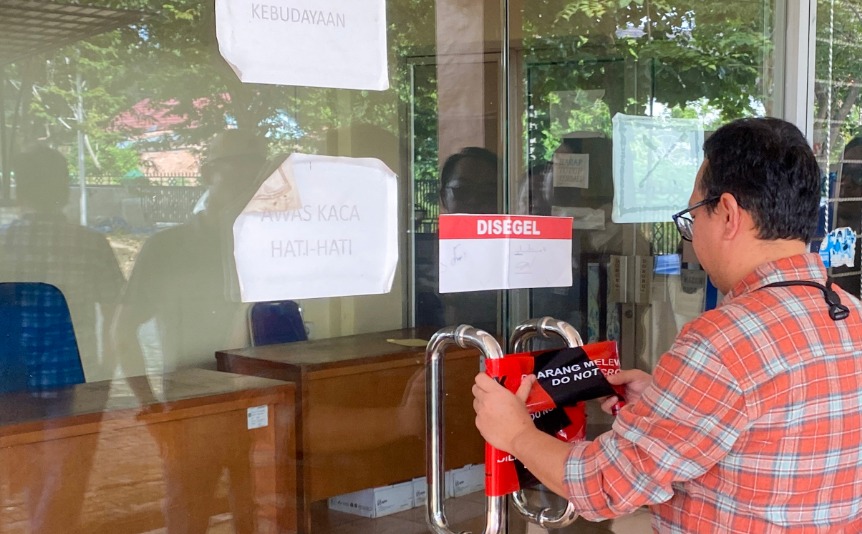
The alleged corruption case in Muara Enim Regency, which once again implicates elements of the Audit Board of Indonesia (BPK), is seen as indicating serious issues in the governance of state financial audits. Indonesia Corruption Watch (ICW) assesses that the practice of buying and selling audit opinions has occurred repeatedly, threatening the credibility of the financial auditing institution.
ICW Investigation Staff, Azhim, stated that audit opinions, which should serve as indicators of regional financial management, have instead transformed into commodities for trade. “Corruption cases involving the BPK continue to recur with similar modes of operation, namely the sale of audit opinions. The WTP (Unqualified Opinion) status is no longer interpreted as the result of good financial management, but is instead pursued by regional heads as a ticket to obtain fiscal incentives and a tool for political branding,” Azhim told reporters on Sunday.
According to ICW, the policy of cutting Transfers to Regions and Village Funds (TKDD) due to findings of financial irregularities also has the potential to create new loopholes for corruption. This is because the policy is deemed not to address the root causes of regional corruption. “Cutting transfers to regions under the pretext of financial management irregularities does not touch the root of regional head corruption, which is high political costs and weak regional oversight. This policy instead encourages local governments to compete in purchasing WTP status to appear competent and to secure incentive funds and additional TKDD,” he said.
ICW also highlighted the light sentences imposed on several BPK officials involved in corruption. According to Azhim, low verdicts do not provide a deterrent effect and could potentially trigger similar practices in the future. “Achsanul Qosasi, a former Member of BPK’s Group III proven to have been involved in BTS corruption, was only sentenced to 2.5 years in prison. Such a low sentence fails to serve as an early warning system and instead provides encouragement to other BPK officials with similar intentions,” he added.
Furthermore, ICW assesses that the recruitment process for BPK leadership remains heavily influenced by political interests. This condition is believed to create conflicts of interest because state auditors are selected by the very institutions that are subject to audit. “The majority of BPK leaders caught in corruption stem from political parties or are former members of the DPR. State auditors are chosen by the parties they are supposed to examine. A conflict of interest exists from the very entry point,” said Azhim.
On the other hand, ICW believes that BPK’s internal oversight mechanism is not functioning effectively. This is evident from several corruption cases that were only uncovered through enforcement operations by law enforcement agencies. “Almost all cases were exposed through sting operations by the KPK or the Attorney General’s Office, rather than by the BPK Code of Ethics Honour Board. The auditing institution has proven unable to audit itself,” Azhim noted.
Based on these findings, ICW is urging a comprehensive overhaul of the oversight system, the leadership recruitment mechanism, and law enforcement against corrupt actors within the BPK environment to restore public trust in the institution.
Source: jawawa.id (https://jawawa.id/newsitem/icw-highlights-rampant-trading-of-bpk-audit-opinions-after-muara-enim-corruption-case-1781423434)
Originally published by Media Indonesia (https://mediaindonesia.com/politik-dan-hukum/900364/icw-soroti-maraknya-jual-beli-opini-audit-bpk-usai-kasus-korupsi-muara-enim), translated from Indonesian