
ICJR: Correctional Centres Strategic in Realising Restorative Justice Paradigm
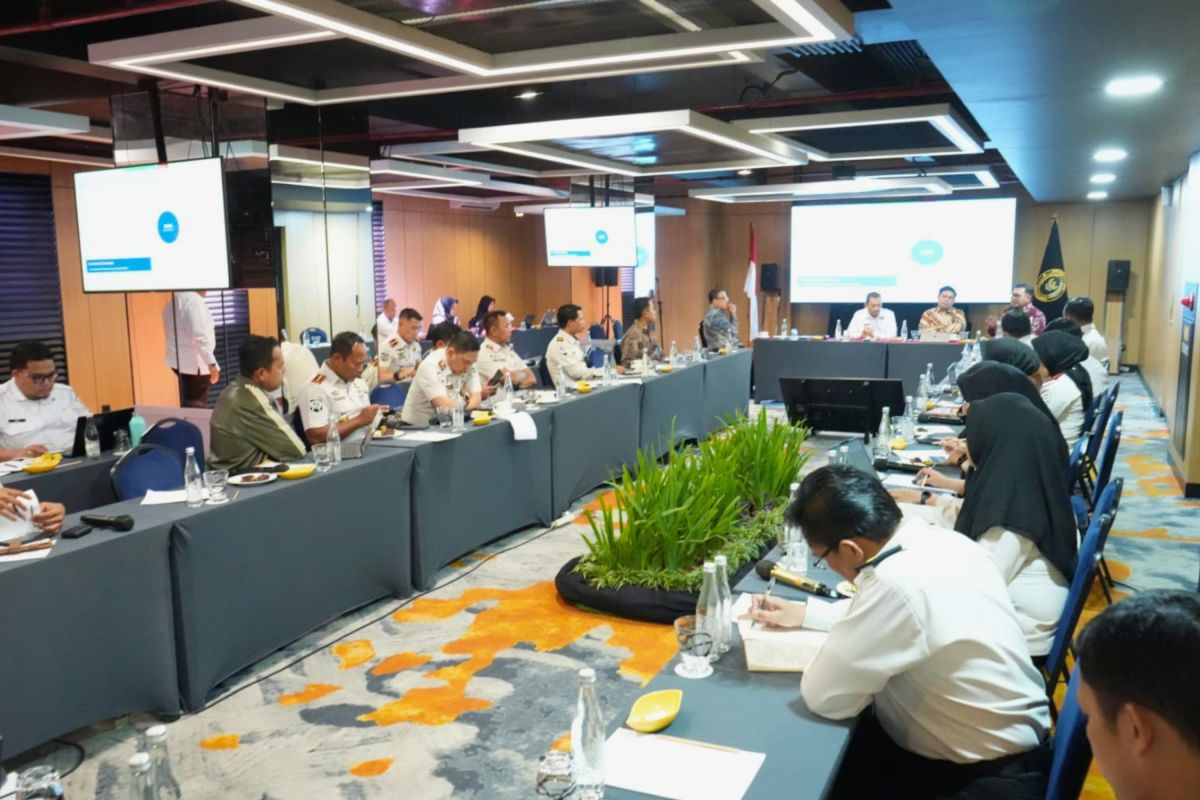
Institute for Criminal Justice Reform (ICJR) Executive Director Erasmus Napitupulu has asserted that Correctional Centres (Bapas) hold a strategic position in realising a more restorative sentencing paradigm through the implementation of non-custodial penalties. During a meeting held by the Coordinating Ministry for Law, Human Rights, Immigration, and Corrections in Tangerang, Banten, on Wednesday (1/7), he stated that the successful implementation of the Criminal Code (KUHP) and Criminal Procedure Code (KUHAP) depends heavily on the readiness of Bapas as an institution responsible for community research, guidance, supervision, and social reintegration. “Without institutional strengthening, various alternative sentencing instruments risk becoming norms that are difficult to implement effectively,” Erasmus said.
Echoing this view, Taufik Tri Prabowo, Head of the Sub-directorate for Programme Strategy and Funding Framework at the Directorate of Corrections System and Strategy, assessed that strengthening Bapas should not be interpreted merely as constructing new offices, but rather as building state capacity to implement a modern sentencing paradigm. Meanwhile, Iman Budiman, Assistant Deputy for Law, Human Rights, Immigration, and Corrections at the Ministry of State Secretariat, explained that the government’s building efficiency policy encourages the optimisation of state assets to accelerate the establishment of Bapas. “Infrastructure needs for Bapas can still be met through various alternatives, such as renovating existing buildings, loan-use mechanisms, or grants from regional governments, so that the acceleration of Bapas formation can proceed as needed,” Iman stated.
In line with this, Ambi Gultom from the Directorate General of State Assets at the Ministry of Finance revealed that the management of State Property (BMN) has various schemes that can be utilised to support government institutional needs. He noted that cross-ministerial and regional government coordination is a key factor in optimising the use of state assets to accelerate the formation of Bapas. Consequently, the establishment of Bapas posts in various regions is seen as a strategy to bring services closer to the community while supporting the implementation of the KUHP and KUHAP. Dwinastiti added that beyond the provision of buildings, human resource needs, particularly for Community Guidance Officers (PK), are a major concern as the current numbers are still far from the ideal requirement. The discussion further focused on strengthening the institutional capacity of Bapas as the foundation for implementing the KUHP and KUHAP, with speakers assessing that the challenges of legal reform implementation involve not only increasing the number of Bapas offices but also strengthening regulations, human resources, governance, information systems, and cross-sector coordination.