
Ice Seller in Java Built a Fortune Worth Nearly Rp10 Trillion
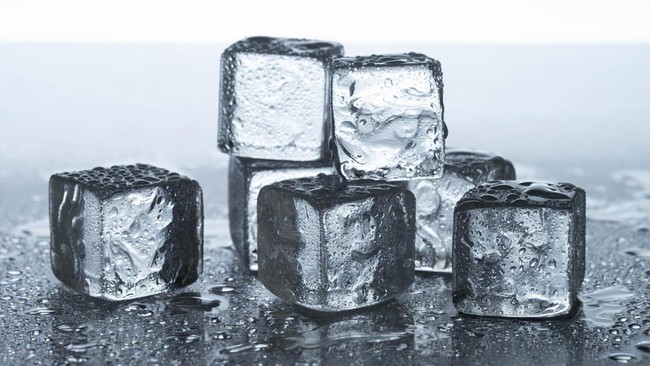
Who would have thought that the seemingly simple ice trade once served as the source of extraordinary wealth in Indonesia? An ice entrepreneur on Java amassed a fortune estimated to be worth nearly Rp10 trillion when calculated using today’s rice prices.
He was Tasripin, a businessman from Semarang who was known as one of the wealthiest people during the Dutch colonial period. His success shows that the ice trade, now commonplace, was once a highly profitable business.
Tasripin’s wealth was reported in the newspaper De Nieuwe Vorstenlanden on 8 September 1919. When he died that year, his estate was said to amount to 45 million guilders, an enormous sum at the time.
A litre of rice then cost just six cents. That meant 45 million guilders could buy 750 million litres of rice. At today’s price of around Rp13,000 per litre, Tasripin’s wealth would be equivalent to Rp9.7 trillion, or nearly Rp10 trillion.
He amassed that fortune by selling ice. During Tasripin’s lifetime, ice was difficult to obtain because refrigerators and cooling machines did not exist. As a result, ice was highly sought-after, sold at high prices and consistently in demand.
Anyone who established an ice factory could therefore become wealthy, Tasripin included. The daily De Locomotief reported on 25 July 1902 that his factory was located in Ungaran, Semarang.
Eight years later, he established another ice factory in the Petelan area of Semarang. De Locomotief reported on 5 September 1910 that it was the largest in the area and was run directly by Tasripin, who was born in 1834.
Tasripin also diversified into other businesses, including a slaughterhouse and the buying and selling of animal hides. These ventures added further to his wealth.
He earned 30,000 to 40,000 guilders a month. It was little wonder that he owned many houses and plots of land in Semarang, while his ice factories became increasingly widespread.
Tasripin’s career as an ice entrepreneur ended when he died in 1919. His family continued the business, although its subsequent history is unclear. He is remembered as one of Indonesia’s wealthiest Indigenous people, having started out in the ice trade.
Other ice kings
Tasripin was not the only ice seller to achieve wealth and success. Kwa Wan Hong, another Semarang ice entrepreneur who lived in the same era, was not as rich as Tasripin but went down in history as an ‘ice king’.
Kwa established Indonesia’s first ice industry. In 1895, he founded an ice factory called Hoo Hien. Historian Denys Lombard writes in Nusa Jawa Silang Budaya (1999) that Kwa made ice using a chemical reaction: a mixture of salt and ammonia that turned water into ice.
De Nieuwe Vorstenlanden reported on 17 July 1901 that Kwa’s factory changed Indonesians’ habits around consuming ice. What had once been expensive and hard to find became more affordable.
People could then enjoy chilled drinks. Kwa also helped give rise to the first ice-cream industry in the colonial era. His exact wealth is unknown, but he was clearly affluent, owning extensive land, houses and ice factories in several areas.
In Magelang, another ice seller was Robert Chevalier. From 1920, he ran his business under the name NV. Magelangsche Ijs en Mineralwater Fabriek. He reportedly owned three ice factories and became wealthy before going bankrupt when the Japanese arrived in 1942.
Tasripin, whose fortune was equivalent to nearly Rp10 trillion, along with ice king Kwa Wan Hong and Robert Chevalier, demonstrates that selling ice could lead to great success and wealth. People who sell ice in its many forms should not be looked down on: all honest work is worthy.