
Ice Cream Vendor in Java Proves He Can Become Rich, Possessing Assets Worth IDR 10 Trillion
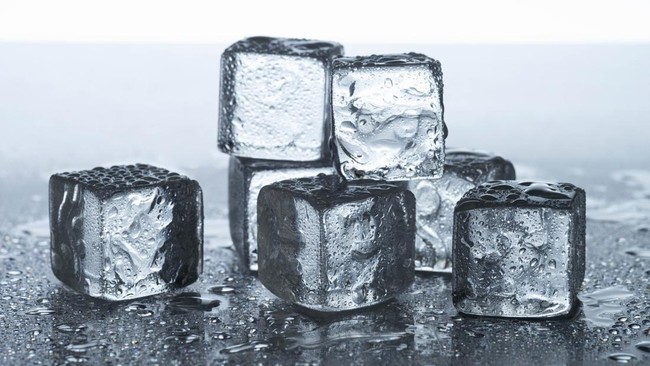
Jakarta, CNBC Indonesia - It turns out that being an ice vendor was once a path to great wealth in the past. This fact is recorded in history, when many ice vendors succeeded and accumulated vast fortunes from their business.
One of them is Tasripin, who had assets worth trillions of Rupiah. How could this be?
In the 1900s or during the colonial era, Tasripin was one of the richest people in Indonesia. When he passed away, the newspaper De Nieuwe Vorstenlanden (September 8, 1919) reported that his assets reached 45 million guilders.
At that time, the price of one liter of rice was only 6 cents. This means that with 45 million guilders, he could buy 750 million liters of rice. If the price of one liter of rice today is around IDR 13 thousand, then Tasripin’s assets are equivalent to IDR 9.7 trillion (almost IDR 10 trillion) in today’s currency.
This large amount of wealth was obtained from selling ice. In the era when Tasripin lived, ice was difficult to obtain because there were no refrigerators or cooling machines. As a result, ice became a popular product because it was sold at high prices and always sold well.
Therefore, anyone who created an ice factory could become very rich, including Tasripin. The daily de Locomotief (July 25, 1902) reported that Tasripin’s ice factory was located in the Ungaran area, Semarang.
Then, eight years later, he established another ice factory in Semarang, specifically in the Petelan area. The newspaper de Locomotief (September 5, 1910) reported that this ice factory became the largest one there and was directly operated by the man born in 1834.
In addition to selling ice, Tasripin also diversified his business. It is recorded that he owned a slaughterhouse and engaged in buying and selling animal skins. These two businesses made his wealth increase even more.
Every month, he earned 30-40 thousand guilders. Not surprisingly, he had many houses and land in Semarang. Likewise, his ice factories were increasingly spread out.
The legacy of Tasripin as an ice entrepreneur ended in 1919 when he died. After that, the ice business was continued by his family, although its further development is unknown. History then recorded him as the richest Indonesian from the indigenous group, who started from selling ice.
Many Other Ice Kings
Besides Tasripin, there were other ice vendors who were successful and wealthy. In the same era as Tasripin, there was an ice vendor in Semarang named Kwa Wan Hong. He was not as rich as Tasripin, but Kwa is recorded in history as the “ice king.”
This is because Kwa created the first ice industry in Indonesia. In 1895, Kwa established an ice factory called Hoo Hien. Historian Denys Lombard in Nusa Jawa Silang Budaya (1999) mentioned that he made ice by utilizing a chemical reaction, namely a mixture of salt and ammonia which turned water into ice.
The newspaper de Nieuwe Vorstenlanden (July 17, 1901) reported that the existence of Kwa’s ice factory changed the habits of Indonesians in consuming ice. Ice, which was previously expensive and difficult to obtain, became more affordable.
People could then enjoy cold drinks. Thanks to Kwa, the first ice cream industry was also born during the colonial era. It is not known exactly how much his wealth was, but he certainly had a lot of assets because he owned many lands, houses, and ice factories in various areas.
In Magelang, there was also an ice vendor named Robert Chevalier. He consistently sold ice under the NV. Magelangsche Ijs en Mineralwater Fabriek since 1920. It is recorded that he had three ice factories and became wealthy, before eventually going bankrupt when the Japanese arrived in 1942.
Tasripin, who has assets of IDR 10 trillion, then the “ice king” Kwa Wan Hoong and Robert Chevalier are proof that ice vendors can also be successful and wealthy. Therefore, it is not appropriate to underestimate people who sell ice in various forms on a mobile basis. Basically, all halal jobs are noble.