
ICCD Chairman emphasises importance of justice-based economic system
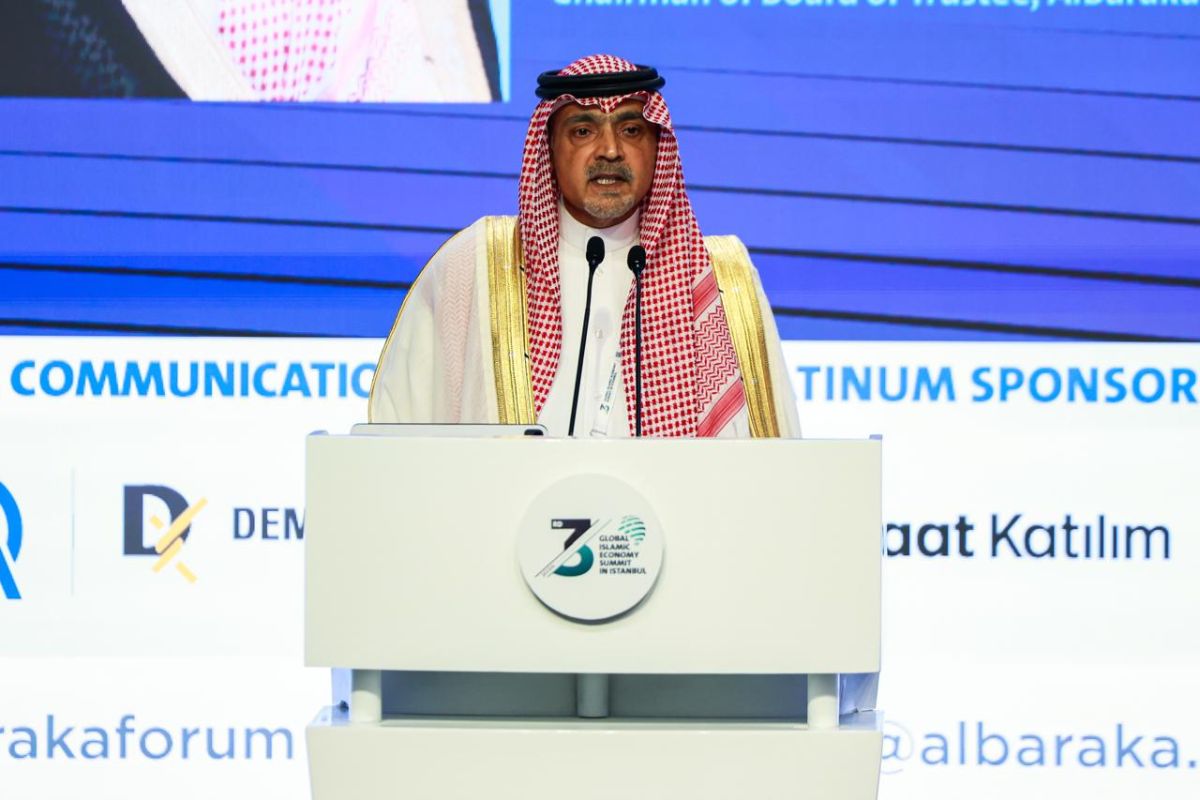
Jakarta (ANTARA) - The President of the Islamic Chamber of Commerce and Development (ICCD), Abdullah Saleh Kamel, has emphasised the importance of an economic system based on justice and productive expenditure, rather than being solely profit-oriented.
“The world needs an economic system capable of restoring ethics to capital. He warned of structural imbalances in the current prevailing global economic model,” said Abdullah Saleh Kamel in a press statement received in Jakarta on Sunday.
He stated that the weakness of the current economic model is rooted in the transformation of capital into a “negative instrument” that focuses only on the interests of owners and personal profit, without considering the resulting impact, particularly on vulnerable groups and marginalised communities.
These remarks were made by Kamel during a summit organised by the AlBaraka Forum for Islamic Economics, themed “Capital in the Islamic Economy: Structuring Wealth for Sustainable Development”, held from 3–6 June in Istanbul. The event was attended by notable figures, including the President of Türkiye, Recep Tayyip Erdoğan, and various high-ranking Islamic scholars and advisors.
Kamel criticised current Corporate Social Responsibility (CSR) practices, noting that corporate contributions only cover a small fraction of the need to repair the significant damage caused by their activities to the environment, humans, and animals. He noted that this reality contradicts the Islamic principle of preventing harm (mudarat).
He also noted that several countries are considering minimum age limits for social media use to protect children, reflecting the deep ethical imbalances in the current economic model that create such issues and then struggle to address the consequences.
The Chairman of the Saudi Chamber of Commerce Federation outlined three characteristics of capital in the Islamic economy. First, capital must be productive, generating wealth and being spent productively. Second, money should not be traded as a commodity, which forms the basis of the prohibition of riba (usury), as such practices turn money into a commodity rather than a tool to serve economic activity. Third, wealth should not be hoarded or monopolised, but rather developed through zakat, sadaqah, and waqf as forms of social capital and philanthropy.
He stated that the concentration of wealth and rising sovereign debt are interconnected phenomena reflecting deep imbalances in the global economic model. According to Kamel, wealth continues to concentrate within the top one per cent globally, leading to a cycle where the rich become richer while the poor become poorer. He added that the dominance of multinational corporations, particularly big tech, continues to expand, while governments and societies struggle to mitigate the negative impacts.
Regarding sovereign debt, Kamel noted that a primary concern for finance ministers today is meeting annual debt service obligations, while the repayment of the principal often falls outside top priorities. He argued that this situation burdens both strong and weak economies, indicating profound structural imbalances.
Kamel asserted that the Islamic economy offers a different structural framework for capital, based on productivity, wealth creation, productive spending, the prohibition of trading money itself, and the development of wealth through zakat, sadaqah, and waqf. He emphasised that this framework is intended to benefit not only Muslims but all of humanity.
The Third Global Islamic Economy Summit was attended by ministers, central bank governors, leaders of financial institutions, and researchers from various countries. The summit was organised by the AlBaraka Forum for Islamic Economics in strategic partnership with the Presidency of the Republic of Türkiye’s Office of Investment and Finance, the Turkish Wealth Fund, the Istanbul Finance Centre, Ibn Haldun University, and the Islamic Cooperation Youth Forum.