
IBSW Praises Sufmi Dasco’s Responsiveness in Resolving Public Issues
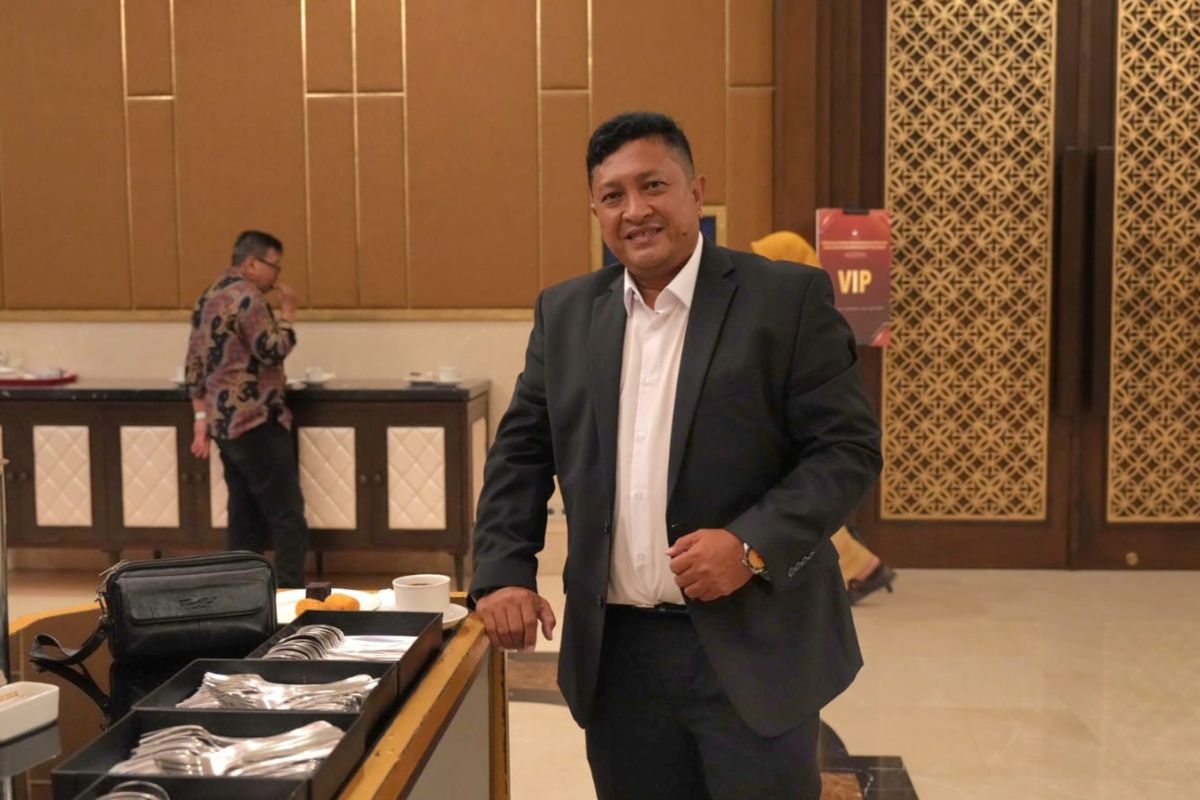
Jakarta (ANTARA) – The Indonesian Bureaucracy and Service Watch (IBSW) said the work of Deputy Speaker of the House of Representatives Sufmi Dasco Ahmad, who has acted promptly to address a number of strategic national issues and resolve public problems directly, should serve as an example for bureaucratic services.
“Dasco’s proactive, results-oriented way of working should be a point of reference for a bureaucracy and public services that respond to people’s needs,” IBSW chairman Nova Andika said in Jakarta on Wednesday.
IBSW noted that throughout 2026 Dasco had consistently demonstrated a working style that went beyond discussion, personally overseeing the resolution of various regulations and issues affecting the public.
Nova said this approach reflected the effective performance of the House of Representatives as an institution.
“Mr Dasco has shown a results-oriented approach, focused on resolving issues rather than mere rhetoric,” Nova said.
He said Dasco did not wait for problems to escalate, but proactively summoned the relevant ministries and institutions to discuss solutions together.
“From the perspective of bureaucratic governance, this is what is expected of the leaders of state institutions: to be present, responsive and committed to resolving problems,” Nova said.
The new legislation fulfils the mandate of Constitutional Court Decision No. 168/PUU-XXI/2023, which ordered the creation of a new Labour Law to replace the employment provisions in the Job Creation Law.
Nova said Dasco had successfully overseen deliberations on the law, ensuring they were completed on time and within the deadline.
“This Labour Law was no easy undertaking. There was a Constitutional Court mandate to fulfil, workers’ concerns that the deliberations should not be rushed as they were with the Omnibus Law, and the interests of businesses that had to be accommodated,” Nova said.
He also cited the issuance of Presidential Regulation No. 27 of 2026 on the Protection of the Digital Platform-Based Transport Ecosystem as a concrete achievement that directly supports the welfare of informal-sector workers.
The regulation, issued on 8 October 2026, limits platform fees to a maximum of 8 per cent, entitling online motorcycle-taxi drivers to at least 92 per cent of their earnings.
“Dasco personally led a coordination meeting with six ministers to ensure the regulation was well prepared and delivered tangible results. Platform fees, which previously could reach 20 per cent, are now capped at 8 per cent,” Nova said.
He added that online motorcycle-taxi drivers now receive social security coverage and recognition as micro, small and medium-sized enterprises (MSMEs).
“From a public-service perspective, this is an example of regulation that supports ordinary people,” Nova said.
Nova said Dasco had also conveyed the House’s institutional position that forest and land fires and disaster response should be handled through coordinated action across ministries and institutions.
In February 2026, Dasco also led a coordination meeting to evaluate post-disaster recovery in Sumatra, attended by relevant ministers.
“On disaster issues, Dasco has positioned the House as part of the solution, not merely as a distant observer, and has encouraged coordinated action across ministries to address forest and land fires and other disasters, while taking into account their effects on air quality and basic services for affected residents,” Nova said.
“Cross-sectoral approaches like this are important because no single institution can resolve disaster-related problems on its own,” he added.
Nova said he hoped Dasco’s responsive working style would serve as an example and be maintained, given the many public issues still awaiting swift and measurable solutions.
“People do not need promises. They need their problems resolved, and this is a concrete example of how a state institution can be present and work for the people. This is the kind of bureaucracy and public service we aspire to,” Nova said.