
IBS 2026 brings together government and battery technology players
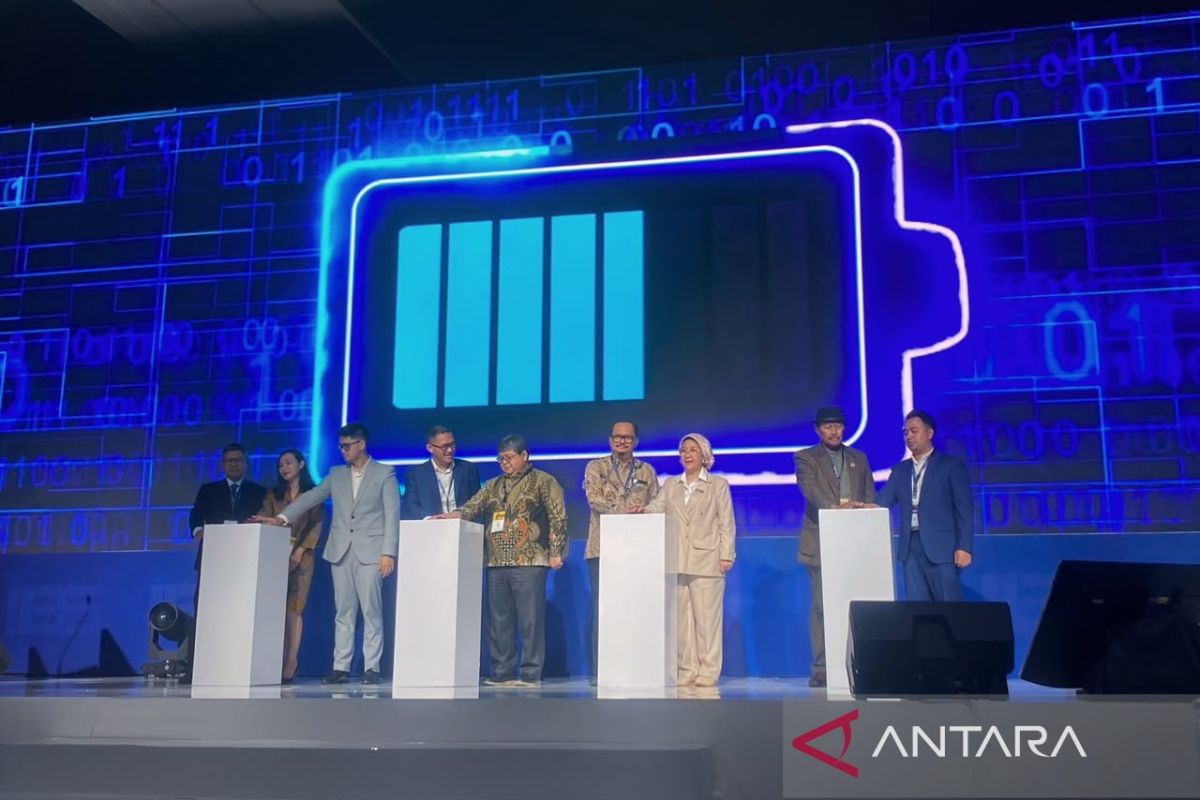
The International Battery Summit (IBS) 2026, taking place on 26–28 August 2026, serves as a bridge to bring together government, industry, academia, research institutions, investors, and technology players to discuss developments in the battery ecosystem.
Founder of the National Battery Research Institute (NBRI) and Chair of IBS 2026, Prof. Dr. rer. nat. Evvy Kartini, said that developing Indonesia’s battery industry cannot rely solely on mineral resource wealth and investment.
“Indonesia has enormous opportunities to take a strategic role in the global battery industry. However, building a competitive and sustainable battery ecosystem is not enough if we only rely on natural resources and investment,” Evvy said at the opening of IBS 2026 at the JIEXPO Convention Centre & Theatre, Jakarta, on Wednesday.
According to her, the opportunity currently attracting significant attention is the Battery Energy Storage System (BESS). This technology is needed to store energy generated by renewable power plants, particularly solar power, whose output depends on weather conditions and time of day.
Director of Business & Academy Development at NBRI and Executive Director of Id Battery, Muhammad Firmansyah, said that demand for BESS is likely to increase in line with plans to expand solar power generation capacity in Indonesia.
“With a target of developing up to 100 GW of solar power plants, the need for BESS is becoming increasingly strategic to address the intermittency of solar energy, maintain system reliability, and optimise the use of renewable energy,” he said.
This means the development of Indonesia’s battery industry has the potential to expand from electric vehicles into the energy system. The industrial chain being built also does not stop at raw materials and cell manufacturing, but encompasses battery packs, BESS, battery management systems, recycling, and the utilisation of batteries after their service life ends.
Chairman of Id Battery and Co-Chair of IBS 2026, Niko Chandra, assessed that connectivity between research, technology, manufacturing, investment, and markets is an important part of building this ecosystem.
“What we need to build is not only production capacity, but also connections between research, technology, investment, manufacturing, and markets along the battery value chain,” he said.
Thus, Indonesia’s challenge going forward is not merely increasing battery production, but ensuring that the technology can support two needs at once: transport electrification and energy system transformation.