
IBC: Energy transition and digital economy drive battery industry
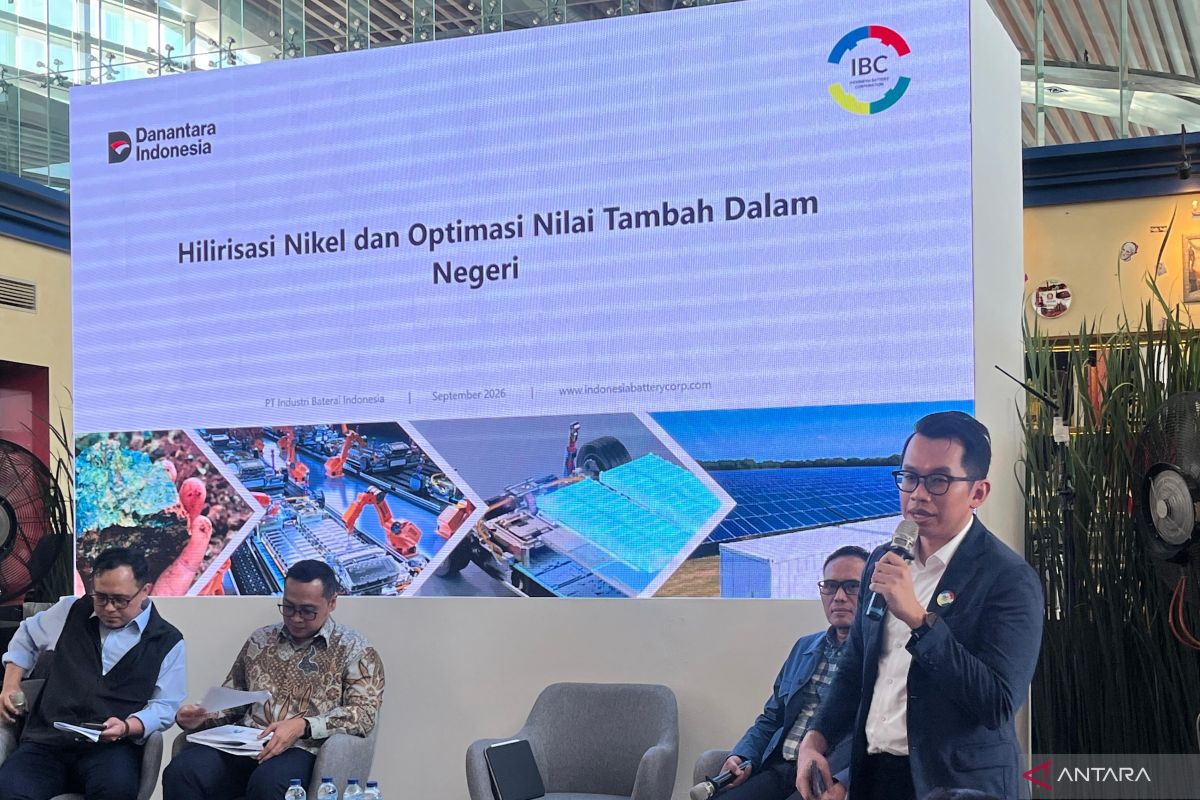
Jakarta (ANTARA) - The Indonesia Battery Corporation (IBC) believes that the prospects for the national battery industry are becoming increasingly promising as the development of the energy transition and the digital economy drives an increased need for energy storage systems.
IBC President Director Aditya F. Arif stated that the current development of the battery industry shows a better outlook compared to the projections made when IBC was established in 2021.
“As it turns out, over time, it has become even better than previously forecast. We see that there are now two key drivers for battery development. Previously, we might have only discussed the energy transition, but now there is the digital economy,” he said in Jakarta on Monday.
The energy transition encourages the use of batteries to support the integration of renewable energy and the transition from conventional vehicles to electric vehicles.
Meanwhile, the growth of the digital economy, particularly the construction of data centres, is also increasing the demand for batteries to maintain the reliability of electrical systems and energy storage.
Aditya noted that the largest growth in the future is expected to occur in the battery energy storage system (BESS) segment, which is required to support data centres.
“This is because it is used for both data centres and the energy transition,” he added.
He stated that IBC is building an integrated battery industry ecosystem from upstream to downstream, with its primary current focus on the midstream sector and battery recycling.
IBC holds several portfolios alongside strategic partners, including Contemporary Amperex Technology Co. Limited (CATL).
Furthermore, IBC is preparing renewable energy support through plans to install an 18 MW solar power plant (PLTS) by 2027.
Aditya assessed that developments in battery technology still offer opportunities for Indonesia to maintain the role of nickel in the global supply chain, even though Lithium Ferro-Phosphate (LFP) technology currently dominates the market.
Therefore, innovation is key to ensuring that the nickel-based battery industry remains competitive while expanding the benefits of downstreaming to other commodities.
“So, if we have a sovereign, advanced, and independent battery industry, we actually have the opportunity to achieve a greater economic impact from other commodities, not just nickel,” said Aditya.
Source: jawawa.id (https://jawawa.id/newsitem/ibc-energy-transition-and-digital-economy-drive-battery-industry-1789387738)
Originally published by Antara (Indonesian) (https://www.antaranews.com/berita/5740287/ibc-transisi-energi-dan-ekonomi-digital-dorong-industri-baterai), translated from Indonesian