
Ibas: We Must Not Use AI Technology While Relying on 'Hearsay' for Policy
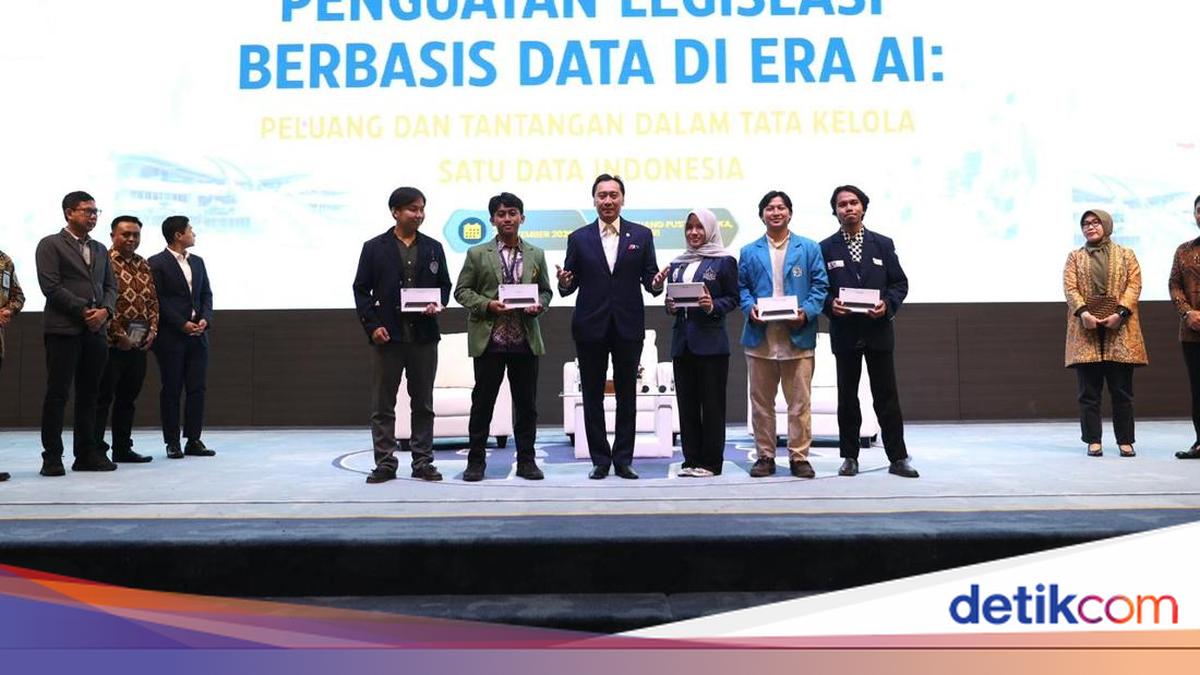
The development of Artificial Intelligence (AI) must be accompanied by changes in how the state formulates policy. The Deputy Chairman of the MPR RI and Chairman of the Democratic Party Faction in the DPR RI, Edhie Baskoro Yudhoyono (Ibas), emphasised that legislation cannot rely solely on assumptions or opinions, but must be based on accurate data, strong evidence, integrated systems, and meaningful public participation.
These remarks were made while serving as the keynote speaker at the National Seminar on “Strengthening Data-Based Legislation in the AI Era: Opportunities and Challenges in Indonesia’s One Data Governance” at the Nusantara IV Building of the DPR RI, Jakarta, on Wednesday (2/9/2026).
The seminar served as a discussion forum regarding the use of data and AI to support the legislative process, while ensuring that such developments remain within the corridors of the constitution, democracy, data security, and public interest.
During the event, Ibas also highlighted the issue of citizens having to repeatedly provide the same data when accessing various government services, despite every citizen possessing a single identity via their National Identification Number (NIK).
He urged students to observe simple everyday problems. He noted that when the individual and the NIK are the same, government data should be interconnected so that the public does not need to continuously provide the same information.
According to him, the challenge in realising “One Data Indonesia” is not merely about storing all data in one place. The most important aspect is ensuring that the data follows the same standard, is accurate, is interoperable between systems, and remains secure.
“One data does not mean all data is piled up in one place. The most important thing is that the data is accurate, the standards are uniform, the systems are connected, and, most importantly, the data is secure,” he stated.
This becomes increasingly vital in the era of AI. Technology can read and analyse millions of data points in a very short time, but this capability will not produce effective policies if the underlying data is flawed from the start.
He emphasised that technological sophistication must go hand in hand with the quality of the decision-making process. While AI can help accelerate information processing, policy-making still requires clearly defined problems, precise data, and strong evidence.
“We must not have AI technology while our policies are still based on ‘hearsay’. We need problems to be identified; we need data, we need evidence, and subsequently, we need policy,” he asserted.
This principle is part of evidence-based legislative policy-making, a process where legislation is drafted based on proof and data. He believes this approach is essential so that the resulting policies are not only conceptually sound but also precisely targeted when implemented within society.
The use of AI should not only be viewed from its technological capabilities. The question that must be prioritised is not just “what can AI do?”, but also “what is AI permitted to do?”
He stated that this question is crucial because the use of AI touches upon data security, ethics, accountability, and public rights.
“Technology must follow constitutional values, not the other way around,” he explained.
Indonesia can learn from countries that have pioneered digital identity systems, such as Singapore through Singpass and MyInfo, and India through Aadhaar. However, he noted that these models should not be adopted blindly.
“We certainly do not need to copy everything they do. We can learn, we can understand, and we can create our own way, with an Indonesian approach,” he said.
He assessed that digital identity and data governance are not merely technological issues. Both are components of public service infrastructure that must be designed to provide convenience while ensuring public security.
Strengthening data-based legislation must also ensure that the democratic process does not lose space for the public. While data can provide a factual overview of issues, the voice of the people is still required to ensure that policies truly address public needs.
Therefore, he emphasised the importance of “meaningful participation.” Participation is not enough if it is limited to merely attending a forum or providing a signature. Public aspirations must be heard and considered in the policy-making process.
“It is not just about our presence or merely signing a document; we want to continue listening, and we want to continue considering the voice of the people,” he said.
He noted that, ultimately, data is about people. Therefore, data governance and legislative drafting must continue to place public interest as the primary consideration.
To strengthen data governance and legislation in the AI era, he proposed five key areas of focus:
First, ensuring data is clean, clear, and correct. Second, building a single, valid, and trustworthy data standard. Third, connecting various systems so that data can be integrated and utilised as needed. Fourth, ensuring public data is protected with adequate security systems. Fifth, strengthening meaningful participation by involving the public in the policy process.
He believes these five elements must proceed sustainably so that data does not remain merely a collection of information, but can truly be used to support better policymaking.