
Ibas Visits Pacitan, Encourages Waste Management as a Collective Movement
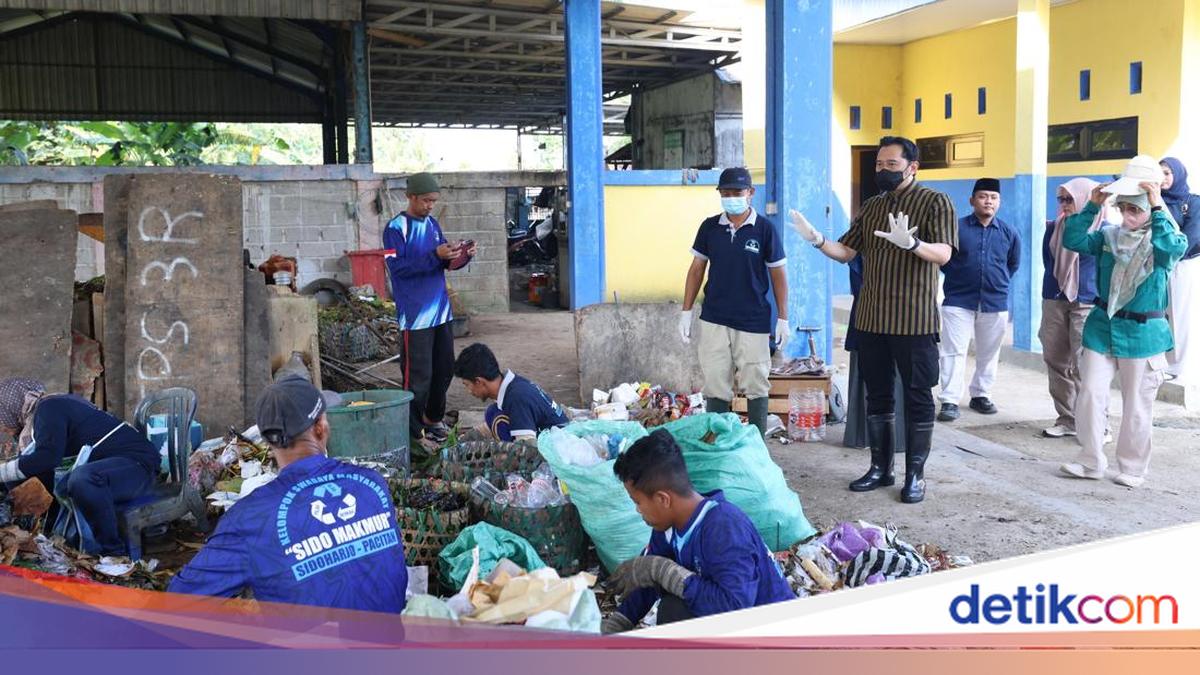
Wakil Ketua MPR RI Edhie Baskoro Yudhoyono (Ibas) has stressed that waste management is not merely an environmental cleanliness issue, but a collective movement to protect the environment, ensure sustainability, safeguard public health, and drive a new economy through collaboration between the community, government, and all stakeholders. He noted that properly managed waste can generate economic value while providing benefits for current and future generations.
The legislator from the East Java VII electoral district observed firsthand how the community manages household waste into various useful products. He said this step is a real example that environmental protection can go hand in hand with efforts to stimulate a new community-based economy. Together with the Ministry of Environment, Ibas also attended a Socialisation of Waste Reduction and Community Group Development event in Pacitan Regency titled ‘Sampah Terkelola, Lingkungan Terjaga’ (Managed Waste, Preserved Environment), which was attended by hundreds of residents.
The Deputy Chairman of the Democratic Party said he always feels the spirit of mutual cooperation that is the main strength of the Pacitan community. ‘Every time I come to Pacitan, I always feel a strong spirit of gotong royong and kinship. Pacitan not only has beautiful nature but also hardworking people who always join hands to develop their region,’ Ibas said in a written statement on Sunday (5/7/2026).
He made the remarks while reviewing the Reduce, Reuse, Recycle (TPS 3R) Waste Processing Site, Sidomakmur, in Sidoharjo Village, Pacitan Regency, on Saturday (4/7). According to the IPB University doctoral graduate, a change in perspective towards waste must start from the smallest unit. Public awareness is a crucial foundation for protecting the environment, building a culture of clean and healthy living, and ensuring sustainable development.
‘Usually, waste is just thrown away and provides no benefit. But today we see how, with the support of the local government, the Environmental Agency, and the enthusiasm of community groups, household waste can be managed into something productive and useful,’ he said. Ibas emphasised that waste management must become a collective movement starting from the village level. He argued that if the community does not start thinking about integrated waste management, it will be difficult to achieve a clean, healthy, and sustainable environment for future generations.
‘If we don’t start thinking about integrated waste management that prioritises cleanliness, health, and sustainability, then who else will? Alhamdulillah, Pacitan has set an example of how the community can collaborate, trust each other, and manage waste not just to reduce or reuse it, but to turn it into something more valuable,’ he stated. He also invited the entire community to make a culture of clean living part of the national character. ‘Let’s build a culture of clean and healthy living as part of our national character. The Javanese have a very good saying, ’Resik kuwi sehat, sehat kuwi berkah.’ Clean is healthy, healthy is a blessing,’ he urged.
Ibas further explained that waste management at the Sidomakmur TPS 3R proves that waste can become a source of benefits if managed properly. ‘It turns out waste is not just sorted. Organic waste produces fertiliser and then maggots for catfish farming, and the results can support the kitchen for the Free Nutritious Meals programme for our children. This is a sustainable and mutually reinforcing distribution pattern. Even plastic waste can still be utilised into something more productive,’ he explained.
The Sidomakmur TPS 3R currently manages around 5 tonnes of waste daily, with a processing capacity of up to 10 tonnes per day. Its management is carried out independently by 14 people, mostly members of the local youth organisation and young generation. Waste management at the site goes beyond sorting. Organic waste is processed into organic fertiliser and maggots as catfish feed, which in turn supports the supply chain for the Free Nutritious Meals (MBG) programme, while inorganic waste is repurposed into various economically valuable products.
According to Ibas, this innovation is part of developing a circular economy that can be further advanced towards waste-to-energy and other environmentally friendly innovations. This innovation proves that waste management can protect the environment, ensure sustainability, maintain cleanliness and health, while simultaneously driving a new economy for the community. ‘I am proud because many young people are not ashamed to get involved in managing waste. They protect the environment while earning an income and improving their welfare. This is a real example that protecting the environment can also bring economic benefits,’ he said.
During a dialogue session, the Head of TPS 3R Sidomakmur, Jaidin, said that waste management at the site has been running well. However, his team still faces obstacles in the form of an operational waste transport vehicle that frequently breaks down, hampering services to the community. ‘Alhamdulillah, public awareness is increasing. Our current obstacle is the operational vehicle that often breaks down, so the waste transportation process is not optimal. We hope for support so that services to the community can improve,’ said Jaidin.
After hearing these aspirations directly, Edhie Baskoro immediately handed over assistance in the form of a three-wheeled motorcycle to support the TPS 3R operations. In addition, he also provided a number of supporting equipment to increase the effectiveness of waste management at the site.