
Ibas Urges KIP Kuliah Scholarship to be Targeted Accurately and Reach Needy Students
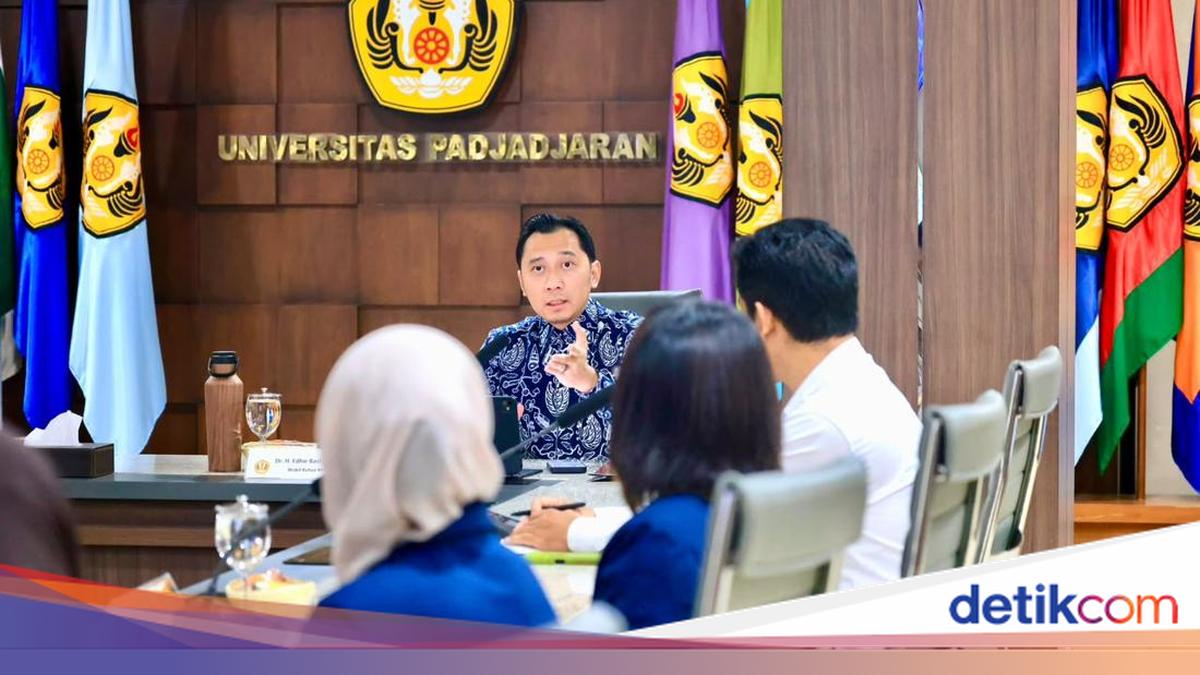
The Vice Chairman of the MPR RI and Chairman of the Democratic Party Faction in the DPR RI, Edhie Baskoro Yudhoyono (Ibas), has emphasised the importance of ensuring that educational assistance programmes, specifically the KIP Kuliah (Indonesia Smart Card for Higher Education), are accurately targeted and truly reach students in need.
Ibas made these remarks during a visit to Padjadjaran University (Unpad), Bandung, on Monday (28/9/2026). On this occasion, he highlighted the necessity of collaboration between the government, parliament, higher education institutions, and local governments to ensure access to quality and equitable higher education.
According to Ibas, the state must intervene to assist citizens who possess academic potential and capability but face financial constraints in pursuing further education. “Programmes such as KIP Kuliah are highly anticipated and utilised by campuses across Indonesia. The state must be present so that our intelligent and capable children do not lose opportunities solely due to their family’s fiscal limitations,” Ibas stated on Thursday (1/10/2026).
Ibas emphasised that the issue of educational access does not end with the availability of scholarship programmes. Field implementation must also be addressed, including administrative issues and the validity of recipient data. He noted that universities, local governments, and the central government need to build synergy so that students who meet the requirements do not lose their rights due to technical problems. He suggested that better socialisation, guidance, and assistance are required for both prospective and current recipients.
Data Accuracy is Key
Ibas also highlighted the importance of improving socio-economic data for the distribution of government programmes. He noted that categorisation based on deciles can serve as an instrument to determine which community groups are entitled to assistance. However, this data must be continuously updated and validated to prevent mistargeting.
“Deciles one to four are indeed the entitled groups. However, the problem remains that there is still data that has not been validated or matched with regional needs,” he said. Ibas noted that this issue requires joint efforts between the central government, local governments, and universities.
Free Education Requires Careful Study
During the event, Ibas also opened the floor to ideas regarding the expansion of free education, ranging from primary to secondary levels and beyond. However, he emphasised that such ideas must be carefully and sustainably calculated, taking into account the state’s fiscal capacity.
“The hope for more accessible, affordable, and quality education is a great hope for all of us. But the challenges must be thought through carefully. We must not rush, as there are fiscal and budgetary factors that must be considered sustainably,” he said.
Ibas argued that meeting educational budget requirements should not be viewed solely through the lens of budget percentages, but must also consider economic growth and available fiscal space. He expressed hope that as Indonesia’s economic capacity increases, more space will open up to expand access to affordable and quality education.
Addressing the Demographic Bonus through Education
Ibas also reminded that Indonesia currently possesses a significant asset in the form of a demographic bonus. The large population of young people represents both an opportunity and a challenge for the nation’s future. Therefore, the demographic bonus must be met with serious investment in education, health, skills, and the character of the younger generation.
“We have a surplus in terms of the young population. But this surplus or bonus must be managed. There are many things we must consider: food sovereignty, energy sovereignty, and educational sovereignty,” he said. He noted that scholarship programmes like KIP Kuliah and LPDP should be utilised to the fullest to improve the quality of Indonesia’s human resources.
Encouraging Unpad to Strengthen Research
To the Unpad academic community, Ibas also encouraged universities to continue strengthening research that can provide direct benefits to society and serve as input for policymakers and the private sector. He noted that universities hold a strategic position in addressing various national challenges, ranging from food, energy, and health to law and constitutional matters.
“Research conducted by campuses must be transferable to policymakers and the private sector, providing a real impact on society,” he said. Ibas appreciated Unpad’s continuous development in education and research, as well as its collaboration with various domestic and international universities. He expressed hope that Unpad would grow stronger as an inclusive, impactful, and world-class campus.
Students Need Character, Not Just Knowledge
Addressing the students, Ibas advised that higher education should not only be used to acquire academic knowledge but also to build character, experience, and concern for the nation.
“Do not merely study academic subjects on campus with great lecturers and experts. You must also strengthen your character,” he said. He reminded them of the importance of creating a healthy, safe, and respectful educational environment, including avoiding bullying on campus. Ibas noted that the younger generation bears a great responsibility in shaping the future of Indonesia.
Source: jawawa.id (https://jawawa.id/newsitem/ibas-urges-kip-kuliah-scholarship-to-be-targeted-accurately-and-reach-needy-students-1790852403)
Originally published by detikcom (https://news.detik.com/berita/d-8688128/ibas-dorong-kip-kuliah-tepat-sasaran-dan-jangkau-mahasiswa-yang-membutuhkan), translated from Indonesian