
Ibas Urges Kendal Batik SMEs to Expand Markets and Access to Finance
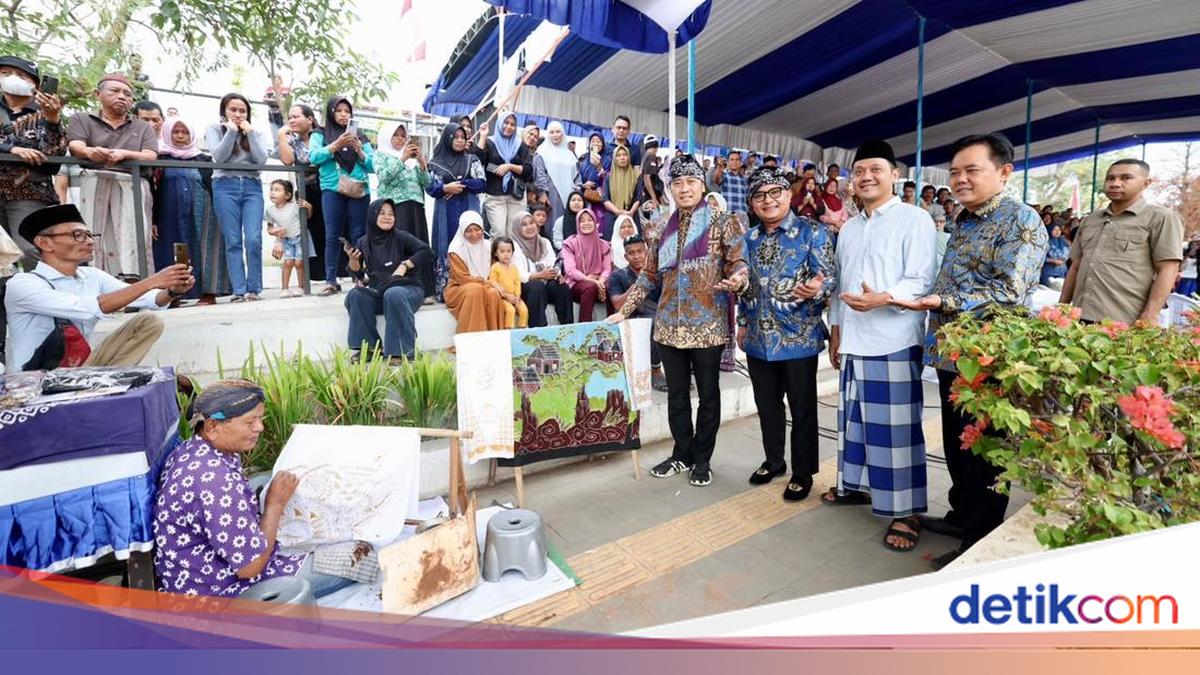
Deputy Speaker of the People’s Consultative Assembly (MPR) and chairman of the Democratic Party faction in the House of Representatives (DPR), Edhie Baskoro Yudhoyono (Ibas), called for stronger support for SMEs and the preservation of batik in Kendal, Central Java. He stressed the importance of financing, training and market expansion to help local businesses grow while safeguarding the region’s cultural heritage.
“The state must be present. The state must care for its people,” Ibas said in a written statement on Monday (26 October 2026).
He made the remarks at an SME and batik event at Kaliwungu Town Square in Kendal on Sunday (25 October). The event provided an opportunity for people to meet and discuss the region’s economic and cultural potential. Ibas said Kendal had a range of assets that could be developed, including marine tourism, religious tourism, batik crafts and traditional performing arts.
Thousands of residents welcomed Ibas at Kaliwungu Town Square. He was presented with a traditional Kaliwungu headband and batik cloth. A performance by the Warok Suro traditional arts group from Mranggen also enlivened the event.
Ibas said batik was not merely a clothing product, but a cultural heritage reflecting the creativity, identity and history of Indonesian society. Batik preservation should therefore go hand in hand with business development so artisans can benefit economically from their work.
“Batik must also continue to be preserved as a source of pride for our ancestors and for communities in villages, and developed as a cultural source of pride for Indonesia,” Ibas said.
He also praised the involvement of younger generations in preserving and developing batik. The next generation of artisans and pride in local products, he said, were important to sustaining the batik industry amid changing trends and market competition.
Religious figure and Kaliwungu history and culture observer Gus Muis also stressed the importance of preserving batik as part of the local community’s identity. Kaliwungu, he said, had a history shaped by the pesantren tradition, where Islamic values and Javanese culture came together.
“This is where Islam and culture come together,” Gus Muis said. He added: “Kaliwungu batik is part of the history of Kaliwungu society and a source of pride.”
Gus Muis said batik and local culture needed to be preserved amid modernisation and industrialisation so Kaliwungu’s historical heritage could be passed on to future generations.
Helping SMEs move up the value chain
Ibas said strengthening the people’s economy required practical support to give SMEs the opportunity to grow. This included skills development, easier access to financing and opportunities to market products more widely.
He said SMEs played an important role in driving the local economy. Business owners therefore needed the opportunity to improve product quality, strengthen competitiveness and reach consumers beyond local markets.
Ibas also called for SME programmes to be tailored to business owners’ needs, including by addressing financing constraints, building skills and expanding marketing. Appropriate support, he said, could help businesses remain sustainable, create new economic opportunities and benefit the wider community.
Kendal batik, he added, could be developed as part of the creative economy, connecting cultural heritage with production, trade and tourism.
Kaliwungu batik artisans welcomed the attention and assistance, expressing hope that the support would help improve product quality, expand markets and grow their businesses without sacrificing their historical value and local identity.
Urging the public to preserve cultural roots
Alongside promoting economic empowerment, Ibas urged the public to preserve Indonesia’s cultural roots. He said the country’s progress should remain grounded in the history, traditions and noble values passed down by previous generations.
In his speech, Ibas quoted the Javanese expression “Ojo Pedot Oyot”, meaning “Do not sever your roots”. The message, he said, reminded people not to forget their origins, history and cultural identity as they face change.
“Nek ora awake dhewe sing nguri-uri, sopo meneh,” Ibas said, calling on the public to take responsibility for preserving its own culture. The Javanese phrase means, “If we do not preserve it, who will?”
He said cultural preservation required collective involvement, from families and communities to artists, artisans, educational institutions and younger generations.
Ibas also noted that Kaliwungu and Kendal were known for their pesantren communities and religious values. These traditions existed alongside local culture passed down through generations.
He cited the Warok Suro performance from Mranggen at the event as an example of traditional performing arts being appreciated by people from different regions. Indonesia’s diverse arts and culture, he said, were part of the country’s wealth and should be nurtured in a spirit of unity.
Gus Muis similarly highlighted Kaliwungu’s tradition of cultural blending, bringing Javanese culture together with Islamic values. Ibas said nationalism and religious values could coexist, and that economic progress should be accompanied by stronger character, respect for diversity and cultural preservation.
Hearing residents’ views
Ibas’s visit to Kendal was also part of a national outreach programme and an effort to hear residents’ views. He was accompanied by several legislators: Rinto Subekti, Raja Faisal, Basuki and Arif.
Ibas said communication between elected representatives and the public should not take place only around election time. Engagement and listening to residents’ concerns should be continuous so their needs and problems can inform representatives’ work.
He also urged the public to strengthen mutual cooperation and care for others. Quoting the Arabic phrase “khairunnas anfa’uhum linnas” — “the best of people are those who benefit others” — Ibas said people could apply the principle in business, cultural preservation and public service.
At the end of his speech, Ibas prayed for the people of Kendal to be granted health, safety and blessings. He expressed hope that children would receive a good education, local businesses would continue to grow, and residents would contribute to the progress of the region and Indonesia.
By strengthening SMEs, preserving batik and developing local cultural assets, Kendal hopes to boost the local economy while protecting its cultural identity as part of Indonesia’s national heritage.
Source: jawawa.id (https://jawawa.id/newsitem/ibas-urges-kendal-batik-smes-to-expand-markets-and-access-to-finance-1793001163)
Originally published by detikcom (https://news.detik.com/berita/d-8724465/ibas-dorong-umkm-batik-kendal-perluas-pasar-dan-akses-modal), translated from Indonesian