
Ibas Urges Economic and Infrastructure Strengthening, Calls Natuna a National Priority
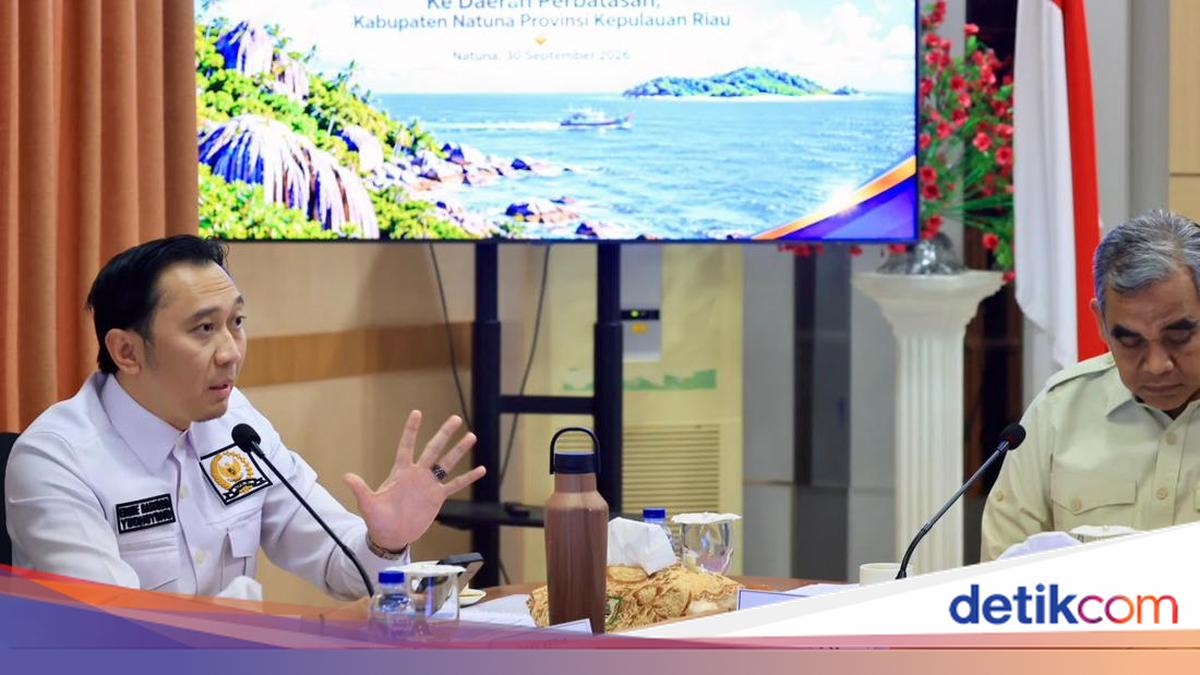
The Deputy Speaker of the MPR RI, Edhie Baskoro Yudhoyono (Ibas), has asserted that the development of Natuna as a border region cannot be achieved solely through defence and security approaches. According to him, strengthening the economy, community welfare, connectivity, food security, and infrastructure development must also become a national priority.
This was stated by Ibas during an MPR RI working visit to the Natuna Regent’s Office, Riau Islands, on Wednesday (30/9). Ibas noted that Natuna holds a strategic position for Indonesia, both in terms of geopolitics and economic potential. Therefore, attention towards Natuna must be sustained.
“We must not only focus on the defence and security of Natuna. We must also ensure that economic growth, welfare, development, and equality are continuously pursued in a sustainable manner,” Ibas stated in a written release on Thursday (1/10/2026).
According to Ibas, guarding border territories means ensuring that the communities living in those areas can tangibly feel the presence of the state.
Natuna Requires National Intervention
Ibas assessed that synergy is required between the central government, local governments, the DPR, the MPR, and all stakeholders to address various development issues in Natuna. Given its geographical character as an archipelago and border region, Natuna faces different challenges compared to other areas. Consequently, policies must consider these specific characteristics.
“This requires national intervention, intervention from the President. Relevant ministers also need to consolidate with provincial and local governments,” he said. Ibas urged that strategic issues in Natuna be discussed directly with the central government so that the resulting solutions are more integrated.
Promoting Integrated Fisheries Industrialisation
The fisheries sector is one of the key areas of concern for Ibas. He noted that Natuna possesses vast marine potential; however, fishing communities still face numerous challenges, ranging from weather conditions and operational costs to limited facilities and sub-optimal processing of fishery products.
Therefore, Ibas encouraged the establishment of integrated fisheries industrialisation to increase value-added products and strengthen the economic independence of the community. “The existing potential, with such a vast shipping area, should be consolidated with the Ministry of Marine Affairs and Fisheries. We must determine how to create integrated fisheries industrialisation here to ensure long-term independence,” he said.
Ibas believes that strengthening the local fisheries industry could also reduce dependence on supplies from outside the region, which would help lower logistics costs and commodity prices.
Food Prices and Logistics Require Attention
Ibas also highlighted the issue of basic commodity prices in Natuna. Geographical conditions, transportation costs, ticket prices, and fuel prices are factors that can influence the price of goods. Consequently, he urged the strengthening of various price control instruments, including cheap market initiatives and supply support from Bulog. Such steps are necessary to assist the community when facing pressures from weather conditions or distribution disruptions.
According to Ibas, these policies should be part of a strategy to maintain the purchasing power of communities in border regions.
Pushing for Border Flight Subsidies
Ibas also addressed connectivity issues. He noted that aircraft ticket prices and limited flight routes can pose challenges to community mobility and economic activities in Natuna. Therefore, he proposed that the government study the possibility of specific flight tariff subsidies for border regions.
“What if we push for specific flight tariff subsidies for borders? This could also reduce the burden on people travelling here,” he suggested. On the other hand, Ibas emphasised that such policies must be supported by mature economic and business calculations to ensure that opened flight routes remain sustainable. Flight issues relate not only to route availability but also to the balance between demand and supply.
Oil, Gas, and Marine Tourism Potential
Beyond the fisheries sector, Ibas assessed that the energy and tourism sectors in Natuna also hold great potential. He urged that oil and gas investment opportunities in Natuna continue to be monitored, ensuring benefits for the region and its people. Meanwhile, marine tourism potential should be developed as a new source of economic growth. Ibas noted that tourism development must be accompanied by community capacity building, training, comparative studies, and the development of the local creative economy.
Revenue Sharing and Regional Fiscal Space
Ibas highlighted the limited fiscal capacity of local governments to fund development. He noted the need for regions to obtain adequate Revenue Sharing Funds (DBH). However, national fiscal policy must still consider budget sustainability and the financing needs of national priority programmes.
According to Ibas, the priority is to ensure that available funds provide high-quality development that is felt by the people of Natuna. “It does not mean Natuna is being neglected. We are striving to ensure that revenue sharing can truly be returned to the regency for higher-quality programmes,” he said.
Natuna as Indonesia’s Veranda
Ibas reaffirmed that guarding Natuna is part of the effort to maintain the integrity of the Unitary State of the Republic of Indonesia.
Source: jawawa.id (https://jawawa.id/newsitem/ibas-urges-economic-and-infrastructure-strengthening-calls-natuna-a-national-priority-1790852473)
Originally published by detikcom (https://news.detik.com/berita/d-8688162/ibas-dorong-penguatan-ekonomi-infrastruktur-natuna-jadi-perhatian-nasional), translated from Indonesian