
Ibas States PPHN Must Emerge from National Consensus and Public Participation
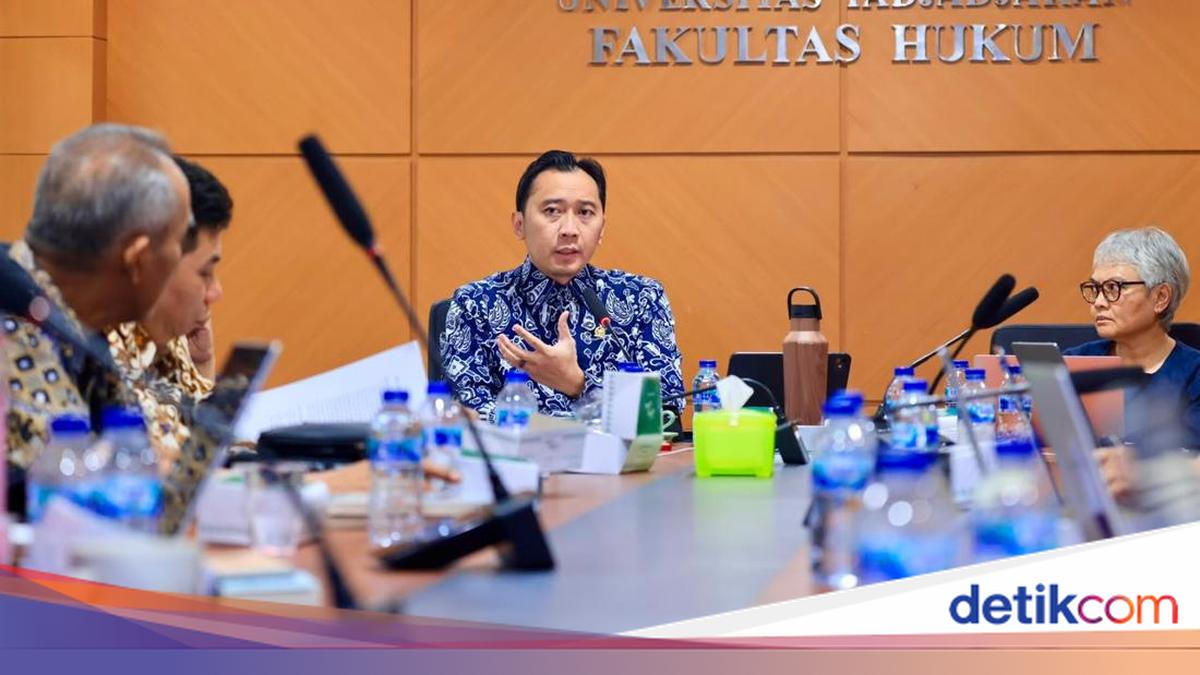
The Deputy Speaker of the MPR RI, Edhie Baskoro Yudhoyono (Ibas), has emphasised the importance of transparency, public participation, and national consensus in the discussion of the State Policy Guidelines (PPHN). According to him, leaders and representatives must listen to the needs, aspirations, and thoughts of the community to understand the nation’s future challenges.
“To lead is to listen. As leaders and representatives of the people, we need to listen more. By listening, we can understand what is needed, felt, and thought for the future of the Indonesian nation,” Ibas stated in his remarks on Thursday (1/10/2026).
These remarks were made during an academic discussion forum titled “State Direction, Future Direction: Academic Reflections on the Urgency of State Policy Guidelines for Indonesia’s Future” at Padjadjaran University (Unpad), Bandung, on Monday (28/9).
The Chairperson of the Democratic Party Faction in the DPR RI asserted that leadership also requires vision. He expressed that Indonesia needs a long-term direction that can serve as a shared foundation in facing changing times.
“To lead is to give vision. As leaders, we must have a vision of how to lead this country, especially in the era of democratisation when the people are a primary part of both national and regional leadership processes,” he said.
PPHN is Not Merely a Legacy
Ibas explained that the discussion of PPHandum PPHN should not be directed solely towards creating a political legacy. Instead, the most important aspect is ensuring that the formulated ideas are beneficial and impactful for the Indonesian nation.
Therefore, he viewed it as essential to conduct a thorough reflection on Indonesia’s constitutional journey, particularly following the amendments to the 1945 Constitution of the Republic of Indonesia.
“This is not about seeking a legacy. We must ask whether what we arrange today truly provides an impact and benefit for the Indonesian nation,” Ibas explained.
Ibas revealed that the experience of constitutional changes shows that Indonesia’s constitutional system is not something that cannot be evaluated. In his view, the four amendments to the 1945 Constitution have been a significant part of Indonesia’s constitutional journey.
Consequently, the PPHN discussion needs to be placed within a broader framework of reflection regarding Indonesia, the constitution, governance, democracy, and the direction of national development.
Political Consensus and Meaningful Participation
During the forum, Ibas also emphasised that the PPHN cannot ultimately be separated from the issue of national consensus.
According to him, besides the political and institutional processes, meaningful participation from the community and cross-group communication are required so that the resulting ideas possess strong public legitimacy.
“If we present a process of meaningful participation and multi-directional communication, then the reflection on participation and public consensus becomes important and necessary,” he said.
He noted that today’s society is increasingly critical and has wider access to information. Therefore, the PPHN discussion process needs to open a larger space for universities, academics, experts, civil society, and various elements of the nation.
This view aligns with input from the Professor of Constitutional Law at Unpad, Prof. Susi Dili Harijanti. According to her, the preparation of the PPHN needs to answer several fundamental questions, ranging from its legal form and substantive content to its implementation effectiveness, its relationship with the system of government, and its connection to the existing national development planning system.
Prof. Susi also emphasised the importance of the principle of intergenerational justice in drafting state guidelines. She argued that development continuity should not depend entirely on the current administration or President, but must consider the interests of future generations.
Meanwhile, the Vice Dean I of the Faculty of Law at Unpad, Imam Mulyana, assessed that universities can serve as critical partners providing objective, independent, and academically-based views. He asserted that academic criticism and input are part of a healthy and constructive scientific discussion process to enrich perspectives and strengthen the substance of the PPHN discussion.
Must be Philosophical and Not Lock the Future
Ibas mentioned that if the PPHN is to proceed, its formulation must be philosophical and provide long-term strategic direction, rather than locking the government into specific details.
In his view, serious thought must be given to how state guidelines can remain relevant in the face of changes 20, 40, or even 60 years from now.
“How about 20, 40, or 60 years from now? Can the MPR Decree (TAP MPR) be further refined? Can laws also be changed? All of this ultimately depends on consensus,” Ibas explained.
Ibas assessed that the discussion regarding the form and position of the PPHN needs to be conducted openly, including examining how these ideas can adapt to future constitutional developments.
He added that the PPHN discussion must also consider the design of the current presidential system. The MPR RI, Ibas noted, is no longer in a position as the mandate holder of the President, as was the case in previous constitutional constructions.
Therefore, the Member of the East Java VII constituency emphasised the importance of deepening the understanding of who holds the authority to draft, formulate, and implement the PPHN, including the position of the PPHN within the prevailing constitutional system.
MPR as the Regulator of Ideas
In the forum, Ibas also asserted that the MPR RI has a role in opening spaces for study and bringing together various thoughts regarding constitutional matters.
“We in the MPR leadership merely act as the traffic regulator. The rest, of course, we return to the legal and state processes,” he said.
He also welcomed the studies conducted by the MPR RI Assessment Body and the Constitutional Study Commission. In his view, this process needs to be continuously strengthened.
Source: jawawa.id (https://jawawa.id/newsitem/ibas-states-pphn-must-emerge-from-national-consensus-and-public-participation-1790852294)
Originally published by detikcom (https://news.detik.com/berita/d-8688052/ibas-sebut-pphn-harus-lahir-dari-konsensus-nasional-partisipasi-publik), translated from Indonesian