
Ibas: South Korea's Experience in Building Infrastructure Can Inspire Indonesia
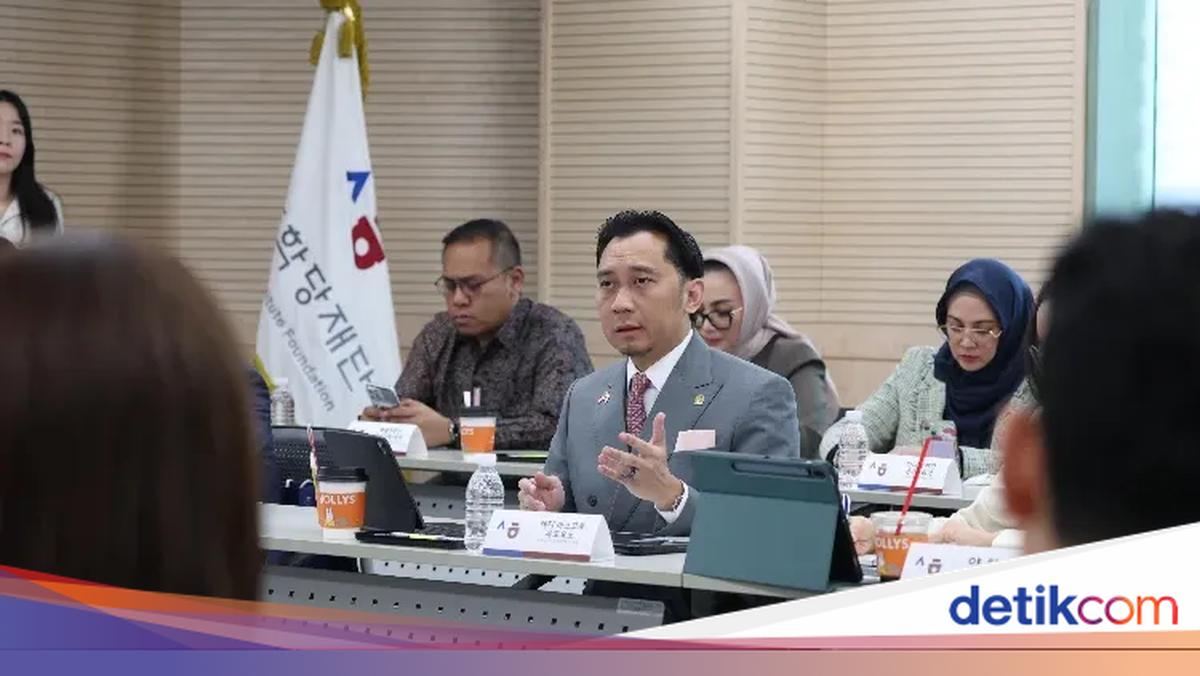
The meeting was also attended by a delegation of members from Indonesia’s MPR/DPR as well as the representative of the Indonesian Ambassador to South Korea, and was received directly by the First Vice Minister of MOLIT, Kim Yi-tak, along with several strategic officials.
In the meeting, Ibas expressed appreciation for the welcome from the South Korean government. He assessed that the relationship between the two countries, which has been established for nearly five decades, serves as a strong foundation for expanding cooperation, particularly in the infrastructure and transportation sectors.
“Indonesia is present not only as a guest, but as a friend and strategic partner who wants to align the future together. We believe that South Korea’s experience in building visionary infrastructure can serve as inspiration for Indonesia’s development,” said Ibas, in a written statement on Wednesday (29/4/2026).
Ibas also highlighted Seoul’s success as an example of city transformation based on infrastructure that is capable of driving economic growth while improving the quality of life for the community. According to him, Indonesia is also committed to bringing about a similar transformation through inclusive and sustainable development.
As an archipelagic country with more than 17,000 islands and a strategic position in the world’s trade route, Indonesia offers great opportunities in global infrastructure development. Investment in Indonesia is considered not only to have a national impact, but also to contribute to the stability of supply chains and international trade, particularly in the Indo-Pacific region.
In addition, Indonesia, with a population of more than 278 million people, is entering a demographic bonus. This condition drives a great need for infrastructure development, from housing, energy, to public facilities. Therefore, synergy with South Korea, particularly through MOLIT, is very important in addressing these challenges.
On the other hand, the government is also continuing to maintain economic growth around 5 percent with a GDP approaching USD 1.4 trillion, although logistics efficiency remains a challenge with costs reaching around 23 percent of GDP.
The government under the leadership of President Prabowo Subianto is also continuing to push for accelerated infrastructure development as part of the vision for Golden Indonesia 2045. This is reflected in the infrastructure budget allocation in the 2025 State Budget, which reaches around Rp400 trillion, as well as various development priorities for the 2025-2029 period, such as road connectivity, water and food resilience, to the development of ‘Smart Cities’.
In this context, Indonesia opens opportunities for South Korea to get involved further, not only as a contractor, but also as a strategic investment partner in various sectors. Starting from smart city development, green infrastructure, transport-oriented development (TOD), to earthquake-resistant construction technology.
This meeting also served as a forum for knowledge exchange, including on smart city development based on living labs, intelligent transport systems (ITS), environmentally friendly technologies such as warm mix asphalt, to the utilisation of artificial intelligence in transportation and infrastructure management.
Closing his remarks, Ibas emphasised the importance of concrete realisation from the cooperation established between the two countries.
“We hope that this collaboration does not stop at agreements on paper, but is realised in real projects that provide direct benefits to the people of both countries,” he concluded.
Meanwhile, MOLIT Vice Minister Kim Ei-Tak introduced various South Korean initiatives, including investment support systems and the K-City Network programme for smart city development abroad. He hopes that through this meeting, South Korea can strengthen the framework of cooperation in sustainable transportation infrastructure, smart cities, and Official Development Assistance (ODA) for land, infrastructure, and transportation, as well as expand exchanges between the two countries.
Both parties also discussed several potential projects, such as the Jakarta Light Rail Transit (LRT), which is being prepared to involve Korean companies, as well as the construction of the Smart City Center in the Nusantara Capital (IKN) through the Official Development Assistance (ODA) scheme. This meeting simultaneously serves as a strategic step in strengthening the partnership between Indonesia and South Korea in the infrastructure and transportation sectors moving forward.
Accompanying Ibas on this visit were several members of the Democrat Party Faction from various commissions in the DPR RI, namely Anton Sukartono Suratto (Commission I), Rinto Subekti (Commission XIII), Dina Lorenza (Commission VII), Lucy Kurniasari (Commission IX), Bramantyo Suwondo (Commission X), Rizki Aulia Rahman Natakusumah (Commission I), Wastam (Commission V), Muhammad Lokot Nasution (Commission V), and Sartono (Commission XII).
Meanwhile, from the South Korean Ministry of Land, Infrastructure and Transport (MOLIT), the meeting was attended by First Vice Minister Kim Ei-Tak, as well as officials handling foreign policy and construction support, including Lee Hye-sun, Lee Hyun-young, Han Chang-min, and Won Byung-chul, supported by advisor and interpreter Yun Da-hee.
This meeting becomes an important milestone in strengthening Indonesia’s national diplomacy, while opening new opportunities for broader and sustainable strategic partnerships between Indonesia and South Korea in the infrastructure and transportation sectors.