
Ibas Pushes for Village Livestock Farming to Support Food Ecosystem-MB G Programme
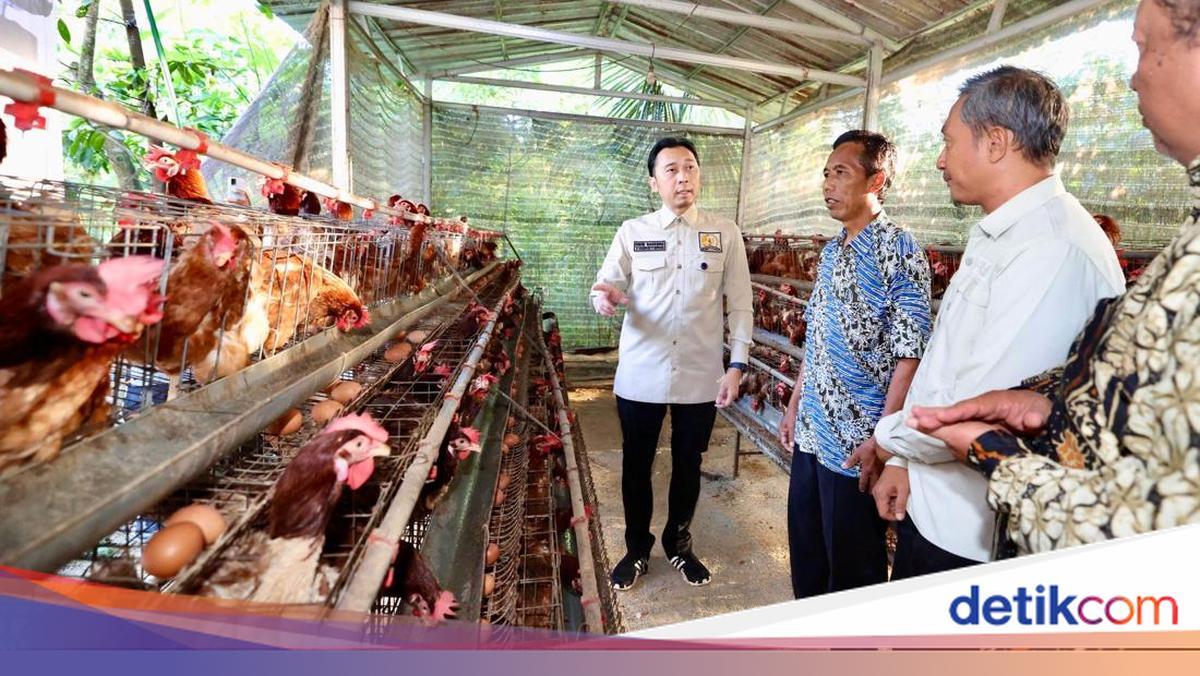
The programme themed ‘Productive Livestock Farmers, Well-Stocked Kitchens, Healthy and Happy Families’ forms part of integrated efforts to empower village economies while supporting national nutrition fulfilment.
For Ibas, livestock business assistance is not merely an ordinary economic programme. In his view, it can serve as the foundation for creating a strong, sustainable village food ecosystem capable of independently supporting community needs.
In Desa Wonogondo, around 500 to 600 laying hens are capable of producing more than 500 eggs every day. Ibas assessed this achievement as demonstrating the village’s great potential when provided with appropriate assistance, guidance, and business access.
He added that the egg production can also support the Free Nutritious Meals (MBG) programme, particularly as a protein source for schoolchildren. Ibas hopes similar programmes can be replicated in other villages in Pacitan.
On that occasion, Ibas also recalled the former conditions in Desa Wonogondo, which were synonymous with water scarcity issues. However, the village is now showing changes and progress thanks to collaboration among various parties.
“I used to hear about, know, and experience how the people of Wonogondo struggled greatly with water. Many areas in our region lack clean water. And alhamdulillah, gradually through our collective hard work, with the hands of the government both at the central and local levels, and us as people’s representatives, Desa Wonogondo has now become a village with surplus water,” he stated in his remarks on Thursday (7/5/2026).
This was conveyed by Ibas during his inspection of the laying hen livestock assistance programme in Desa Wonogondo, Pacitan Regency, on Tuesday (5/5).
Furthermore, Ibas revealed that the village’s improved conditions serve as crucial capital for the community to develop various productive enterprises, including livestock, agriculture, and other food sectors.
He also stressed the importance of synergy between village economic empowerment programmes and public nutrition fulfilment initiatives. In this way, local production not only boosts residents’ income but also directly impacts the health and quality of Indonesia’s younger generation.
In addition to laying hen farming, Ibas encouraged the community to develop other village potentials, from vegetables, fruits, fisheries, to integrated agriculture as part of the village food security ecosystem.
Ibas also reminded the importance of managing programmes with integrity and on target, especially in supporting SPPG kitchen operations so that the programme’s benefits are truly felt by the community.
“Insyaallah, we pray that everything is handled with integrity. Do not let deliveries be late, do not let the menu fail to rotate daily, and do not let the management merely fulfil reports without addressing the people’s needs,” he emphasised.
In front of residents and livestock groups, Ibas also directly showcased the egg production from the local farm. For him, one egg holds great significance for the future of the nation’s generation.
“I pray that all laying hen livestock groups can advance further, succeed, and provide benefits to other villages. With capital of around 100 to 200 million rupiah, we can produce extraordinary daily egg output. Hopefully, more people will be interested, whether through People’s Business Credit, independent capital, or in groups,” he said.
For information, on this occasion, Ibas also handed over feed assistance to support the sustainability of the community’s livestock business so that production continues optimally.
Attending the event were Pacitan Regent Indrata Nur Bayu Aji, Pacitan Regency DPRD Chairman Arif Setia Budi, Pacitan Regency DPRD members, Jember KPPG Head Said Karim, the sub-district head and Kebonagung Forkopimca officials, as well as representatives from the Pacitan Regency Agriculture Office, who together support the development of the livestock sector and food security in the area.