
Ibas Pushes for Strengthening the State's Role in Governing the National Oil and Gas Sector
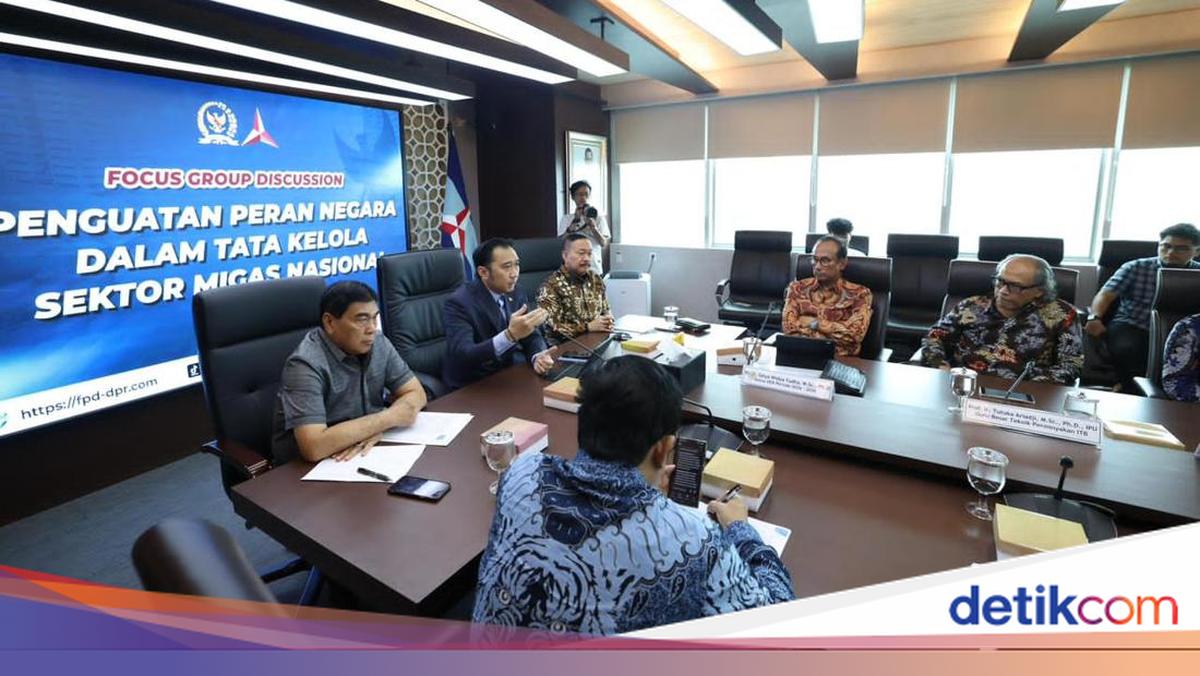
Deputy Chairman of the MPR RI Edhie Baskoro Yudhoyono (Ibas) emphasised that oil and gas issues concern the nation’s overall resilience, not merely fuel supply. He conveyed this during a Focus Group Discussion (FGD) titled ‘Strengthening the State’s Role in Governing the National Oil and Gas Sector’ at the DPR RI.
Ibas, who is also Chairman of the Democratic Party faction, highlighted the increasingly uncertain global situation as the backdrop for the urgency of this discussion.
“In my view, today we want to discuss oil and gas, as I mentioned earlier, which essentially means we are talking about our nation’s resilience,” he stated in a written remark on Wednesday (15/4/2026).
He explained that conflicts in the Middle East to Eastern Europe directly impact the global energy supply chain. The Strait of Hormuz route, which handles about 25 percent of global energy distribution, has become a crucial point that also triggers price pressures and inflation in nearly all countries, including Indonesia.
Ibas also reminded that global energy instability does not stop at the energy sector but extends to food, logistics, and the state’s fiscal burden.
“Energy is not just about fuel, but also LPG, food distribution, and the cost of living for the people,” he stressed.
Referring to Article 33 of the 1945 Constitution, Ibas asserted that the state must not merely act as a regulator. “A market without regulation will breed inequality,” he said, while emphasising the importance of national sovereignty in determining positions in global trade.
In his presentation, Ibas outlined five strategic focuses for the future. First, pushing for an increase in national oil and gas production through more aggressive investment and exploration. “The first is, of course, how we can increase our national production,” he said.
Second, ensuring energy subsidies are on target. “The second, we must remember the full economic value of fuel prices themselves and how subsidies must be on target,” he emphasised.
Third, strengthening state-owned energy enterprises to compete at the global level. “The third, of course, we want to strengthen our state-owned energy enterprises,” said Ibas.
Fourth, building strong national energy reserves. “The fourth is how we can also build our national energy reserves.”
Fifth, overseeing the acceleration of the energy transition, including the development of geothermal, solar, and hydropower. “The fifth is how we together oversee the acceleration of the energy transition,” he stated.
Ibas also urged regulatory reforms and simplification of permitting to create legal certainty for investors. He concluded his presentation with a call for Indonesia to transform from a resource-rich country into one that is truly sovereign in the energy sector.
“What is needed today is our courage and continuity in maintaining policies with a clear direction,” he concluded.
The FGD was attended by several experts. Chairman of the National Energy Council (DEN) for the 2026-2030 period, Satya Widya Yudha, presented projections for natural gas as a transition energy that will gradually replace the dominance of coal and crude oil.
Professor of Petroleum Engineering at ITB, Tutuka Ariadji, advocated for the implementation of a one-stop permitting system in the upstream sector and strengthened oversight in the downstream. Executive Director of the Reforminer Institute, Komaidi Notonegoro, emphasised the importance of improving governance in the revision of Oil and Gas Law No. 22 of 2001.
From a sustainability perspective, Head of the Centre for Food, Energy, and Sustainable Development at INDEF, Abra Talattov, discussed the dynamics of global energy commodity prices, including European gas trends. Postgraduate lecturer at UI, Wezia Berkademi, assessed that strengthening the state’s role must rely on regulatory certainty, bolstering state-owned enterprises, and enhancing technology.
Macroeconomic Researcher at LPEM FEB UI, Teuku Riefky, highlighted the linkage of the oil and gas sector to inflation, energy subsidies, and national fiscal resilience.
From within the Democratic Party faction, Achmad from Commission VI emphasised the need for more concrete energy transition strategies, while his faction colleague, Nurwayah, assessed that the Oil and Gas Bill discussion has not fully accommodated energy transition issues.
Zulfikar Hamonangan proposed mandatory state share ownership in every foreign energy investment.
Member of Commission XII, Sartono Hutomo, closed the forum by affirming that inputs from this FGD will serve as material for refining regulations, and what is needed now is not new institutions, but the optimisation of the state’s role within the existing regulatory framework.
The presence of these stakeholders strengthens the spirit of cross-sector collaboration in formulating more comprehensive, adaptive oil and gas policies oriented towards national interests.
Source: jawawa.id (https://jawawa.id/newsitem/ibas-pushes-for-strengthening-the-states-role-in-governing-the-national-oil-and-gas-sector-1776246659)
Originally published by detikcom (https://news.detik.com/berita/d-8445545/ibas-dorong-penguatan-peran-negara-dalam-tata-kelola-sektor-migas-nasional), translated from Indonesian