
Ibas Pushes for Strengthening of These 3 Strategies Amid Global Uncertainty
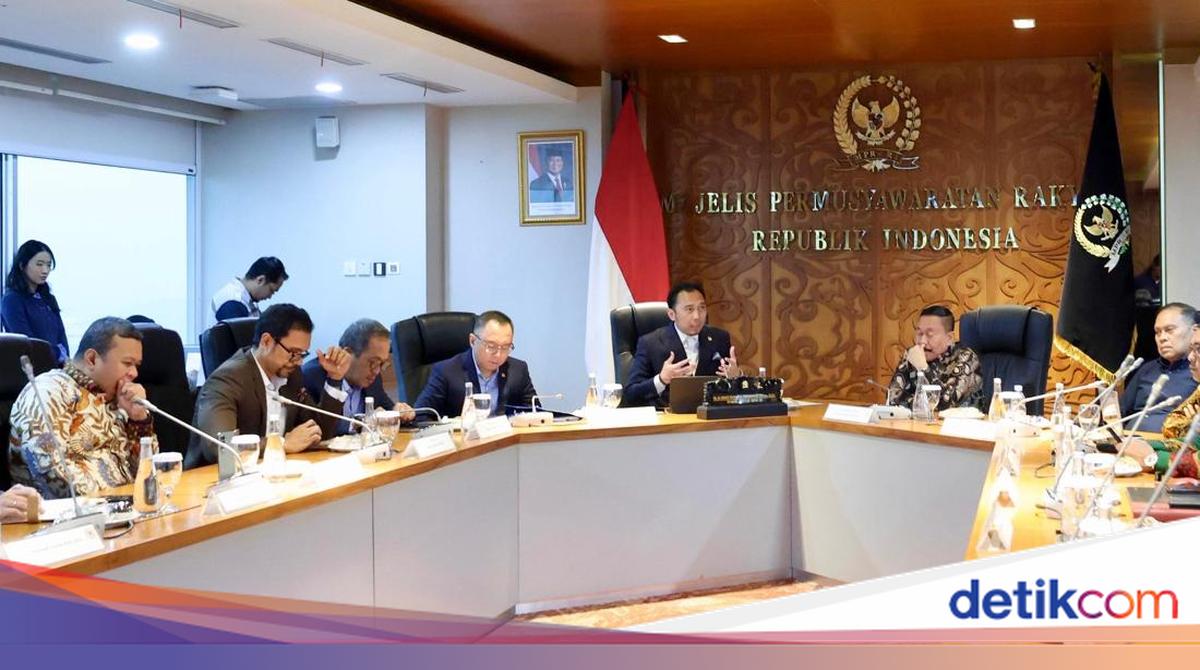
Deputy Chairman of the MPR RI and Chairman of the Democratic Party Faction in the DPR RI, Edhie Baskoro Yudhoyono (Ibas), has stressed the importance of strengthening fiscal, energy, and social protection strategies to address the increasingly complex and uncertain global dynamics.
This was stated during the National Discussion themed ‘Indonesia Amid Global Turmoil: Fiscal, Energy, and People’s Protection Strategies’.
In his opening remarks, Ibas noted that the world is currently facing three major layers of dynamics: geopolitics, geo-economics, and geostrategy. These three are interconnected and impact global economic stability, energy and food trade, as well as national monetary and fiscal policies.
“Indonesia does not stand alone. We are connected in a dynamic global system. What happens in the world today directly affects our people’s lives, from energy and food prices to people’s purchasing power,” he said in a written statement on Thursday (9/4/2026).
He explained that global tensions trigger supply chain disruptions, rising energy and food prices, and changes in world trade patterns. These conditions also impact exchange rate pressures, capital flows, as well as the increasing burden of energy subsidies and social protection needs.
From the fiscal perspective, Ibas highlighted the importance of maintaining a balance between protecting the people and the health of the state budget (APBN).
“The APBN must remain a shock absorber, protecting the people from global pressures while maintaining national economic stability,” he said.
He noted that the government has taken strategic steps by keeping energy prices stable to avoid burdening the public, as well as introducing various pro-people economic policy packages.
Quoting Nobel laureate economist Joseph Stiglitz, Ibas reminded that high inequality can weaken the economy. Therefore, public policies must favour the people.
Ibas also affirmed his commitment to guiding policies through three main approaches: short-term (stabilisation), medium-term, and long-term. In the short term, the focus is on price and market interventions, strengthening food and energy reserves, expanding social assistance, and stabilising the exchange rate.
For the medium term, it is directed towards targeted subsidy reforms based on data, diversification of import and export sources, and strengthening domestic industries. Meanwhile, for the long term, strategies include energy independence through renewables, national food sovereignty, value-added-based economic transformation, and enhancing global competitiveness.
In addition, Ibas discussed the importance of synergy between monetary and fiscal policies, strengthening economic diplomacy, and increasing investment in the energy and food sectors. He stated that Indonesia has experience in facing various crises, from the 1998 crisis, the 2008 global crisis, to the Covid-19 pandemic, which serves as ‘capital’ to face current global challenges.
“A strong nation is not one free from crises, but one that can respond to crises quickly, accurately, and in favour of the people,” he said.
Ibas also invited all discussion participants to provide strategic views, critical input, and concrete, implementable policy recommendations, while emphasising that the key to facing global challenges is through bold policy-making, precise strategies, and national synergy.
“Today’s input will be an important part in formulating policies in parliament, overseeing the APBN, and strengthening our national strategies,” he revealed.
“From global shock to national resilience, from challenges to opportunities,” he added.
The discussion was enriched by views from experts and academics. Professor of International Law at Universitas Indonesia (UI), Prof. Hikmahanto Juwana, SH., LL.M., Ph.D., questioned the effectiveness of the global system in ensuring compliance between countries.
“What can ensure that if an agreement is reached, there will be no more violations?” he asked.
Meanwhile, Professor of Middle East History and Geopolitics at UI, Prof. Yon Machmudi, Ph.D., highlighted the linkage between the Iran conflict and dynamics in Gaza as a new pattern of global conflict. This was reinforced by the view of Democratic Party Faction Member Rizki Natakusumah, who emphasised the importance of national strategic resilience.
“Indonesia proposes itself as a mediator, which we appreciate. We must build our own country’s strategic resilience,” he explained.
From the energy perspective, Energy Resilience Expert from Universitas Pertahanan, Dr. Ir. Rudy Laksmono W, M.T., reminded that subsidies continue to swell, while national production is still far below daily consumption. This aligns with the response from Democratic Party Faction Secretary Marwan Cik Asan, who highlighted energy subsidy pressures and the importance of maintaining oil prices through national efficiency.
Meanwhile, Asia Freedom Fellow at LSE and Senior Research and Policy Specialist at CIPS, Andree Surianta, Ph.D., stated that strengthening economic fundamentals through mobilising production, efficient distribution, and sustainable financing is crucial.
From the geopolitical and national resilience perspective, Director of Foreign Cooperation at Indo-Pacific Strategic Intelligence, Aisha Rasyidila Kusumasomantri, M.Sc., reminded of the need for preparedness in facing various global disruption scenarios, especially in the energy and food sectors.
Furthermore, Senior Economist at ERIA, Dionisius Narjoko, Ph.D., mentioned the need to strengthen the manufacturing industry and social protection. This aligns with Democratic Party Faction Member Sartono, who highlighted the importance of long-term structural improvements through increasing domestic energy production and strengthening regulations.
“What needs to be prepared is a social safety net as well as long-term strategies through industry diversification and regional cooperation,” he clarified.
This national discussion is expected to produce policy recommendations to help
Source: jawawa.id (https://jawawa.id/newsitem/ibas-pushes-for-strengthening-of-these-3-strategies-amid-global-uncertainty-1775717453)
Originally published by detikcom (https://news.detik.com/berita/d-8436218/ibas-dorong-penguatan-3-strategi-ini-di-tengah-ketidakpastian-global), translated from Indonesian