
Ibas Pushes for Clean, Smart Transportation as a Civilisational Transformation Agenda
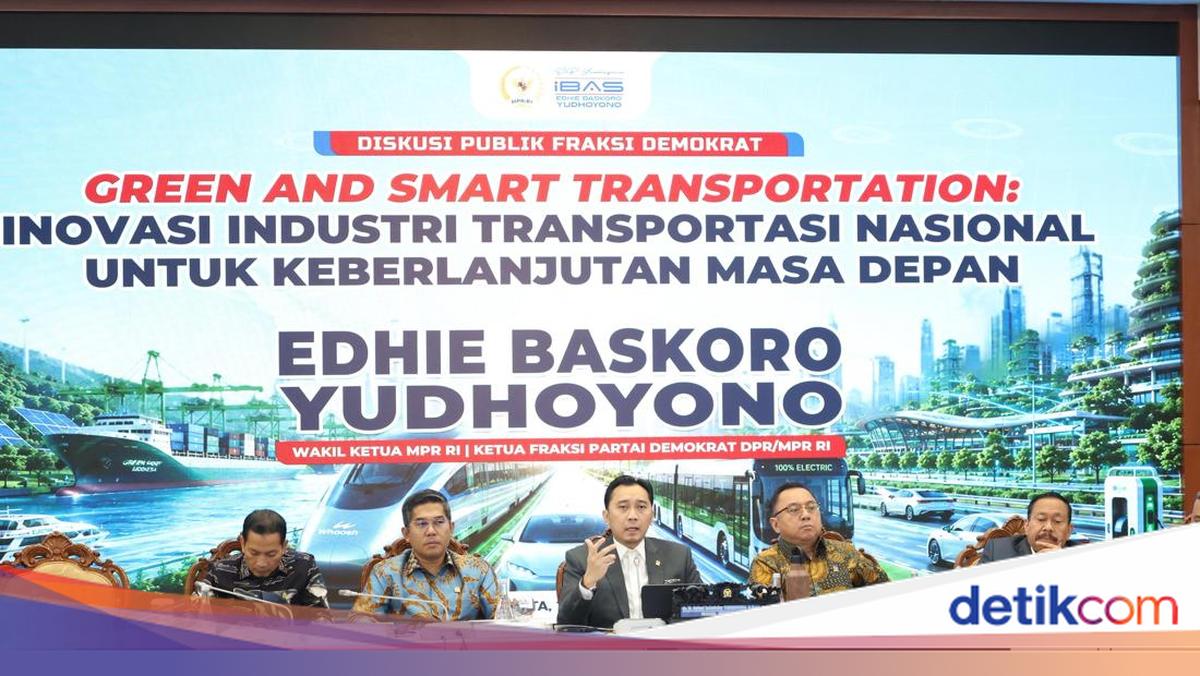
Deputy Speaker of the People’s Consultative Assembly (MPR), Edhie Baskoro Yudhoyono (Ibas), has emphasised that the transformation towards green and smart transportation must be oriented towards the constitutional mandate, namely protecting the people, advancing public welfare, and enhancing the intellectual life of the nation. According to him, development should not only focus on physical infrastructure but must also deliver public services that are increasingly effective, efficient, and whose benefits are felt by the community. He made these remarks while attending a public discussion titled ‘Green and Smart Transportation: National Transportation Industry Innovation for Future Sustainability’ on Wednesday (17/6). The discussion brought together academics, transportation industry players, community groups, and stakeholders involved in promoting the development of smart and environmentally friendly transportation systems in Indonesia. In his address, the legislator from East Java VII reminded attendees that the direction of national development must always be anchored in the state’s objectives as enshrined in the Preamble of the 1945 Constitution. He argued that technological progress and economic development must ultimately lead to the people’s welfare. ‘Our constitution is very clear. The state exists to protect the entire Indonesian nation, promote public welfare, and enhance the intellectual life of the people. Therefore, economic development, as mandated by Article 33 of the 1945 Constitution, must truly be for the people’s prosperity, not merely physical construction or infrastructure,’ Ibas stated on Thursday (18/6/2026). The IPB University doctoral graduate assessed that technological advancements must be harnessed to improve the quality of public services. He noted that the success of digital transformation is not solely measured by the sophistication of the technology, but by the extent to which its benefits are directly felt by the community. ‘The most important thing is not just a commitment to advancing technology, but how that technology delivers better, more accessible public services whose benefits are truly felt by the people,’ he said. Furthermore, the Deputy Chairman of the Indonesian Chamber of Commerce and Industry (KADIN) Advisory Board highlighted the global trend towards smart city development, low-emission transport, and carbon-neutral transportation policies. He observed that many developed countries have made the transport sector a key part of their sustainable development agendas. ‘Developed countries are already focusing on environmentally friendly transport, smart cities, and carbon-neutral transportation. All of this is done to create a greener, cleaner, and more sustainable future,’ he explained. On the other hand, Indonesia is also facing a significant momentum in the form of a demographic bonus and energy transition. However, as the world’s largest archipelagic nation, Indonesia still faces various challenges, ranging from urban congestion, high energy consumption, and transport emissions to regional infrastructure inequality. ‘Indonesia is one of the largest energy consumers in the region. We also face rising emissions and infrastructure gaps across different areas. Therefore, the transition to new and renewable energy must be carried out gradually, sustainably, and with the people’s interests at heart,’ said the Chairman of the Democratic Party Faction in the House of Representatives (DPR RI). As a solution, the Deputy Chairman of the Democratic Party urged the formulation of more comprehensive policies to support the national green transport ecosystem. He assessed that the government needs to prepare a clear roadmap to prevent the transportation transformation from proceeding in a piecemeal fashion. ‘Do we need a more integrated electric vehicle roadmap? Are the incentives and subsidies already well-targeted? How about integrating national transportation data, strengthening the Intelligent Transportation System (ITS), utilising Internet of Things (IoT) sensors, and employing Artificial Intelligence (AI) in traffic management? We must think about all of this together,’ Ibas asserted. He believes that the use of AI can also help improve the effectiveness of transport governance if integrated with relevant institutions, including the police and the transportation sector. Such a move is believed to accelerate the realisation of the smart mobility concept in Indonesia. On the occasion, Ibas also recalled the experience of the administration of Indonesia’s 6th President, Susilo Bambang Yudhoyono, which promoted a development strategy that was both pro-growth and pro-welfare. ‘We once had a development approach oriented towards both economic growth and public welfare. The principle was pro-growth, pro-jobs, pro-poor, and pro-environment. This means economic growth must create jobs, reduce poverty, and preserve the environment for future generations,’ he said. He added that the current national development direction under the leadership of President Prabowo Subianto shares a similar spirit, namely achieving energy sovereignty, strengthening national industrialisation, building strategic infrastructure, and delivering economic justice supported by good governance. Concluding his remarks, the Nanyang Technological University (Singapore) master’s graduate invited all participants to build cross-sector collaboration to realise a more advanced and sustainable future for Indonesia’s transportation. ‘We may have different backgrounds, but we have the same goals. The question now is, does Indonesia already have a grand architecture for national green transportation? How do we ensure the electric vehicle transition proceeds fairly for all parties? And, no less important, how can Indonesia become a producer of innovation and technology, not just a consumer?’ he concluded. Ibas expressed hope that the public discussion would not end merely as an exchange of ideas, but would generate concrete steps forward.