
Ibas Emphasises the Importance of Strengthening the Blue Economy and Food Security
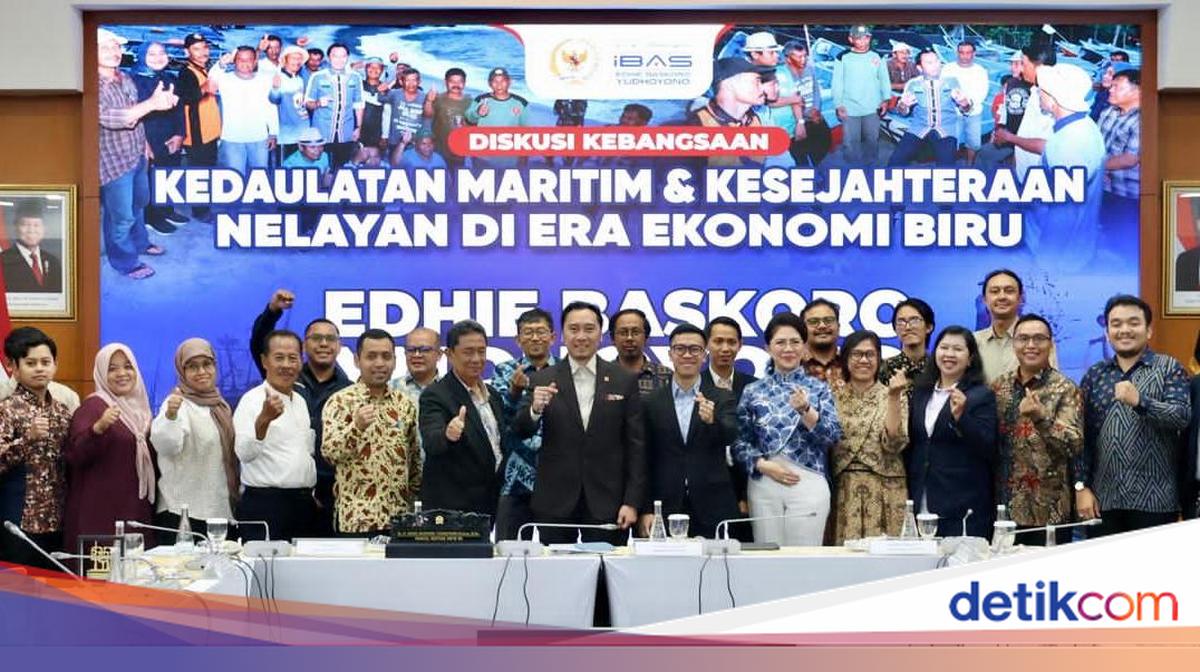
On the occasion of National Fishermen’s Day, Deputy Chairman of the MPR RI, Edhie Baskoro Yudhoyono (Ibas), emphasised the importance of strengthening the blue economy and national food security. This step serves as a strategic agenda for Indonesia’s future.
The Chairman of the Democrat Party Faction in the DPR RI appreciated the dedication of Indonesian fishermen as sea food heroes who have played a crucial role in maintaining protein availability for the community.
“Happy National Fishermen’s Day to us all. Fishermen are the frontline guardians of the nation’s food security. The sea is our future, and fishermen are its guardians,” said Ibas in a written statement on Monday (6/4/2026).
This was conveyed during the MPR RI National Discussion titled ‘Maritime Sovereignty and Fishermen’s Welfare in the Blue Economy Era’.
He stressed that the national discussion forum must produce ideas that do not stop in the discussion room but are realised as real solutions for the community.
“We want to ensure that the ideas in this forum do not stop in the discussion room but develop into concrete solutions. The maritime and fisheries sector must grow as a complete ecosystem capable of providing welfare for the community, especially fishermen,” he asserted.
Ibas also highlighted the global situation full of uncertainties, from food crises and energy issues to supply chain disruptions, which demand that Indonesia further strengthen national self-reliance.
“In the midst of global dynamics, conflicts, energy crises, and supply chain disruptions, we must reaffirm the importance of national food security, including from the maritime sector,” he continued.
According to the S2 graduate from Nanyang Technological University, the blue economy concept needs to be implemented in a real manner as a sustainable development strategy that favours public welfare.
“The blue economy must not stop as a concept. Blue food must become a real strength in the national food system that we build together,” he stated.
Furthermore, the S3 graduate from IPB University reminded the importance of positioning fishermen as the main subjects in development.
“We must not leave behind local communities, our fishermen. They must be the main actors in a sustainable maritime ecosystem. True development is about expanding human freedoms,” he revealed.
Indonesia, he continued, possesses abundant marine biodiversity, from tuna, snapper, and grouper to shrimp and lobster, as well as important ecosystems such as coral reefs, mangroves, and seagrass. In addition, high-value commodities like pearls and various marine derivative products also have great potential in the global market.
“Our potential is extraordinary. The challenge is how to preserve and manage this wealth wisely to truly improve community welfare,” he said.
Ibas also highlighted the importance of policy continuity across governments in building the national maritime sector.
He appreciated the policy foundations during the era of President Susilo Bambang Yudhoyono, which strengthened fishermen’s institutions and maritime diplomacy, as well as the policy direction in the era of President Prabowo Subianto, which promotes sea-based food security and strengthens investment in the fisheries sector.
“Maritime sector development is a cross-generational process. A strong foundation must continue to be carried forward to yield sustainable results,” he said.
In addition, he emphasised that challenges in the maritime sector are not only in production aspects but also encompass distribution, access to capital, technology utilisation, and the impact of climate change.
“Distribution must be more efficient, technology must be enhanced, and budget allocation must truly be felt by fishermen,” he asserted.
Ibas also encouraged the transformation of the fisheries industry through downstreaming to increase added value and global competitiveness.
“We must not just sell marine products in raw form. We must enter the processing industry to have added value and competitiveness in the global market,” he explained.
In closing his remarks, Ibas called on all stakeholders to jointly build a strong maritime culture, including promoting the consumption of sea food as part of efforts to improve the quality of Indonesia’s human resources.
“When sea food consumption increases, we not only strengthen the fishermen’s economy but also improve the health and intelligence of the nation’s generation,” he concluded.
In the discussion, several experts also provided strategic views. Prof. Dr. Ir. Sugeng Hari Wisudo, M.Si emphasised the importance of energy efficiency and the application of environmentally friendly technology, as well as strengthening fishermen’s cooperatives and business diversification, such as fishing tourism.
Meanwhile, Dr. Ir. Firdaus Basbeth highlighted the importance of strengthening the value chain so that fishermen gain greater economic benefits, with cooperatives as one of the main solutions.
Dr. Roza Yusfiandayani underscored the challenges faced by fishermen, such as lean seasons, extreme weather, and low income, as well as the importance of technological and informational support.
From the Democrat Party Faction, Member of Commission IV of the DPR RI Hasan Saleh stated that various inputs in this forum will be a serious concern at the legislative level.
Another Commission IV member, Ellen Esther, highlighted the importance of strengthening the Red White Fishermen’s Village programme as an integrated effort to improve fishermen’s welfare.
Meanwhile, M. Zulfikar Suhadi emphasised the importance of balancing investment and protection for small fishermen so that maritime sector development remains inclusive.
This national discussion was also attended by Members of Commission IV of the DPR RI from the Democrat Party Faction, namely Hasan Saleh, M. Zulfikar Suhadi, and Ellen Esther, as well as experts and academics from various institutions, such as IPB University, PPM School of Management, and Universitas Padjadjaran.
Representatives from maritime organisations were also present, including Conservat