
Ibas: Creativity is Not Just Content, but an Economic Force
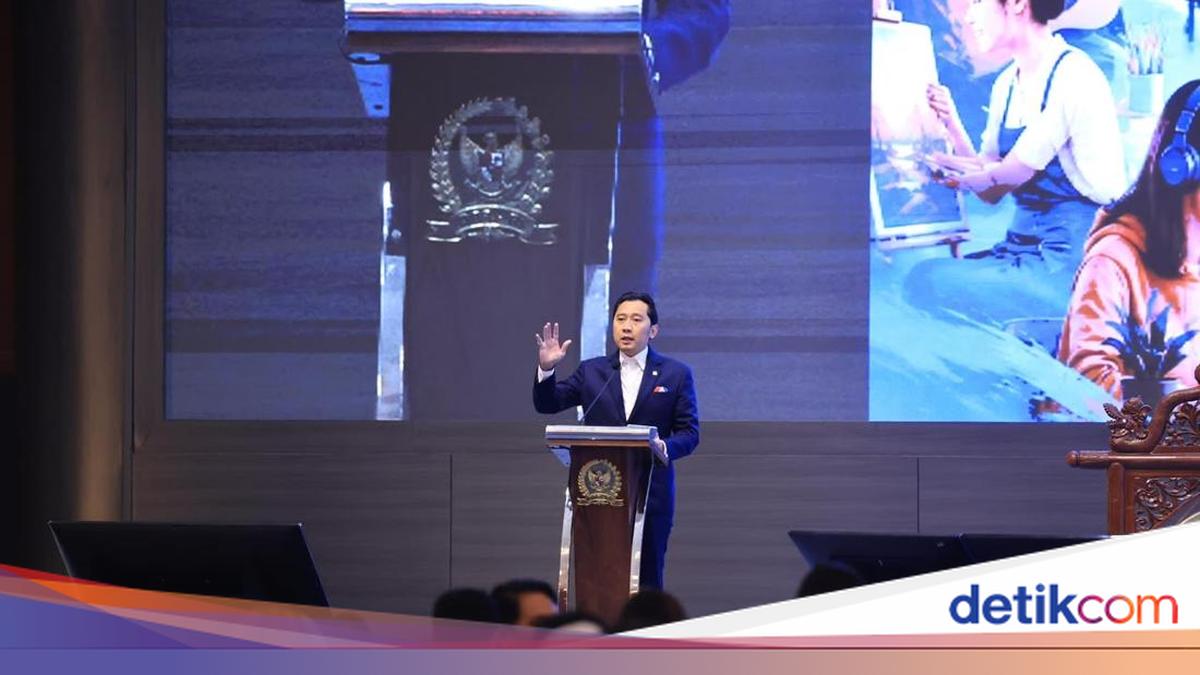
The Deputy Chairman of the MPR RI and Chairman of the Democratic Party Faction in the DPR RI, Edhie Baskoro Yudhoyono (Ibas), has urged Indonesia’s younger generation not to merely be spectators amidst global technological and economic shifts, but to emerge as players, creators, and drivers of change.
This was stated during a National Seminar organised by the Democratic Party Faction in collaboration with the Ministry of Creative Economy, themed ‘Youth Working, Economy Empowered, Indonesia Advanced’ in Jakarta, Monday (7/9/2026). The seminar brought together members of parliament, the government, creative economy practitioners, communities, and students from various universities to discuss the future of the creative economy, technological developments, politics, and democracy.
According to Ibas, Indonesia possesses significant capital in the form of a young generation that is creative, innovative, and capable of adapting to technological advancements. He noted that this potential must be directed towards becoming an economic force that creates employment and improves public welfare. “Creativity is not just content. Creativity is an economic force,” Ierb said on Thursday (10/9/2026).
He remarked that the current challenge for the youth is not a lack of ideas; rather, many young people possess grand visions but hesitate to begin. Consequently, Edhie Baskoro encouraged students and the younger generation to be brave in transforming ideas into works, and works into economic value. “Ideas must become works. Works must become value. And value must create opportunity. This is the essence of the creative economy,” he stated.
He assessed that digital technology developments have opened much wider opportunities for the youth to build businesses and create new professions. In his view, large capital is not always necessary to start; skills in using laptops, cameras, technology, art, design, or content creation can be developed into sustainable businesses if pursued seriously.
He also urged young people not to be trapped in the mindset that an idea can only be realised after attaining a certain position or significant capital. “Let us not merely stop at thinking big without starting. Once we start, let us accelerate so that what we run can provide more benefits to the wider community,” he expressed.
AI is Not an Enemy
The development of Artificial Intelligence (AI) is both a challenge and an unavoidable opportunity. Ibas assessed that AI has become part of human life and will continue to influence how people learn, work, create content, and run businesses. Therefore, the younger generation must not view AI and digitalisation as enemies. “If we consider AI and digital technology as enemies, we certainly will not be able to move faster and more advanced,” said Ibas.
However, he reminded that the use of AI must be accompanied by critical thinking skills. Technology should be used to augment humans, not to cause humans to stop learning. He noted that humans must continuously increase their competence to adapt to technological changes. “Humans must continue to adapt and learn how to use AI so that their functions are not replaced by technology,” he explained.
Politics Directly Affects the Youth
Addressing students, Ibas also reminded the younger generation not to be apathetic towards politics. He stated that various issues touching the lives of young people are fundamentally linked to public policy and political processes. From education, employment, and the digital economy to copyright, AI policy, and the direction of the national budget, all require political decisions. “Do not feel that politics is not your business. Because politics is present in your daily lives,” he said.
He believed that youth participation in democracy is necessary so that public policy can become more responsive to societal needs. He emphasised that democracy does not require everyone to have the same thoughts; differences in choice, ideas, and views are part of a healthy democracy, provided they are built on ethics and mutual respect.
In the forum, EBY also emphasised the importance of ensuring that economic growth provides real benefits to the community. He argued that the success of development should not be measured solely by the size of economic growth figures or the national budget. “What is more important is whether the people obtain jobs, have purchasing power, gain access to education and health, and have opportunities to improve their welfare,” he stated. He added, “The measure of development success is not just how much economic growth is produced, but whether the people truly feel the benefits.”
He requested that government policies and budget usage be continuously monitored to ensure they benefit the wider community, including MSMEs and creative economy actors.
Democratic Party Promotes MSME Strengthening
During the event, the experience of the ‘Mitra Sehati’ programme was also shared. This MSME coaching programme is managed by the Association of Wives of Members (PIA) of the Democratic Party Faction and is chaired by Aliya Baskoro Yudhoyono. The programme has been running for about a decade and has grown from approximately 300 MSMEs to over 600 mentored MSMEs across various regions in Indonesia.
“Assistance includes financial management, bookkeeping, capital, marketing, product packaging, to the expansion of market access,” it was explained. According to the Chairman of the Democratic Party Faction in the DPR RI, the experience of Mitra Sehati demonstrates the importance of an ecosystem capable of supporting business actors sustainably, specifically so that MSMEs are not only able to survive but also grow and expand their markets. Ibas encouraged that collaboration between the government, parliament, business actors, communities, and the younger generation must continue to be expanded to strengthen the people’s economy and create more opportunities.