
Ibas Calls for Pine Resin Downstreaming to Boost Ponorogo’s Economy
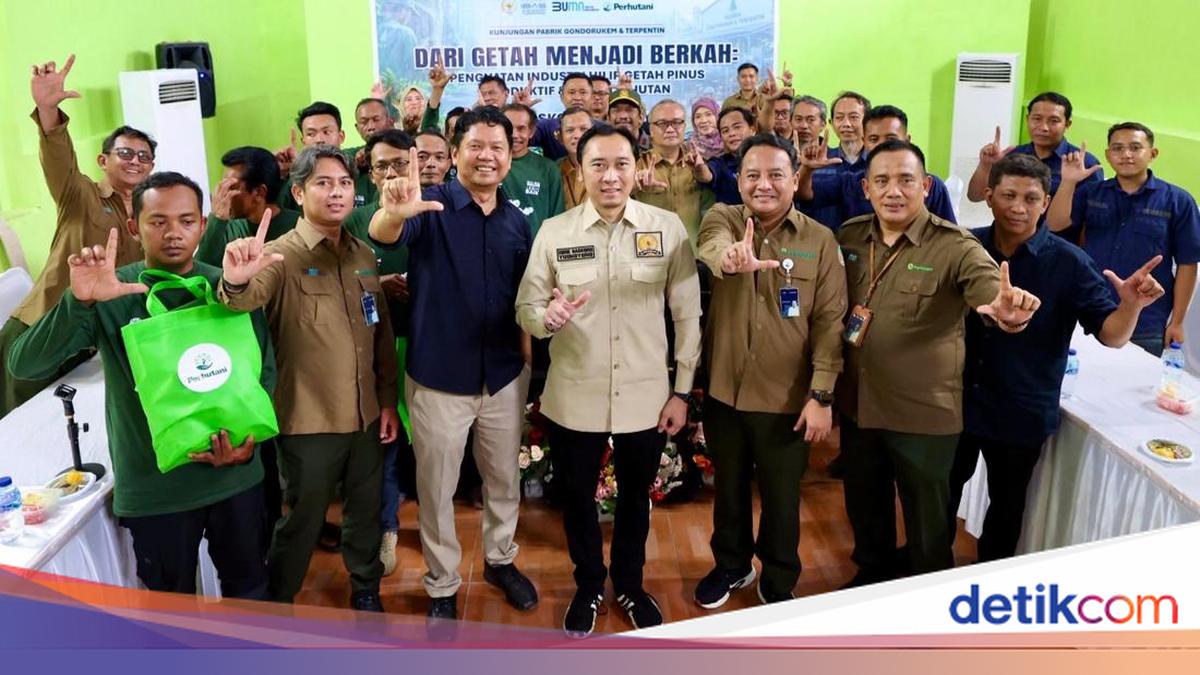
Edhie Baskoro Yudhoyono (Ibas), deputy speaker of the People’s Consultative Assembly (MPR RI) and chairman of the Democratic Party faction in the House of Representatives (DPR RI), has called for stronger downstream development in the forestry industry to increase the added value of natural resources and improve public welfare. One proposal is to develop pine resin processing in Ponorogo, East Java.
Ibas made the remarks during a visit to the Sukun Gum Rosin and Turpentine Factory (PGT Sukun) in Ponorogo on Thursday (29 October). The visit, held during a recess, was intended to observe production, discuss issues with Perum Perhutani officials, and hear from workers and nearby residents.
Ibas toured the process of turning pine resin into gum rosin and turpentine, as well as the factory’s facilities and production technology. He said Indonesia’s forestry potential should be developed further so that it does not merely supply raw materials. Pine resin, for example, can be processed into derivative products used in sectors ranging from construction and infrastructure to paint, cosmetics and pharmaceuticals.
He said there were still opportunities in domestic and overseas markets for gum rosin and turpentine. India and China are among the countries seeking Indonesian pine-resin derivatives. Increasing production capacity and quality is therefore necessary to make Indonesia’s processing industry more competitive.
“Strengthening downstream industries is not simply about increasing production or export figures; it is also about ensuring that the economic value generated benefits the country, workers and local communities more broadly,” Ibas said in a statement on Friday (30 October 2026).
Alongside industrial development, Ibas emphasised the need to maintain raw-material supplies through sustainable forest management. He said planting, forest care and rehabilitation must be prioritised to ensure a continued supply of pine resin.
He stressed that forests are not only a source of industrial raw materials but also provide ecological and social benefits. Forestry industry development must therefore take environmental sustainability into account.
The risks of forest damage caused by climate change, extreme weather and human activity must also be anticipated. Ibas said industrial productivity must not come at the expense of the environment. He also called for studies into land that could be developed productively in collaboration with various parties.
Ibas also highlighted the importance of operational efficiency, innovation and technology in strengthening the forestry industry’s competitiveness. Production processes should be continually improved to prevent waste and raw-material losses, he said. Research into new products derived from gum rosin and turpentine should also be expanded to generate greater added value.
He said digital technology for administration and operational record-keeping was important for transparency and good corporate governance. He hoped better product quality, efficiency and governance would help Indonesia’s forestry industry compete more effectively in global markets.
Ibas also drew attention to workers’ welfare, particularly that of pine-resin tappers, who are an important part of the production chain. The industry’s success should be measured not only by output, but also by the economic benefits received by workers and surrounding communities, he said.
He called for improvements to workers’ welfare, safety and health, both in forest areas and at the factory. The renewal of the tapping workforce was another concern: Ibas said young people should be encouraged to take part so that pine-resin tapping can continue.
He also heard residents’ calls for repairs to the access road to the factory area. The road is important for local mobility and smooth operations, he said.
Ibas said Perhutani should work more closely with local government and other stakeholders to improve conditions for workers and local communities. Developing the forestry industry requires collaboration between central and local government, state-owned enterprises, parliament, the private sector and the public, he added.
He also hoped PGT Sukun would generate broader economic benefits for Ponorogo, including by involving micro, small and medium-sized enterprises (MSMEs) in economic activity around the plant.
“Pine resin can be a blessing if we manage it well, protect the sustainability of the forest, develop the industry and ensure that communities share in the benefits,” Ibas said.
Perum Perhutani president director Tio Handoko welcomed Ibas’s visit and interest in developing downstream forestry industries in Ponorogo. He said he hoped the support would encourage Perhutani to make better use of the industry’s potential while improving the welfare of workers and communities.
Also attending the visit were Perhutani operations director Wawan Triwibowo, East Java regional division head Dewanto, KBM IHHBK general manager Irmasari Churiana, and PGT Sukun head Slamet Asrofi.
Source: jawawa.id (https://jawawa.id/newsitem/ibas-calls-for-pine-resin-downstreaming-to-boost-ponorogos-economy-1793375584)
Originally published by detikcom (https://news.detik.com/berita/d-8731824/ibas-dorong-hilirisasi-getah-pinus-untuk-tingkatkan-ekonomi-ponorogo), translated from Indonesian