
Ibas: 100 GW Electricity Target Is Not Just About Power Plants, but a Foundation for a Resilient Economy
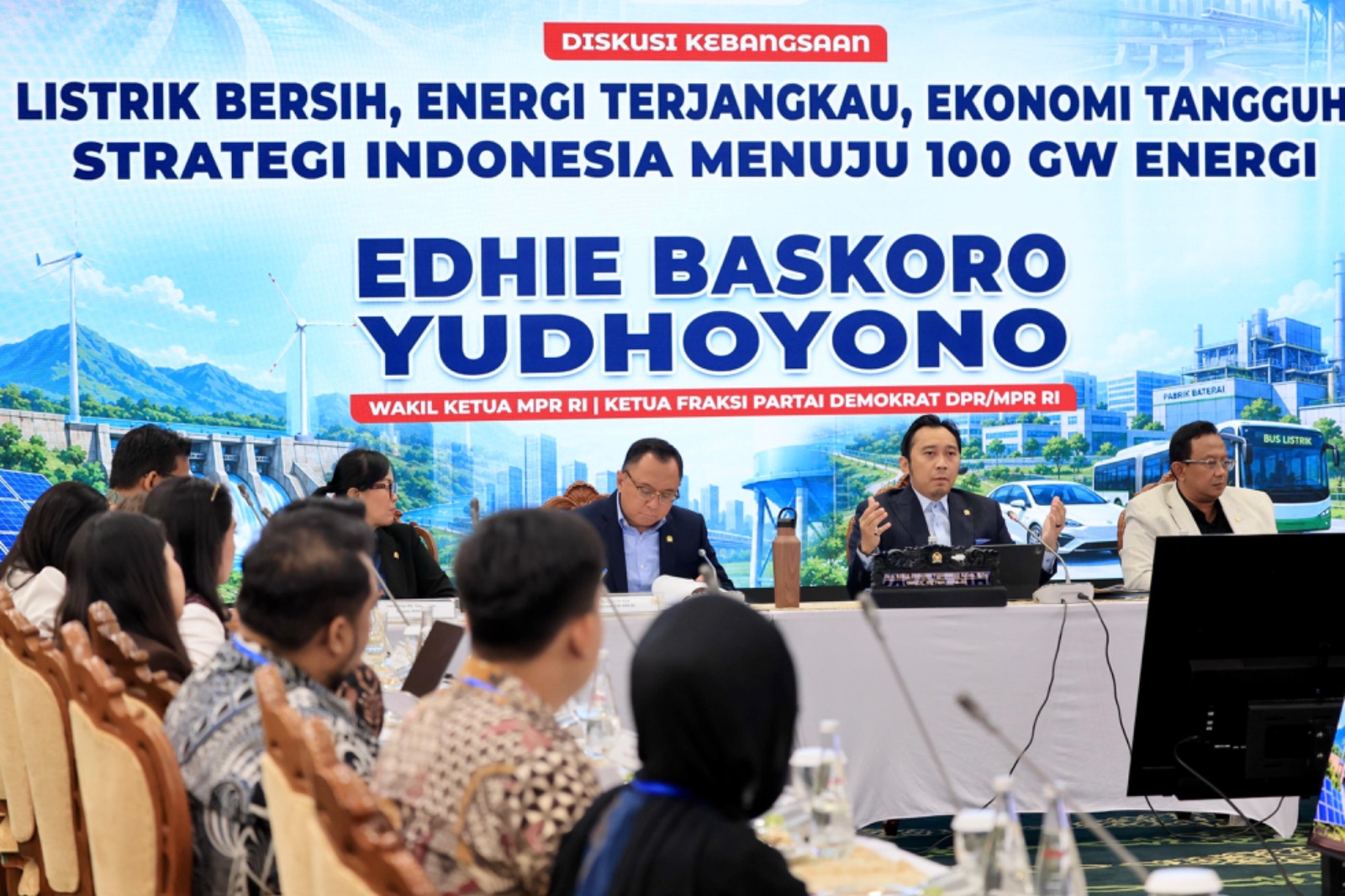
Deputy Speaker of the MPR and Chairman of the Democratic Party Faction in the DPR, Edhie Baskoro Yudhoyono (Ibas/EBY), is pushing for the national electricity capacity development agenda towards 100 Gigawatts (GW) not to be pursued merely as a power plant construction target, but to be made a strategic momentum for creating investment, strengthening national industry, and opening up employment opportunities.
This was conveyed by Ibas at the National Discussion titled “Clean Electricity, Affordable Energy, Resilient Economy: Indonesia’s Strategy Towards 100 GW” at the MPR/DPR Complex, Senayan, Jakarta.
Ibas emphasised that in the era of information technology development, artificial intelligence (AI), data centres, and the electric vehicle ecosystem, the availability of large, reliable, and competitive electricity is the main foundation for economic growth and public welfare.
“When we turn on a light, we are actually turning on the economy. Children can study, MSMEs can produce, hospitals can serve, industry can move. Electricity is not merely a commodity; electricity is the foundation of welfare,” said Ibas.
Ibas offered four main strategic shifts to accelerate the transformation of the national electricity sector without burdening the public. This step begins with shifting focus from merely building power plants towards strengthening the transmission network system, energy storage, interconnection, and smart grids. The clean electricity supply is then made the main magnet for attracting green industry investment, manufacturing, electric vehicles, and downstream processing.
In addition, universities, BRIN, and domestic industry are encouraged to transform from users into creators of energy technology, balanced by a reorientation of state budget allocation policy so that it becomes a trigger for productive investment and job creation.
Ibas also reminded that the acceleration of the renewable energy transition must firmly uphold three basic principles, namely clean, affordable, and reliable, and operate within the corridor of Article 33 of the 1945 Constitution.
“The development of new and renewable energy (EBT) must not be synonymous with expensive energy, and the energy transition must not make our industry dependent on foreign technology,” he stressed.
The discussion also gathered various views from members of parliament, academics, and environmental practitioners. Democratic Party Faction member Faujia Helga linked electricity infrastructure development in eastern Indonesia such as Southwest Papua as a form of social justice and state presence.
Meanwhile, DPR member Anton Sukartono Surrato emphasised the importance of regulatory certainty in the formation of the New and Renewable Energy Bill (EBET) and the Electricity Bill in order to simplify licensing and attract private investment.
On the technical and environmental side, Professor of the Faculty of Engineering at the University of Indonesia Prof. Widodo Wahyu Purwanto and Pandawara Group representative Ikhsan Destian also highlighted the arrangement of energy subsidy regulations and the potential for developing waste-to-energy power plants from upstream to downstream.
Ibas hopes that this cross-sector collaboration can translate ideas into concrete policies that provide real benefits for all Indonesian people.
“Indonesia must not only become the energy market of the future; Indonesia must become the owner of the energy future,” concluded Ibas.
Source: jawawa.id (https://jawawa.id/newsitem/ibas-100-gw-electricity-target-is-not-just-about-power-plants-but-a-foundation-for-a-resilient-economy-1787320324)
Originally published by Media Indonesia (https://mediaindonesia.com/ekonomi/924527/ibas-sebut-target-100-gw-listrik-bukan-cuma-soal-pembangkit-tapi-fondasi-ekonomi-tangguh), translated from Indonesian