
IAW: Institutions Lose Authority Due to Loss of Trust
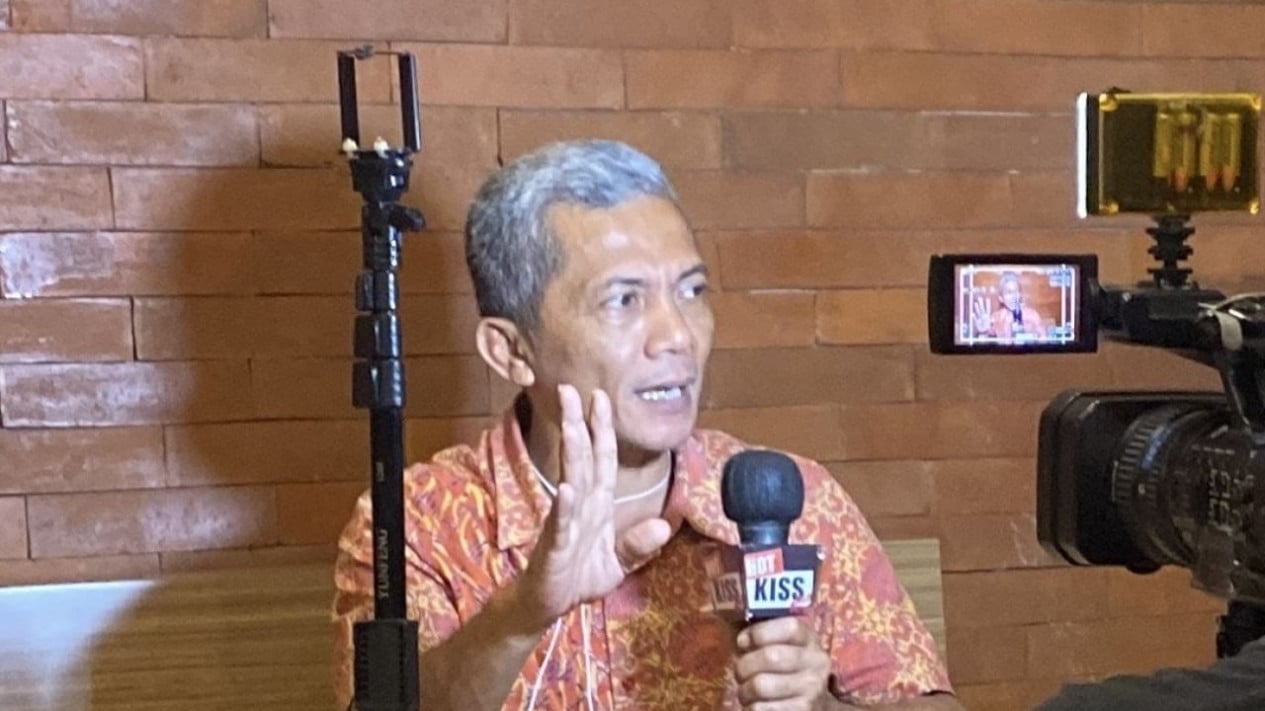
The threat of dissolving the Directorate General of Customs and Excise (DJBC) by 2026 is not considered a new event in the history of Indonesian customs. Four decades ago, specifically in 1985, the government took drastic measures by transferring part of the import inspection authority to surveying companies due to declining trust in Customs.
“In 1985, the government made a decision that is very rare for a country to take against its own customs institution. Through Presidential Instruction Number 4 of 1985, the government altered the mechanism for inspecting imported goods. In practice, certain inspections were conducted by surveying companies before goods were shipped to Indonesia. Some functions that were previously the heart of Customs’ work were transferred to third parties,” said the Founding Secretary of Indonesian Audit Watch (IAW), Iskandar Sitorus, on Saturday, 1 August 2026.
Iskandar explained that while Customs was not formally dissolved, the transfer of inspection functions to surveyors served as an indicator that the state’s level of trust in the institution’s ability to supervise import flows had suffered a very serious decline. “Customs was not formally dissolved. However, trust in its ability to conduct import inspections fell so low that the state chose to use inspectors from outside the institution,” Iskandar explained.
Iskandar revealed that this policy was not solely intended to accelerate the flow of goods. At that time, the business community complained about lengthy procedures, high economic costs, service uncertainty, and extortion practices that hindered trade. The government subsequently chose to reduce interactions at ports by moving part of the inspection process to the country of origin.
“For trade, the policy was intended to ensure smoothness. For Customs, it served as a vote of no confidence. This crisis lasted quite a long time until Indonesia rebuilt its customs legal foundation through Law Number 10 of 1995 on Customs and Law Number 11 of 1995 on Excise,” he said.
According to Iskandar, the creation of these two laws marked a turning point in the modernisation of the national customs system. Subsequently, these regulations were strengthened through amendments to Law Number 17 of 2006 on Customs and Law Number 39 of 2007 on Excise, followed by the implementation of electronic services, risk management, post-clearance audits, and the digitalisation of various services.