
IAKMI: Collaborative Prevention Efforts Must Be Strengthened to Tackle Forest and Land Fires
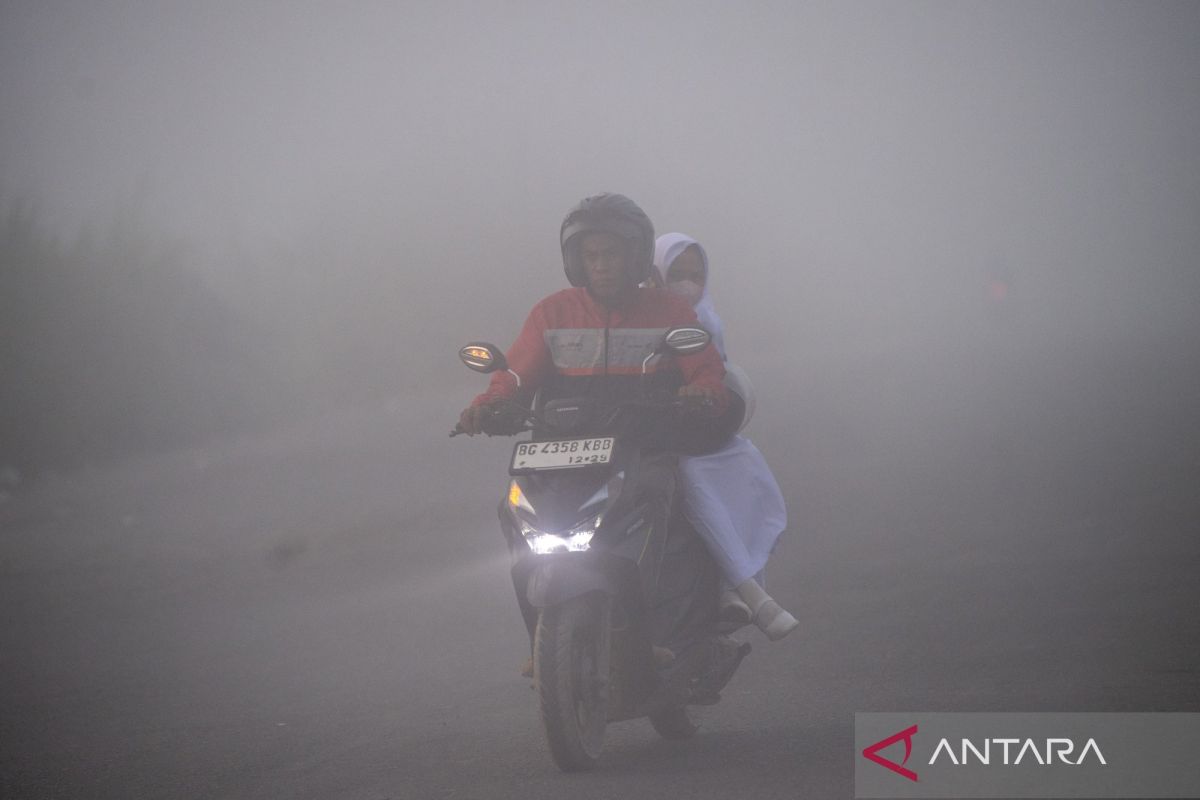
Jakarta (ANTARA) - The Chairman of the Central Board of the Indonesian Public Health Experts Association (IAKMI), Dr Hermawan Saputra, SKM., MARS., CICS, has said that collaborative efforts must be stepped up in handling forest and land fires (karhutla).
According to him, karhutla is a case that can occur every year, so prevention must be carried out from the outset, particularly regarding behaviours that could potentially trigger fires.
“Let us not forget that this is an annual occurrence. So we must not end up busy extinguishing the flames without being able to prevent, from early on, the risks related to the season as well as the behaviours that lead to these forest and land fires,” Hermawan told ANTARA in Jakarta on Monday.
Hermawan said that from an environmental standpoint, preventing karhutla means avoiding behaviours that can trigger fires, such as carelessly discarding cigarette butts, indiscriminate burning, or clearing land by burning, especially during the dry season when land is dry and highly flammable.
“That is why the most important thing is multi-party, multi-stakeholder cooperation, not only in the environmental sector. Health tends to bear the consequences and ultimately carries the burden,” he added.
At the individual level, Hermawan said that steps to prevent smoke exposure include avoiding, or temporarily evacuating from, areas affected by karhutla. If smoke exposure persists, members of the public are advised to use standard masks such as the N95, which can filter air effectively.
“Also, always wear clothing that covers the body if you truly have to be outdoors. Because the impact relates to the risk of various exposures that can irritate the eyes, as well as what is inhaled, and can even trigger allergies in some people,” said Hermawan.
Hermawan explained that karhutla smoke contains various particles from the burning, ranging from soft tree tissue and foliage to plastics and other materials. These particles are quite dangerous because they can carry a variety of substances that enter through the respiratory tract, reaching the lungs and other bodily organs.
He said that acute respiratory infections (ISPA) are the most common cases found as a result of karhutla smoke, with impacts on other lung diseases such as Chronic Obstructive Pulmonary Disease (COPD), asthma, and other disorders.
“The most important element of health services is, of course, masks above all. Oxygen must be available at every rescue service centre, and most crucially there must be the readiness of health workers and health facilities from early on in areas affected by haze and smoke,” he said.
Several strategies adopted by the Ministry of Health in response to these events include intensifying education and health promotion; monitoring diseases such as acute respiratory infections (ISPA), pneumonia, asthma, and eye and skin irritation; air quality surveillance; and issuing alert letters.
In addition, the Ministry has readied Public Safety Centres, health service posts, referral hospitals, and the mobilisation of logistical assistance.
Seven provinces have declared emergency alert status for the karhutla disaster: South Kalimantan, Central Kalimantan, West Kalimantan, East Kalimantan, Jambi, Riau, and South Sumatra.