
IA-ITB Urges Stronger Investment and Skills Development to Accelerate Papua’s Development
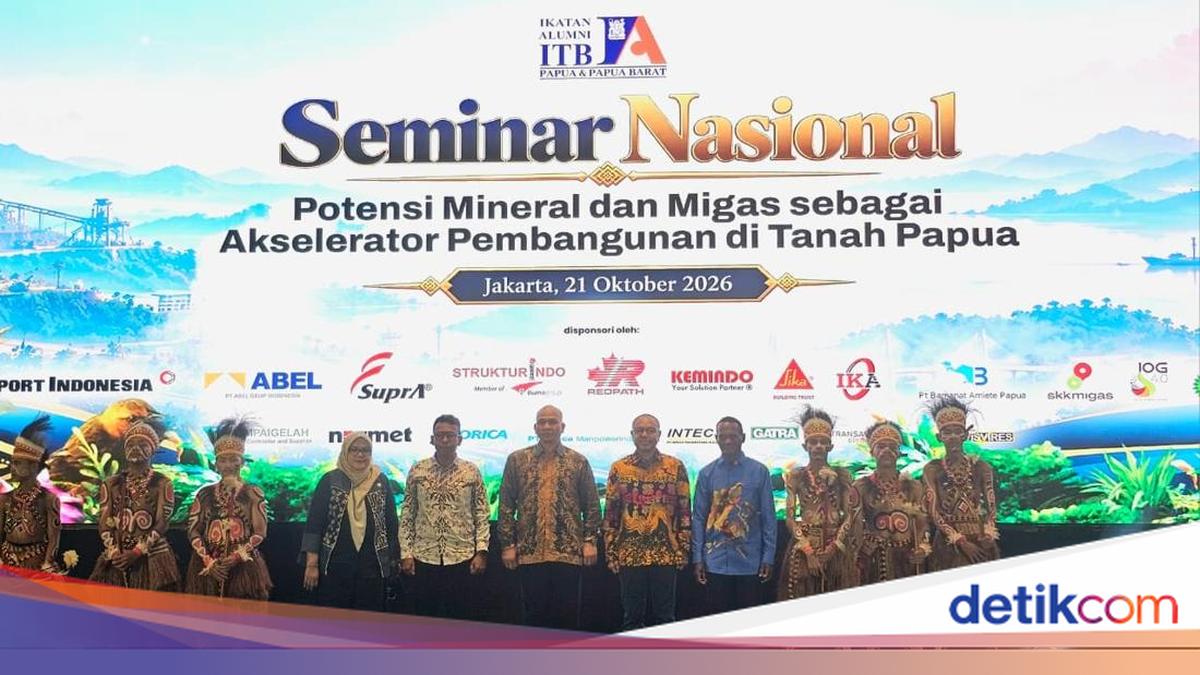
The Papua and West Papua regional branch of the Bandung Institute of Technology Alumni Association (IA-ITB) is calling for stronger investment, local human-resource development and collaboration among multiple stakeholders. The aim is to optimise mineral and oil and gas resources as drivers of sustainable development in Papua.
These issues were the focus of a national seminar entitled “Mineral and Oil and Gas Potential as an Accelerator of Development in Papua”, organised by IA-ITB Papua and West Papua in Jakarta today. The seminar brought together central and regional government representatives, academics, industry players and other stakeholders to discuss ways of managing natural resources so that they deliver broader economic and social benefits for Papuan communities.
Hengky Rumbino, chair of IA-ITB Papua and West Papua, said Papua had substantial mineral and oil and gas potential, but realising it required long-term planning, policy support and cooperation between government, industry, academia and communities.
“Papua’s mineral and oil and gas potential must drive development in a way that directly benefits the community. We therefore need to ensure that sustained investment goes hand in hand with stronger local workforce capacity, a stronger regional economy and a more even distribution of development benefits. This seminar provides a forum for formulating concrete ideas and recommendations for Papua’s future,” Hengky said in a statement on Wednesday (21 October 2026).
Hengky said sustained investment was a key factor in maintaining Papua’s economic growth. Major investments, including PT Freeport Indonesia’s (PTFI) mining operations in Central Papua and the Tangguh gas project in West Papua, demonstrated how the mineral and oil and gas industries could stimulate regional economic activity, create jobs and develop supporting sectors.
However, new investment still faces challenges, including inadequate infrastructure, high logistics costs, energy availability and the need to improve local workers’ skills. Stronger exploration, business certainty and policies that support sustainable investment are important to making the most of Papua’s natural resources.
Claus Wamafma, PTFI’s director and executive vice-president for sustainable development, said Papua’s mineral and oil and gas resources were strategic assets that could support regional development and contribute to the national economy. Their management, however, needed to take account of economic, social and environmental considerations, governance, and respect for local wisdom.
“Natural-resource management is not just about the scale of mineral potential or the value of investment, but also about how industry can create tangible and lasting benefits for communities. At PTFI, mining activities also stimulate various economic sectors by creating jobs, supporting local spending, partnering with micro, small and medium-sized enterprises, strengthening supply chains and contributing tax revenues to regional and national governments,” Claus said.
Claus explained that PTFI’s mining operations were also helping to increase the value of minerals through domestic processing and the development of downstream industries. This forms part of efforts to strengthen national industrial supply chains and broaden the economic benefits of mineral-resource management.
He added that measured mineral resources provided an important basis for long-term operational and investment planning. Investment certainty was needed to sustain industrial activity and ensure that economic, social and environmental contributions could continue to be made responsibly.
“Long-term investment certainty must go hand in hand with responsible natural-resource management. The government, academics, businesses, Indigenous communities and younger generations all have an important role in ensuring that Papua’s potential delivers broader benefits for the community and sustainable development,” Claus said.
Alongside stronger investment, the seminar highlighted the importance of increasing Papuan participation in the mineral and oil and gas industries. Education, training and skills development tailored to industry needs are necessary to widen employment opportunities and encourage local workers and businesses to participate in exploration, production, processing and downstream activities.
In the oil and gas sector, the issues under discussion included stronger exploration and production, infrastructure support and the involvement of regional government-owned enterprises through participating-interest arrangements. IA-ITB Papua and West Papua also called for discussion on increasing financial benefits for producing regions to support infrastructure development, public services and community welfare.
IA-ITB Papua and West Papua said they hoped the seminar’s dialogue between government, academics, industry and communities would produce practical recommendations for managing Papua’s mineral and oil and gas potential.
“Development success is measured not only by the scale of investment or natural-resource production, but also by whether more Papuans have opportunities to grow and participate in economic activity. We hope the ideas generated by this seminar will inform the government and all stakeholders as they accelerate inclusive and sustainable development in Papua,” Hengky said.
Paul Antoh, chair of the IA-ITB Papua and West Papua national seminar committee, said the event was held in Jakarta to improve coordination and cooperation between central and regional government. The initiative is intended to accelerate development in Papua in line with President Prabowo Subianto’s Asta Cita agenda.
Source: jawawa.id (https://jawawa.id/newsitem/ia-itb-urges-stronger-investment-and-skills-development-to-accelerate-papuas-development-1792597941)
Originally published by detikcom (https://news.detik.com/berita/d-8718074/ia-itb-dorong-penguatan-investasi-sdm-untuk-percepat-pembangunaan-papua), translated from Indonesian