
‘I worked as if my life depended on it’: The forgotten pioneers of South Korea’s economic miracle
‘I worked as if my life depended on it’: The forgotten pioneers of South Korea’s economic miracle
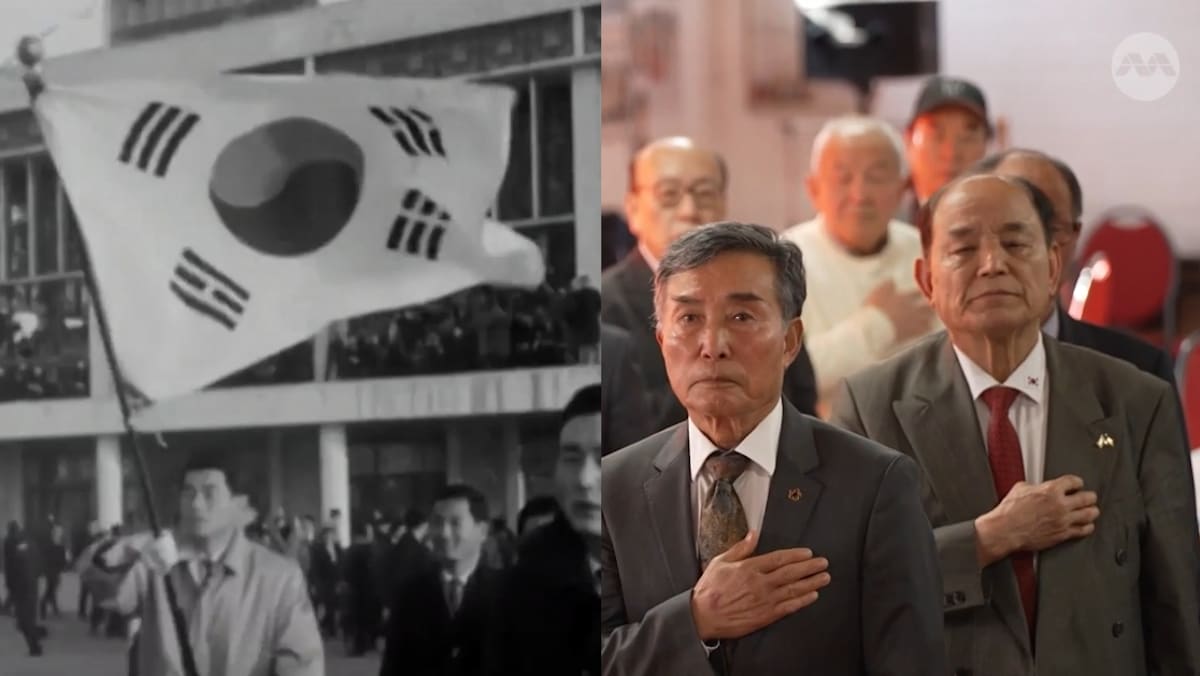
In the 1960s and 70s, South Korea sent 20,000 miners and nurses to West Germany in exchange for loans to rebuild its economy devastated by the Korean War. CNA traces these workers’ journeys across both nations.
Hyun Wo-so is buried in Germany’s Krefeld city, where the former coal miner spent most of his life.
On his gravestone, the words his children asked to inscribe in Korean are simple and final: “I love you” and “Rest in peace”.
“My father is from the silent generation – a generation that is not able, maybe, to say: “I love you” to the children, but they show it in a different way,” his son Martin Hyun told CNA.
That private farewell captures the life of a man whose story is shared by tens of thousands of South Koreans who left home in the decades after the Korean War, bound for West Germany – as it was known then – in search of work, dignity and a way out of poverty.
While their labour helped power South Korea’s rise from devastation to prosperity, these workers – now in their 70s, and many poor and ill – say they feel they have been forgotten.
HUMAN COST
The three-year Korean War, sparked by North Korea’s attack on South Korea in 1950, left the latter impoverished and in ruins.
A reprieve came in 1961 when West Germany agreed to provide loans for rebuilding the economy. In exchange, South Korea supplied urgently needed labour in two sectors: mining and nursing.
About 20,000 young Koreans headed over to Europe.
This included 8,000 men who became miners in West Germany between 1963 and 1977 under a labour-for-loan deal agreed by the two governments.
More than 11,000 South Korean women went over to fill a critical shortage of nurses. Among them was Hyun Wo-so’s wife Lee Soon-hee, who would go on to work in a hospital at Krefeld for four decades.
Their wages, along with the money they sent home, became part of the building blocks of South Korea’s industrialisation.
Today, it is Asia’s fourth-largest economy and the 13th largest globally thanks to its rapid economic development.
But there was a human cost.
Many of the women who went to Germany worked as nurses in short-staffed and overburdened hospitals. Lee described it as a “battlefield” where so much help was needed during surgeries that it was “hard to even breathe”.
They also carried the loneliness of being far from home without most of their loved ones.
“I didn’t like showing sadness to others, so I would just cry quietly by myself. Every night, I slept holding family photos to my chest,” Lee recalled.
“No matter how good life was here, I always missed Korea. That feeling has always stayed with me.”
Still, she remembers moments of kindness. People treated her well and the family adapted to life in a foreign country, she said. They even managed to make the Korean staple side dish of kimchi using local German vegetables.
“When I had a baby, they (senior staff) gave me new curtains because they said it was cold. And it wasn’t a dormitory – they gave me a private house,” she added.
Lee met her husband in Krefeld in 1971 at age 22, when she arrived in West Germany. The couple built a life, raised children and stayed there.
“I sent all my salary back to Korea. Because of that, my siblings were able to study,” she said.
“I worked as if my life depended on it.”
A TALE OF TWO SISTERS
West Germany recruited 14 million “guest workers” during its postwar boom, with South Koreans being its biggest labour force from East Asia.
Most Koreans eventually moved back home or to another country after their three-year contracts ended, but an estimated one-third chose to stay.
Rim Jung-hee – who now goes by her husband’s surname Kuhn – settled in the western German city of Bonn and became a German citizen after moving there in 1971.
“I never felt like a guest worker from the beginning. I always felt that this was a place where I could live, where I wanted to live … Here, I found freedom. I could earn as much as I was willing to work,” she said.
“I started my social life in Germany, so in many ways, this place felt right for me.”
When she tied the knot in 1976, her growing family became her priority – and the distance between her and her homeland grew.
“Both Korea and Germany feel like home. Germany is my second home, so it feels completely natural to live here,” she added.
Her older sister Rim Ok-jin, on the other hand, returned to South Korea a decade after moving to Berlin.
She recalled a childhood of sacrifice and self-teaching, as her parents were farmers with seven children and could not afford to send her to high school.
She wanted a better life – and Germany seemed to offer one.
“I thought that if I went, I could develop myself and I could help my family … My parents didn’t (stop me), just respected my decision,” she told CNA.
While she was initially afraid of how she would cope, she worked hard as a nurse in Germany and sent money home. Eventually, she saved enough to attend college in the United Kingdom. But her intention was never to settle there.
In 1980, she went back to South Korea and took up church work.
The sisters said they never regretted their decision to go to Germany, whether they chose to stay or leave.
“Back then, having the chance to go to Germany was an incredible privilege. Studying abroad or boarding a plane was unimaginable for me. So, when I finally got to go, I felt overwhelmed,” said Rim Ok-jin.
“It truly felt like a door of blessing had opened.”
TROUBLES FACED BY MINERS
The Korean miners, meanwhile, endured a different kind of hardship.
In the 1960s, coal mines across West Germany were short of men willing to work underground. Miners there could earn 10 times what a civil servant did in South Korea – but the work was brutal and dangerous.
“When my mother heard it was a coal mine, she tried to stop me. In those days, there were many mining accidents in Korea – people dying,” said Kim Chun Dong, head of the Korean Association o
Source: jawawa.id (https://jawawa.id/newsitem/i-worked-as-if-my-life-depended-on-it-the-forgotten-pioneers-of-south-koreas-economic-miracle-1779545733)
Originally published by CNA (https://www.channelnewsasia.com/east-asia/south-korea-miners-nurses-germany-forgotten-pioneers-6131391)