
I-EU CEPA to Be Implemented Soon, Indonesia Targets Wider Market Access to Europe
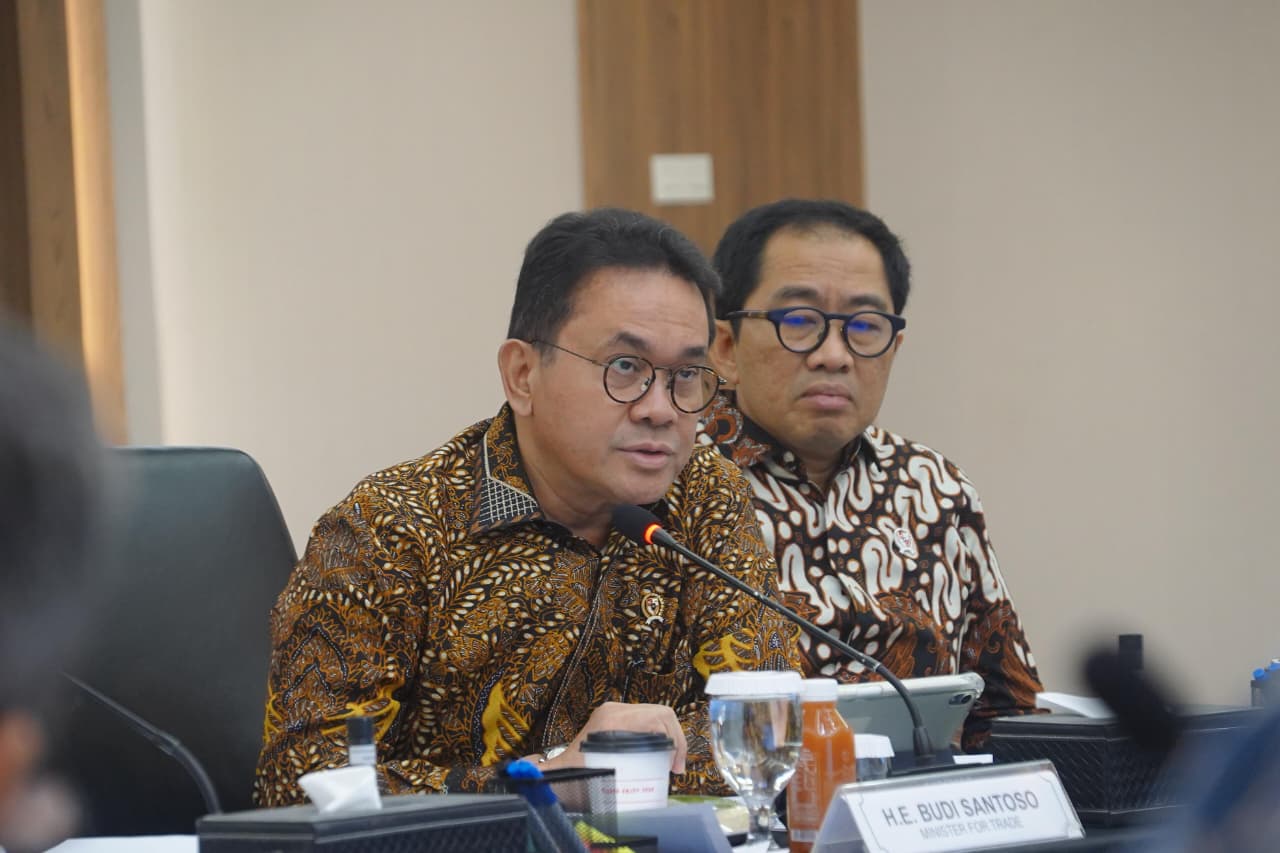
The Indonesian government is continuing to finalise steps towards the implementation of the Indonesia-European Union Comprehensive Economic Partnership Agreement (I-EU CEPA). Trade Minister Budi Santoso assessed that the trade agreement holds significant potential to expand economic benefits for Indonesia, both through increased exports and incoming investment from the European Union.
The Ministry of Trade is now coordinating with relevant ministries and agencies to prepare all requirements before the agreement enters into force. These preparations include completing legal documents for the ratification process, adjusting a number of domestic regulations, and ensuring that technical trade aspects are ready to be implemented.
According to Budi Santoso, the I-EU CEPA can serve as a new entry point for Indonesian products to enlarge their market share in the European region. The agreement is also expected to encourage investment in priority sectors, strengthen Indonesia’s role in international production networks and supply chains, and deepen economic relations between Indonesia and the European Union.
Budi conveyed this during the Dialogue on Preparation for the Implementation of I-EU CEPA at the Office of the Coordinating Ministry for Economic Affairs in Jakarta on Friday (21/8). The forum was led by Coordinating Minister for Economic Affairs Airlangga Hartarto and attended by a number of relevant ministries and agencies as well as diplomatic representatives of European Union member states.
Budi said the government is currently accelerating cross-sector work so that all required legal and technical instruments are available before the agreement takes effect. The government, he said, wants to ensure that the implementation of I-EU CEPA will not be merely administrative but will genuinely provide benefits for national business actors.
In the preparation process, the government is also paying attention to the involvement of the private sector. Budi assessed that business associations and companies need to receive adequate information from the outset so that they can understand the various facilities, requirements, and business opportunities that will emerge once the I-EU CEPA is implemented.
He said communication between Indonesian companies and business partners in Europe also needs to be strengthened. Relationships built during the preparation period are expected to make it easier for the business community to capitalise on trade and investment opportunities once the agreement becomes effective.
With the European Union market covering around 450 million consumers and a combined GDP of approximately USD 22 trillion, the I-EU CEPA is considered to have strategic significance for Indonesian business expansion. The agreement has even been described as one of the most modern and comprehensive trade agreements Indonesia has ever negotiated.
The I-EU CEPA negotiation process itself has been underway since 2016. The two parties reached a substantial agreement in September 2025. After completing internal procedures, Indonesia and the European Union are targeting the signing of the agreement in the fourth quarter of 2026. The next stage is ratification by each party’s parliament before the agreement can be implemented.
In terms of tariffs, the agreement provides quite significant market access. Around 98 percent of tariff lines for both parties will be liberalised, covering approximately 99.5 percent of total import value. For Indonesian exporters, a number of key products such as palm oil and its derivatives, textiles, footwear, and rubber-based goods will receive a 0 percent tariff once the agreement takes effect.
Indonesia will also grant 0 percent tariff treatment to a number of products from the European Union. These include wood pulp, aircraft and their components, trains and their components, and fertilisers.
Budi assessed that these tariff commitments provide greater opportunities for Indonesian products to compete in the European market. With lower entry costs, national exporters are expected to have more room to improve price competitiveness while expanding their markets.
The benefits of I-EU CEPA are not limited to trade in goods. The agreement covers trade in services, investment, and various provisions aimed at creating a more efficient business environment and providing certainty for business actors.
A number of other areas are also part of the agreement, including digital trade, simplification and acceleration of customs procedures, standardisation, and sanitary and phytosanitary (SPS) provisions. Capacity-building cooperation also covers a number of strategic issues, including state-owned enterprises (BUMN) as well as sustainability and environmental aspects.
Despite the significant opportunities, the government still needs to anticipate various challenges in implementing the agreement. A number of European Union regulations currently of concern include the European Union Deforestation Regulation (EUDR), the Carbon Border Adjustment Mechanism (CBAM), and specific provisions for fishery products entering the European market.
According to Budi, various regulations that could affect the economic benefits of I-EU CEPA need to be continuously communicated by both parties, including if new rules emerge after the agreement is signed. Joint discussions are needed so that such provisions do not become barriers that reduce the benefits of the agreement for business actors.
Airlangga Hartarto previously stated that the government is targeting the signing of I-EU CEPA in October 2026. Once the agreement is officially signed, Indonesia and the European Union will proceed with the ratification process in their respective parliaments.
Support for the process also came from the European Union Ambassador to Indonesia and Brunei Darussalam, Denis Chaibi. He welcomed the dialogue forum that brought together the Indonesian government and representatives of European Union member states. According to him, the meeting can serve as a means to strengthen the shared commitment to accelerating the completion of the signing and ratification process.
Source: jawawa.id (https://jawawa.id/newsitem/i-eu-cepa-to-be-implemented-soon-indonesia-targets-wider-market-access-to-europe-1787590215)
Originally published by vibizmedia.com (https://www.vibizmedia.com/index.php/2026/08/24/i-eu-cepa-segera-diimplementasikan-indonesia-bidik-perluasan-pasar-ke-eropa/), translated from Indonesian