
HYPSET Showcases Cable Structure Solution for Solar Panel Installation in Complex Southeast Asian Terrain
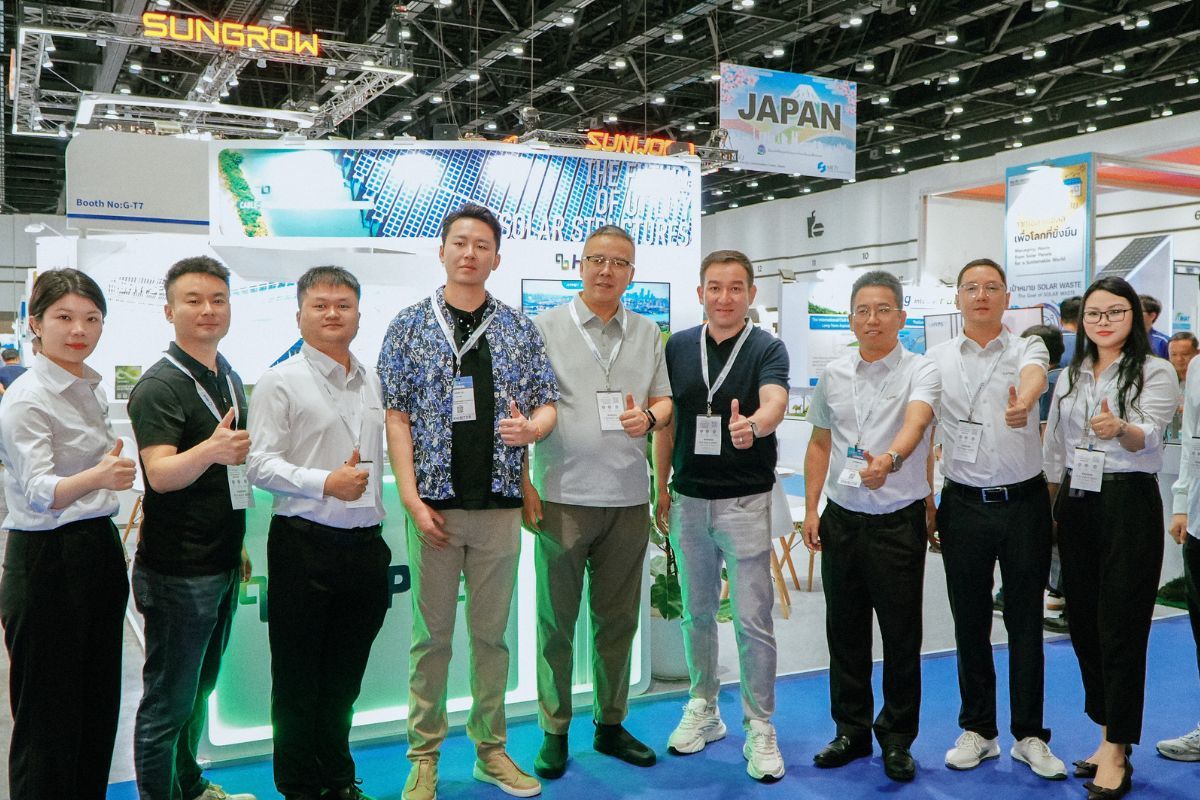
At the ASEAN Sustainable Energy Week (ASEW) 2026 in Bangkok, HYPSET introduced its latest cable structure technology for solar photovoltaic (PV) mounting systems. The solution supports the development of solar power plants in the commercial and industrial sectors, aquavoltaic projects, and various solar project sites with complex terrain conditions across Southeast Asia.
Thailand is one of the fastest-growing solar energy markets in Southeast Asia. Government support for renewable energy and ambitious clean energy transition targets continue to accelerate the construction of solar projects in the country. On the demand side, electricity needs from the commercial and industrial sectors are steadily rising. This situation, combined with significant potential in the agricultural and aquaculture sectors, opens up broader opportunities for the development of distributed solar power plants and aquavoltaic systems. In recent years, solar installations in Thailand have shown a stable growth trend.
Despite this, solar energy development still faces several obstacles. Thailand’s diverse landscape, ranging from mountains and hills to water bodies, makes conventional solar panel mounting systems costly and complex to install. Moreover, these systems generally require large land areas, making them less flexible for deployment in complex terrain. This condition increases project costs while hindering the integration of solar energy with agriculture and aquaculture, thereby constraining market expansion.
HYPSET developed a cable-structure-based solar mounting solution to address these challenges. The technology is designed to be more adaptive to various site conditions, thereby improving project construction efficiency. In dense industrial and commercial areas, land availability is often a major constraint. HYPSET’s cable structure technology enables the installation of solar panels in previously underutilised areas such as industrial zones, car parks, and wastewater treatment facilities. The system allows solar power plants to operate without disrupting the primary function of the site, while also reducing construction complexity and overall project costs.
Furthermore, the cable structure possesses strong resistance to high winds and seismic activity. This capability supports long-term operations in Thailand’s hot, humid tropical climate, which is prone to seasonal storms. With more efficient construction costs, high reliability, and attractive investment return potential, HYPSET’s solution helps businesses reduce electricity costs and supports the transition towards more environmentally friendly operations.
Thailand’s aquaculture industry is one of the largest in Southeast Asia. However, conventional solar panel mounting systems often require numerous pile foundations that can disrupt aquaculture activities. To overcome this, HYPSET employs a wide-span design with fewer foundations. This approach creates more space beneath the solar panels, allowing aquaculture activities to continue unimpeded. The concept enables solar power plants to operate above the water surface while aquaculture proceeds underneath, supporting optimal water resource utilisation and the growing aquavoltaic market in Thailand.
As a global pioneer in cable structure technology for PV mounting systems, HYPSET has established a strong presence in the Chinese market and continues to expand in Southeast Asia, backed by a portfolio of over 100 patents. At ASEW 2026, the company not only showcased technology proven to address solar energy development challenges in the region but also reaffirmed its commitment to supporting long-term global market growth. Going forward, HYPSET will continue to invest in innovation and engineering to accelerate the adoption of cable structure systems for solar power plants and speed up the global energy transition.