
Hypersonic Missile Race Heats Up on the Korean Peninsula
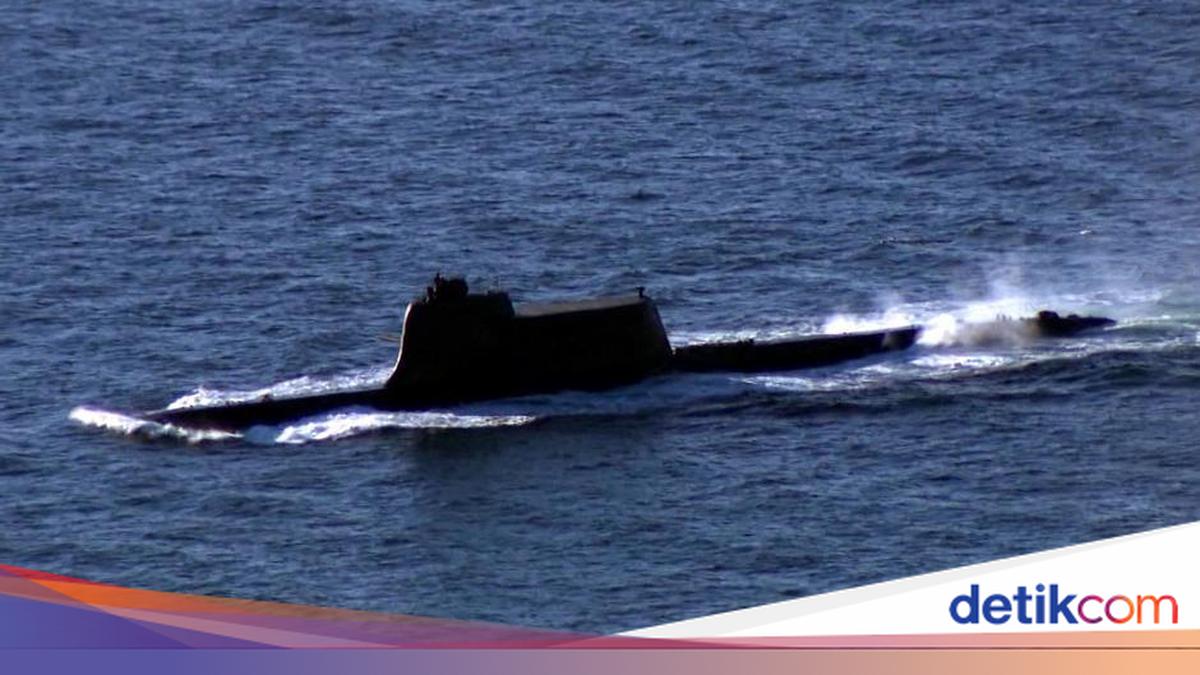
North Korea announced that it had tested two types of submarine-launched cruise missiles. The tests took place off the east coast on Wednesday (14 October). A day earlier, state news agency Korean Central News Agency (KCNA) reported that North Korean leader Kim Jong Un had visited a newly built defence industry museum and inspected an intercontinental ballistic missile (ICBM) said to be capable of reaching the continental United States (US).
The visit came five days after South Korean President Lee Jae-myung witnessed the launch test of the country’s first fully domestically developed hypersonic missile.
South Korea’s breakthrough came after Pyongyang announced on 3 October that it had tested a medium-range hypersonic missile, which it said travelled 350 kilometres before hitting its target.
“Kim Jong Un expressed his hope and confidence that all the country’s missile forces would remain loyal to their mission of defending the republic’s sovereignty and security with responsible combat readiness,” KCNA reported.
The hypersonic technology race on the Korean Peninsula
North Korea and South Korea are both racing to develop hypersonic technology, which is seen as a way to improve their offensive capabilities amid rising tensions in the Indo-Pacific region.
Hypersonic missiles are weapons capable of travelling at least five times the speed of sound, or Mach 5, equivalent to more than 6,100 kilometres per hour.
Their speed makes them much harder to detect, track and destroy with defence systems. The missiles can carry conventional or nuclear warheads. Compared with earlier generations of missiles, they can change direction suddenly, dive or manoeuvre in flight, making them much harder to intercept.
“The arms race on the Korean Peninsula has been under way for years, and hypersonic weapons are simply its latest manifestation,” said Chris Green, International Crisis Group senior adviser on the Korean Peninsula.
Green said hypersonic weapons had become “a priority for South Korea” as North Korea’s military capabilities grow and Pyongyang’s military and economic ties with Russia become closer.
“North Korea does have nuclear weapons, but using them is not realistic,” Green said. “The threat has always been the same: if those weapons are used, the United States will destroy the country.”
For North Korea, Green added, regional geopolitical dynamics are driving the development of advanced conventional weapons to gain an advantage on the Korean Peninsula.
Expert: ‘The world must not underestimate North Korea’
Although it is difficult to establish whether North Korea’s weapons are truly capable of what it claims, Green said the world must not underestimate Pyongyang.
“We don’t know what their actual capabilities are, and this may all be propaganda. But there have been many examples of North Korea’s capabilities being underestimated, only for it to prove that it can do what it claims,” he said.
Chun In-bum, a retired South Korean army general who is now a senior fellow at the National Institute for Deterrence Studies, expressed a similar view.
“It is difficult to know whether they are telling the truth. But any prudent military planner must always prepare for the worst-case scenario,” Chun said.
North Korea’s progress in mastering the advanced technology needed to operate hypersonic missiles has been rapid. However, how Pyongyang acquired this capability remains unclear.
“They probably got it through illegal means,” Chun said. “They spy on companies in the United States, South Korea and Japan to obtain this kind of information. They do the same to countries they consider ‘friends’.”
Regardless of where the technology came from, North Korea’s hypersonic missiles are considered worrying.
“Greater offensive capability means the threat from North Korea also increases. If they have weapons that are harder to shoot down, the temptation to use them could grow,” Chun said.
“I am speculating,” he continued. “But I am certain we are looking for ways to neutralise this threat. As far as I understand, there is currently no fully adequate solution.”
Could new missile systems change the battlefield dynamics?
Green said that missile systems successfully developed by both countries could ultimately cancel out each other’s advantages on the battlefield.
“I don’t see this changing the balance of power,” Green said.
He said North Korea still relied on nuclear deterrence and a “hedgehog” strategy: making itself sufficiently sharp and dangerous that others would be reluctant to approach.
“And this technology does not change the game very much for South Korea either.”
“What is clear is that if North Korea continues to develop its weapons systems and is able to deploy them in large numbers,” Green said, “then there needs to be further discussion about strengthening missile defences, not only in South Korea but also in Japan. And that will raise a range of difficult questions.”
Source: jawawa.id (https://jawawa.id/newsitem/hypersonic-missile-race-heats-up-on-the-korean-peninsula-1792389057)
Originally published by detikcom (https://news.detik.com/dw/d-8713480/persaingan-rudal-hipersonik-memanas-di-semenanjung-korea), translated from Indonesian