
Hydroponic Spinach Can Be a Profitable Home Business, Here's How to Start
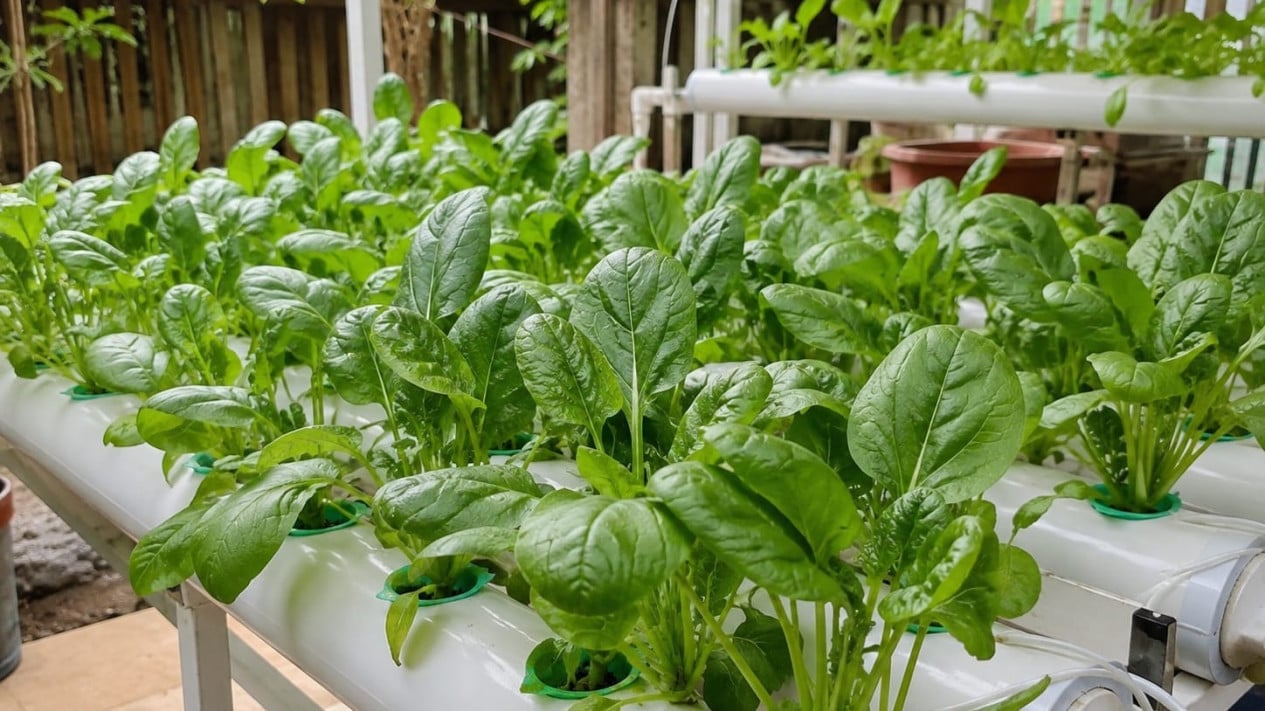
Have a yard or terrace that has only been used for storing items? That area can actually be turned into a vegetable production site.
One interesting option to try is hydroponic spinach cultivation, especially for those who want to start an agricultural business without having to own large land.
Spinach is also attractive from a business perspective because it is a relatively fast-harvest vegetable. This means the money spent on production does not have to wait months to circulate back.
However, do not immediately imagine installing hundreds of hydroponic pipes. For beginners, it is safer to start on a small scale while testing whether the product actually sells.
Here is how to start a hydroponic spinach business from home.
- Start with 50 to 100 planting holes
Do not rush to build a large-capacity hydroponic installation. For the initial stage, you can try 50 to 100 planting holes first. That number is sufficient for learning the production process, from seeding, providing nutrients, and maintenance to harvesting. You can also calculate how much it actually costs to produce one kilogram of spinach.
From this, you will have a figure that is far more important than simply knowing the selling price, namely the production cost. If the trial results are profitable and the market responds positively, capacity can be increased gradually.
- Choose an installation according to your capital
For a home-scale business, you are not required to use expensive installations from the start. A wick system or floating raft can be an option for learning. Meanwhile, when the number of plants starts to increase, you can consider an NFT or DFT system that is more suitable for production in larger quantities.
The principle is simple: do not buy an installation based on a capacity you may not be able to sell. It is better to have 100 productive planting holes whose output is absorbed by the market than 500 holes where most of the plants go unsold.
- Use the right seeds and nutrients
Once the installation is ready, prepare spinach seeds and a growing medium such as rockwool. The seeds can be sown first before being transferred to the hydroponic installation. After the seedlings are strong enough, the plants receive nutrients through the hydroponic solution.