
Hydrogen: Ushering in Indonesia's Energy Future
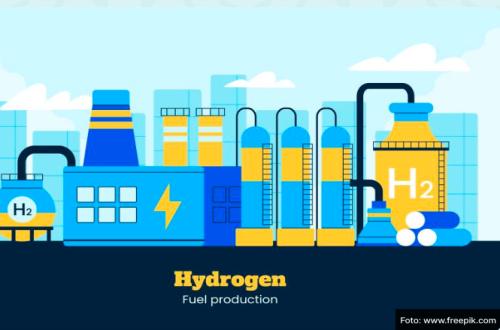
As the world moves towards a post-fossil fuel era, one name is increasingly prominent in various global energy forums: hydrogen. This clean energy, once merely part of laboratory experiments, is now slowly taking centre stage in the energy transition. From Japan to Germany, from Australia to the United Arab Emirates, countries are competing to build their hydrogen ecosystems. Amid this global momentum, where does Indonesia stand?
Germany’s experience offers valuable lessons. This advanced industrial nation has long relied on a combination of energy from fossil fuels, nuclear, and renewables. However, in recent years, Germany has placed great hope in hydrogen—particularly green hydrogen, which is produced through the electrolysis of water using electricity from renewable sources.
In 2020, Germany launched its National Hydrogen Strategy, a long-term policy that positions hydrogen as the backbone of decarbonisation in hard-to-electrify sectors that cannot be directly powered by electricity, such as steel, chemicals, and heavy transport. The government targets a domestic electrolyser production capacity of 10 gigawatts by 2030. Yet, that is not enough. Germany projects that about half of its hydrogen needs will still rely on imports.
What makes Germany so serious? The answer: For nearly two decades, under Angela Merkel’s leadership, Germany pursued the ambitious Energiewende policy, transforming its national identity from dependence on nuclear and fossil fuels to renewables. This seriousness is not just about climate protection, but an economic strategy to position Germany as a global leader in green technology and achieve energy sovereignty. Add to that the Fukushima tragedy in Japan in 2011, which led Germany to sporadically shut down its nuclear power plants without adequate short-term replacements.
At the same time, the country remained heavily dependent on gas and oil supplies from Russia, considered stable and cheap at the time. Ironically, as nuclear plants closed, Germany’s reliance on Russian gas and oil deepened—seen as stable and affordable. This combination of two strategic decisions created naked vulnerabilities when two crises came in succession: the COVID-19 pandemic and the war in Ukraine, or the current Iran crisis.
Due to the pandemic and the war in Ukraine, energy prices surged sharply. Electricity, previously stable at 12 to 14 euro cents per kilowatt-hour, soared to 50 cents. Natural gas prices also jumped from around 4 cents to 25 cents. Industries, domestic consumers, and households were thrown into disarray. Dependence on imported energy proved to be a strategic risk, not only to national energy resilience but also to regional and international geopolitical vulnerabilities. This momentum ultimately drove Germany to accelerate the development of clean, domestic energy sources—and hydrogen became one of the answers.
The 2022 energy crisis due to the war in Ukraine provided a bitter lesson about the risks of relying on cheap gas from a single supplier. The crisis awakened Germany to the fact that national security depends on energy diversification and the speed of domestic infrastructure development. Far from retreating, this experience spurred policy acceleration through more radical targets, such as achieving 80% renewable electricity by 2030, while strengthening bureaucracy to ensure the green transition aligns with industrial economic stability. More than just a fuel, hydrogen is now seen as an alternative energy storage medium (Energiespeicher). For those sceptical of lithium or nickel batteries as the future of energy, hydrogen offers a different approach: energy is not stored as static electricity, but as a substance that can be converted back into electricity when needed—through fuel cells, turbines, or other systems.
Batteries store electricity but still depend on rare mined materials, have short lifespans, controversial mining processes, and complex recycling. In contrast, hydrogen can be stored in tanks or piped through networks, even used in pumped storage systems or hydrogen-fuelled gas turbines. More importantly, hydrogen opens opportunities to build power generation systems less reliant on the variability of natural laws. Unlike solar, wind, or river flow energy—which are fluctuating—hydrogen can be used in pumped-storage hydro systems or hydrogen-fuelled gas turbines, which can be activated anytime according to demand. Thus, hydrogen provides greater system flexibility in maintaining national grid stability. Although fundamentally, hydrogen electrolysis can also be powered by non-green energy, such as through generation processes using fossil fuels.
In other words, hydrogen offers systemic flexibility: a more stable electricity grid, controllable energy whenever needed, and broader technology diversification opportunities. Although its sources still come from nature (wind, water, sun), hydrogen as an “energy storer” allows electricity generation outside peak production hours. The lesson from Germany is clear: energy diversification is not just about environmental sustainability, but also national resilience. Over-reliance on one or two types of energy—especially from abroad—can be fatal in global crises.
Indonesia has all the prerequisites to avoid repeating the same mistakes.
Source: jawawa.id (https://jawawa.id/newsitem/hydrogen-ushering-in-indonesias-energy-future-1776855133)
Originally published by Republika (https://analisis.republika.co.id/berita/tdvifh318/hidrogen-menyongsong-masa-depan-energi-indonesia), translated from Indonesian