
Hydrogen Is Beginning to Enter Our Everyday Lives
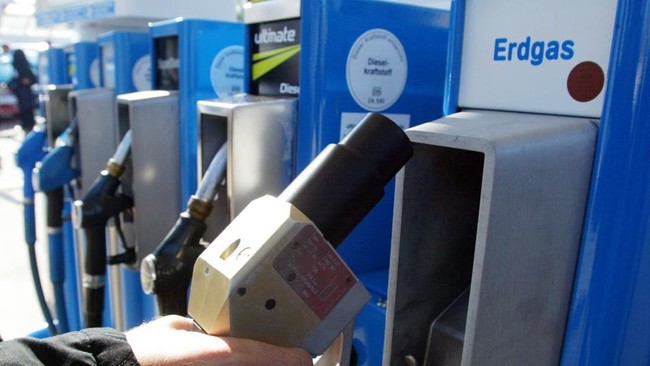
We live in an era of uncertainty: geopolitical threats and sanctions in the oil and energy sectors are making supplies increasingly unstable. Excessive dependence on a small number of energy sources is making matters worse. As a result, energy is becoming harder to access, particularly for lower- and middle-income groups.
This situation has prompted many parties to race to develop new and renewable energy, with hydrogen seen as a promising alternative. Its sources are readily and widely available around us. Interest has led countries to begin developing hydrogen applications, which are gradually finding their way into everyday life.
Hydrogen cooker from India
One example comes from India. Greenvize, an Indian start-up, is developing a hydrogen cooker integrated with a proton-exchange membrane electrolyser. The system allows users to produce hydrogen directly from water by turning a knob, without the need for storage or distribution infrastructure.
The system works by splitting water into hydrogen and oxygen through electrolysis. The hydrogen is then used directly as cooking fuel, with only water vapour emitted by the cooker; the oxygen released is said to help improve the surrounding air quality.
According to Sanjeev Choudhary, Greenvize’s director and co-founder, the system needs only about 100 millilitres of distilled or reverse-osmosis water and around one kilowatt-hour of electricity to produce enough hydrogen for six hours of continuous cooking. The unit can also be paired with rooftop solar panels, making it particularly relevant to areas with unreliable electricity supplies or limited access to a gas network.
Hydrogen bicycles in Chengdu
From cooking, we turn to transport. Hydrogen is already being used on a large scale for two-wheeled transport in Chengdu, China. The vehicles were developed by Qinglv Technology, a green-technology start-up based in Xindu District. Local residents have nicknamed the blue fleet “Hydrogen Pony”.
By early 2026, more than 11,000 hydrogen bicycles and scooters were operating in Chengdu, recording over 3.5 million trips. Fares are affordable: 2.5 yuan, or about Rp5,500, for the first 10 minutes, followed by 1 yuan for every additional five minutes.
Notably, the vehicles do not burn hydrogen directly in an engine. Instead, they use a low-pressure, 2 MPa solid-hydrogen tank. Hydrogen reacts with oxygen in a fuel cell to generate electricity that powers the motor. Each vehicle carries a cylinder containing 100 grams of hydrogen, giving it a range of up to 100 kilometres—more than twice that of a lithium-battery electric bicycle.
Performance remains stable in extreme temperatures, while the only exhaust is water vapour. Chengdu is now known as a hydrogen-energy development hub in south-west China, with activity extending to logistics trucks, hydrogen refuelling stations and urban railways.
Hydrogen aviation: still a long way off, but a serious prospect
The aviation industry is also beginning to consider hydrogen as an alternative. Rolls-Royce, a leading aircraft-engine manufacturer, has recently patented a fuel system for a gas-turbine engine designed to burn hydrogen.
One of the biggest challenges in using liquid hydrogen is its extremely low temperature, which makes stable combustion difficult. Rolls-Royce’s system addresses this by heating the hydrogen before it reaches the engine.
Hydrogen is one of the cleanest fuels, but it is also among the most difficult to use in aircraft. It requires more storage space than conventional jet fuel and must be kept at minus 253 degrees Celsius.
Rolls-Royce is targeting the mid-2030s for hydrogen-powered engines to be ready for small and medium-sized aircraft, with light aircraft expected to come first before the end of this decade. For long-haul flights, sustainable aviation fuel (SAF) will remain the main solution, while hydrogen is expected to be used first on short-haul routes.
Conclusion
These examples from around the world—from cookers and bicycles to aircraft—show that hydrogen is being considered as a long-term energy solution. Its use is not yet economical and remains relatively expensive, as the technology is still at the research stage.
Indonesia, too, needs to pay attention to the development and use of hydrogen. Sustained research and development will be necessary so that one day hydrogen can be deployed widely and economically in Indonesia.
Source: jawawa.id (https://jawawa.id/newsitem/hydrogen-is-beginning-to-enter-our-everyday-lives-1793965842)
Originally published by CNBC Indonesia (https://www.cnbcindonesia.com/opini/20261106172749-14-783078/hidrogen-mulai-menyentuh-keseharian-kita), translated from Indonesian