
Hydroelectric Power Supply in South Sulawesi Declines Due to El Niño, Ministry of Energy Outlines Strategy
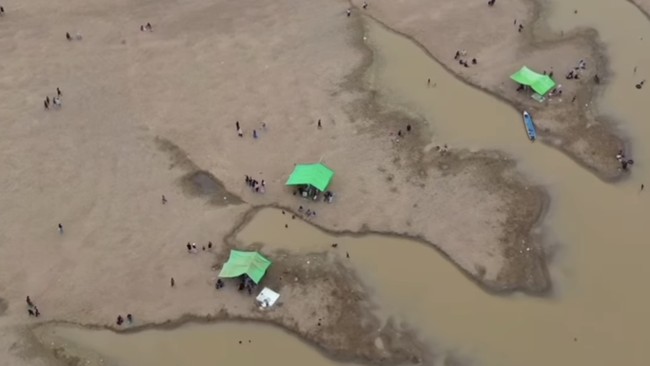
The Ministry of Energy and Mineral Resources (ESDM) is preparing a strategy to maintain the reliability of the national electricity supply following a decline in the performance of Hydroelectric Power Plants (PLTA). This reduction in water discharge is a direct consequence of the El Niño phenomenon, particularly affecting the regions of South Sulawesi and Kalimantan.
As a solution, the government will utilise a combination of hydroelectric operations with Wind Power Plants (PLTB), or wind energy. The Director General of New, Renewable, and Energy Conservation (EBTKE) at the Ministry of ESDM, Eniya Listiani Dewi, stated that the shrinking river discharge during the dry season has a direct impact on reducing electricity production from hydroelectric plants.
However, the hot weather caused by El Niño simultaneously increases the potential and intensity of wind significantly in several Indonesian regions, especially South Sulawesi. “Because during El Niño, the wind actually blows 24 hours a day. Fortunately, we already have two power plants in South Sulawesi, namely in Sidrap and Jeneponto; I visited both yesterday. Both are operating at full capacity 24 hours a day. Therefore, our preliminary conclusion is that during hot periods, when rivers recede and water levels drop, hydroelectric power must be combined with wind,” Eniya explained when met at the DPR RI Building, Jakarta.
She revealed that the two wind power plants operating in South Sulawesi, in Sidrap and Jeneponto, are actually operating optimally at full capacity 24 hours non-stop amidst the El Niño conditions. “Essentially, that is the metric for PLN. I have just returned from there because I visited. Hydroelectric power has indeed decreased due to the prolonged drought. Now, rivers in Kalimantan are also receding. What I see is that wind power is the key,” she said.
In essence, the characteristics of wind in Indonesia possess a unique quality, where within the period of four to 4.5 months—from June, July, August, and September until mid-October—the wind potential is capable of generating electricity for 24 full hours. This condition is considered an ideal momentum to offset the decline in hydroelectric capacity when water levels are low.
Although the mapping of wind power potential in the Electricity Supply Business Plan (RUPTL) reaches 11 Gigawatts (GW) across various regions such as South Sulawesi, East Java, South Kalimantan, NTT, and Maluku, investment in the wind energy sector has reportedly not increased in the last four years. To attract investor interest, the Ministry of ESDM is currently processing a revision of Presidential Regulation Number 112 of 2022 regarding renewable energy pricing regulations.
“We are currently revising Presidential Regulation 112 regarding pricing. I will discuss the pricing further because, during El Niño, the wind potential can actually operate 24 hours a day. We have wind speeds of up to 31 metres per second,” she concluded.
Source: jawawa.id (https://jawawa.id/newsitem/hydroelectric-power-supply-in-south-sulawesi-declines-due-to-el-nino-ministry-of-energy-outlines-strategy-1789725348)
Originally published by CNBC Indonesia (https://www.cnbcindonesia.com/news/20260918144548-4-769061/suplai-listrik-plta-di-sulsel-menurun-imbas-el-nino-ini-siasat-esdm), translated from Indonesian