
Hunting for Traces of Ancient Martian Life Hidden Beneath Layers of Clay
The search for signs of life beyond Earth continues, and scientists are now turning their attention to clay minerals on Mars. These minerals are believed to be a crucial key to discovering physical evidence of past life on the Red Planet.
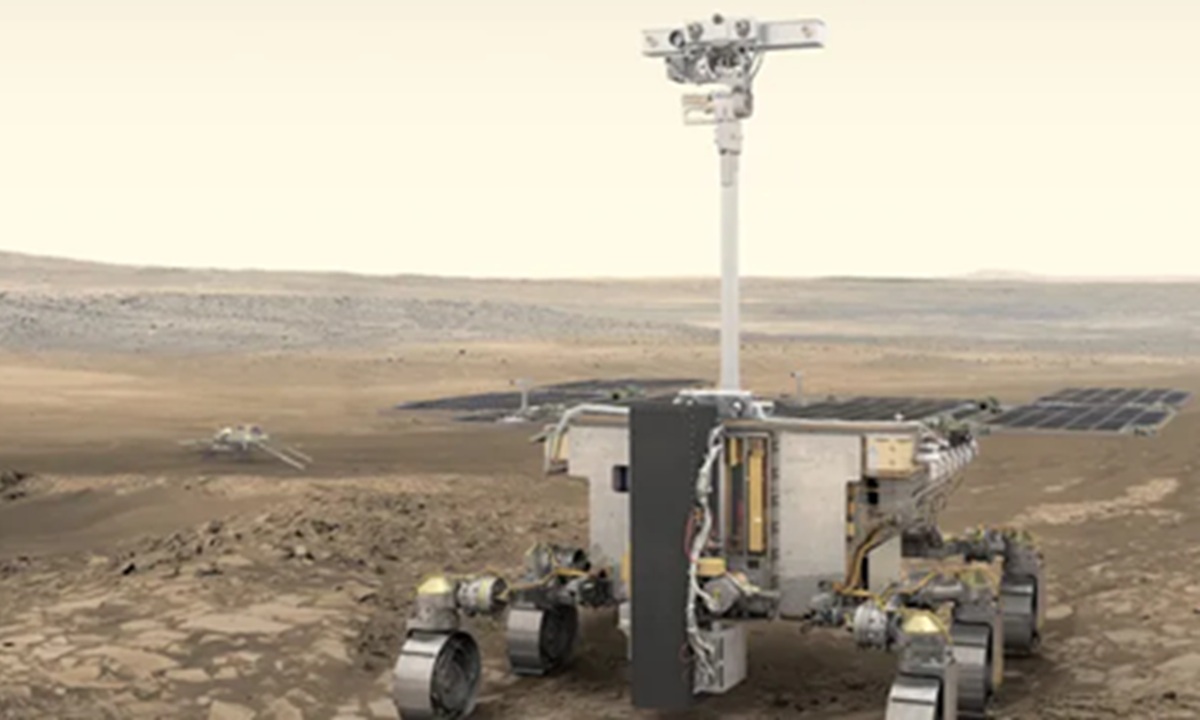
The European Space Agency (ESA) is currently preparing to launch its flagship rover, Rosalind Franklin, as part of the ExoMars mission. According to an official statement from the space agency, the rover is targeted to land at Oxia Planum, a basin region on the Martian surface strongly suspected to have been flushed with abundant water in ancient times.
Through a recent study using orbital observation data, scientists discovered extremely extensive clay deposits in the region. These mineral layers stretch to a radius of roughly 300 kilometres from the Oxia Planum landing site, even reaching the Martian valley known as Mawrth Vallis.
“By landing at Oxia Planum, we will uncover large-scale processes that shaped ancient clays across Mars,” said Inés Torres Auré, lead researcher from the University of Lyon in France, in an official statement.
The study was conducted by analysing Martian rock and mineral layers from orbit using the OMEGA instrument aboard ESA’s Mars Express spacecraft and NASA’s Mars Reconnaissance Orbiter. The orbital data reveal consistent mineral layers and indications of chemical changes in water over time at both sites.
For scientists, the presence of clay is critical because the mineral forms through interaction with liquid water. As water is a fundamental component of life, these ancient clay layers are considered the best places capable of trapping and preserving organic compounds or ancient biological evidence from billions of years ago.
ExoMars project scientist Jorge Vago explained the significance of the chosen landing site.
“We are targeting the oldest deposits in the sequence, which makes the potential implications for early Martian geology and climate highly relevant to the Rosalind Franklin mission in its search for life,” Vago explained in an official statement.
Echoing this, Elliot Sefton-Nash, deputy project scientist for ExoMars, added that Mars’ past environmental conditions could potentially have supported living organisms.
“Warmth and nutrients at the bottom of an ancient Martian sea could have provided a habitat for early life,” Sefton-Nash added in the statement.
The Rosalind Franklin rover is projected to launch towards the Red Planet in 2028. The rover will not only explore the surface area but is also equipped with a special drill, designed to dig and collect soil samples from a certain depth beneath the Martian surface in search of evidence of ancient microbial life protected from extreme radiation.