
Huntara Aids Lubuk Sidup Residents in Building New Hope Post-Disaster
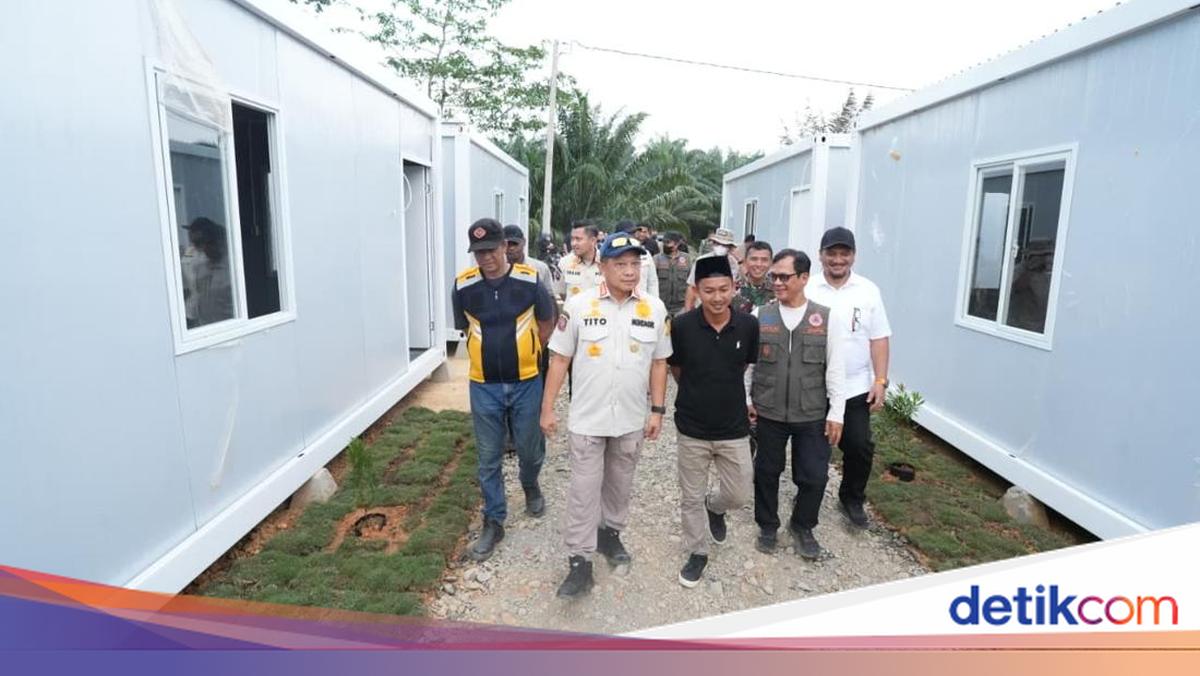
The presence of these huntara units marks the beginning of restoring normal life for residents after nearly five months surviving in refugee tents under severely restricted conditions. Now, although not all units are yet ready for occupancy, some residents have started reorganising their daily lives in more decent accommodation. Muhammad Fa’i, one of the Lubuk Sidup residents, said he has been living in the huntara for just one week. He considers the temporary housing far more comfortable than the refugee tents he occupied for months previously. “It’s far more comfortable here, with a larger area and beautiful views,” he said, according to a written statement from the Ministry of Home Affairs on Friday (1/5/2026). Fa’i revealed that upon initially moving in, there was an issue with leaks in the roof section. However, he noted that the government quickly carried out repairs, restoring the housing to normal and making it fully habitable. The huntara units built are allocated for 163 family heads (KK). Currently, about half of that number have occupied their respective units, while the remainder are still under construction and completion of supporting facilities. On the other hand, Fa’i also complained about the daytime conditions feeling quite hot due to the absence of additional shading in the housing area. He hopes the government can add shading facilities so that children and residents can carry out activities more comfortably during the day. Similar sentiments were expressed by another resident on Wednesday (29/4), Anwar, who said he is grateful to finally leave the refugee tents after nearly five months enduring post-disaster. “Thank you to the government for providing this huntara,” he said. He stated that conditions in the huntara are far better than when living in tents, especially in terms of comfort and space for family activities. With the gradual occupation of this temporary housing, Lubuk Sidup residents are slowly returning to normal activities, even as several facilities are still being refined. The presence of the huntara is becoming a new hope for the community to rise again after being impacted by flooding that paralysed their lives for a considerable time. Meanwhile, data from the Task Force for Accelerating Rehabilitation and Reconstruction (Satgas PRR) Post-Sumatra Disaster on 29 April recorded that 18,505 huntara units have been completed in Aceh, North Sumatra, and West Sumatra. Progress on huntara construction has reached 91 percent of the planned 20,267 units.