
Hungary's 'Leaky Hell' Becomes Reality as Danube Dries Up, Residents Fearful
Companies and households in Hungary have drastically cut their electricity consumption this week. This unprecedented step was taken after the government urged residents to reduce pressure on the power grid amid a severe drought.
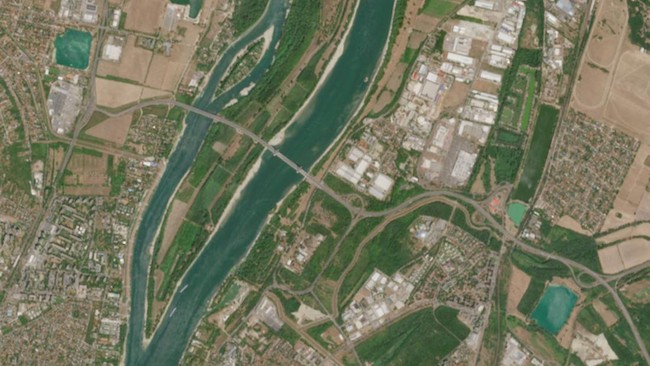
Residents of Budapest are now bracing for the peak of a heatwave on Wednesday and Thursday, with temperatures forecast to reach 40 to 42 degrees Celsius. Some residents standing on the dried-up sandbanks of the Danube River realise that the reality of climate change has finally arrived on their doorstep.
The sharply receding river water level has forced Hungary to shut down most of the operations of its only nuclear power plant. The facility, which relies heavily on the Danube’s water for cooling, is now facing an energy crisis that is pushing its supply capacity to the limit.
The power plant, which is the backbone of the national grid, is likely to operate at just over 10 percent capacity for weeks. This critical situation, which is forcing a surge in energy imports, will depend heavily on the river’s future water levels.
Krisztina Nemeth, a Budapest resident wearing a straw hat to ward off the heat, shared her views while gazing at the drying Danube. She said some people have even built piles of stones on the parched riverbed to mark this grim moment.
“This is sad and frightening, and a very serious warning to society that we need to be careful with our resources. This is a very serious wake-up call,” Krisztina said.
Hungarian Prime Minister Peter Magyar repeatedly thanked companies and households that have voluntarily reduced their power usage. The savings reached 600 to 700 megawatts (MW) each day during the peak consumption period between 5 p.m. and 10 p.m. local time.
In a post on his Facebook page on Wednesday, Magyar warned citizens that more critical days still lie ahead.
“The heatwave will peak today and tomorrow, so voluntary power consumption cuts will be crucial between 5 p.m. and 10 p.m.,” PM Magyar wrote.
An unnamed energy analyst said most of the electricity savings came from industrial users. With total power demand now exceeding 7,000 MW, the 600 MW in savings is estimated to be equivalent to turning off one million air conditioning units.
PM Magyar explained that 837 medium and large-scale power users have made voluntary consumption cuts. In addition, the state railway has also suspended freight services during peak periods, saving around 60 to 90 MW per day.
Authorities added that decorative lights on several iconic buildings in Budapest have also been switched off to reduce the electricity load. Meanwhile, Magyar also praised Hungarian households, which he said have done an excellent job in reducing consumption.
Another Budapest resident standing by the bridge, Csongor Szabo, explained his family’s savings measures.
“We try to use the air conditioner as little as possible at home, and we really only use essential electrical appliances. I think everyone in Hungary should do the same,” Csongor explained.
This phenomenon of voluntary savings is very surprising given that the previous government heavily subsidised household energy bills, which was not conducive to reducing consumption. The European Union had previously recommended that Hungary immediately end the subsidy scheme.
However, Magyar’s new government, which took power in May, stated that it would maintain the subsidy policy. Instead, the government promised to invest European Union funds to strengthen the national electricity grid.
Last month, the Organisation for Economic Co-operation and Development (OECD) warned that Hungary’s economic costs associated with recurring floods and droughts continue to rise. In a report released on 27 July, the agency highlighted climate scenarios leading to increased agricultural losses and widespread infrastructure disruption.
“Hungary may become one of the European countries most affected by river flooding and severe drought in the future,” the OECD report stated.