
Hungary Furious: Ukraine Urged to Allow Russian Oil Flow, Zelensky Accused of Playing European Energy Politics
Energy tensions in Europe are heating up again as Hungary ramps up pressure on Ukraine regarding the operations of the Druzhba oil pipeline. This issue has evolved from a technical matter into a broader geopolitical conflict.
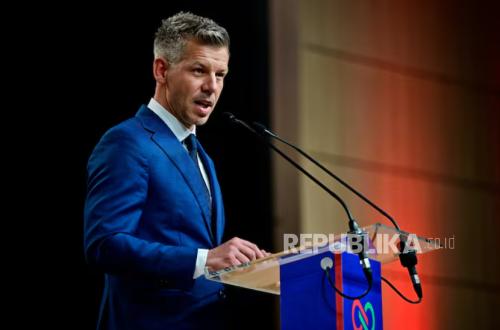
Péter Magyar, the opposition figure and newly elected Prime Minister of Hungary, has launched a sharp critique of the dynamics. He believes that energy supplies should not be used as instruments of political bargaining amid the regional crisis.
Magyar has voiced concerns that uncertainty in the Druzhba pipeline’s operations could directly impact Hungary’s domestic energy stability. He also emphasised the importance of maintaining the continuity of oil supplies for national needs.
“This is not a game. If Druzhba is suitable for transporting oil, then please open it as promised. And we expect Russia to start supplying oil (to the pipeline) in accordance with the contract, because without that, nothing will function,” said Magyar, as reported by Russian media outlet RTVI.
According to him, the Druzhba pipeline forms the backbone of Hungary’s energy supplies. Disruptions to this route could pressure the industrial sector, transportation, and energy price stability.
The Druzhba pipeline is the world’s largest oil distribution line. This infrastructure connects Russian oil fields to several Central and Eastern European countries via Ukrainian territory.
For Hungary, the existence of Druzhba holds irreplaceable strategic importance in the short term. This route has for years been the primary source of crude oil supplies for the country.
In terms of consumption, Hungary requires around 140,000 to 160,000 barrels of oil per day. Of that amount, approximately 60 to 65 percent is supplied from Russia via the Druzhba pipeline.
This dependence means that any disruption to the pipeline is immediately felt domestically. The impacts are not only on the energy sector but also on inflation and people’s purchasing power.